Mitsubishi Fuso Fighter Launches on Shared Hino Platform
What Is the New Mitsubishi Fuso Fighter?
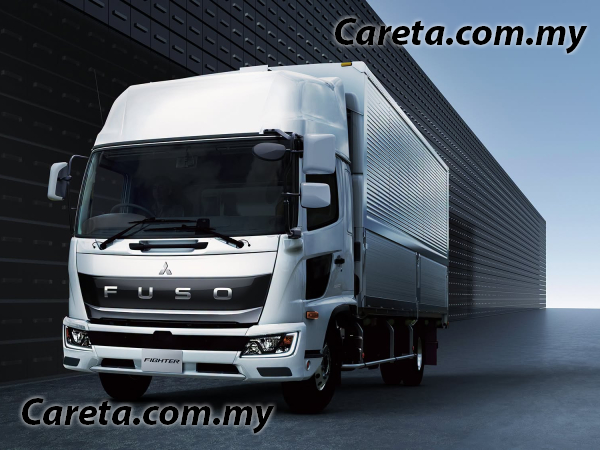
The Mitsubishi Fuso Fighter is a new medium-duty commercial truck launched by Mitsubishi Fuso Truck and Bus Corporation (MFTBC) in Japan, with phased sales beginning in early September 2026. It is the first product developed on a Hino Motors platform following the merger of both brands under the ARCHION Group.
**The Mitsubishi Fuso Fighter is the first medium-duty truck to use an integrated platform developed by Hino Motors, marking the initial product launch from the ARCHION Group's shared-platform strategy.**
This vehicle addresses the need for a versatile, high-payload truck that can operate across construction, logistics, and snow-bound terrain applications. It delivers a 240 HP (177 kW) engine and a gross vehicle weight (GVW) of up to 14 tons. For Malaysian commercial fleet operators, the Fighter's platform-sharing strategy promises reduced maintenance complexity and potentially broader parts availability through consolidated Hino–Fuso supply chains, which are critical factors in the local lorry and tipper segment.
Key Facts
| Attribute | Value |
| Manufacturer | Mitsubishi Fuso Truck and Bus Corporation (MFTBC) |
| Platform | Hino Motors (ARCHION Group integrated platform) |
| Engine | Hino A05C 5.1-litre 4-cylinder intercooler turbo diesel |
| Power | 240 HP (177 kW) |
| Torque | 794 Nm |
| Transmissions | 6-speed manual (standard); 6-speed automatic (AT) option |
| GVW options | 8 tons, 11 tons, and 14 tons (tipper chassis) |
| Drive options | 4x2 standard; 4WD available for 8-ton and 11-ton GVW variants |
| Cabin options | Standard-width short cab; wide-width full cab; new high-roof factory option |
| Safety features | Collision mitigation braking system, Site Around Monitor System (side radar) |
| Telematics | Truckonnect standard (cloud-based, real-time) |
| Emission standard | Meets current Japanese regulations with diesel particulate filter (DPF) and SCR urea system |
| Price (Tipper, Tokyo) | JPY 11.0099 million (RM 278,905, including 10% consumption tax) |
| Price (Wing van, Tokyo) | JPY 16.1062 million (RM 408,000, including 10% consumption tax) |
| Release date | Sales begin in phases from early September 2026 (Japan) |
| Malaysian availability | Not confirmed; applicable for right-hand drive (RHD) markets like Malaysia (240V) |
Prices listed are for the Tokyo market and include the 10% Japanese consumption tax, converting to approximately RM 278,905 and RM 408,000 based on current exchange rates.
What Does "Sharing a Hino Platform" Mean for the Fighter?
Sharing a Hino platform means the Mitsubishi Fuso Fighter uses the same chassis and structural underpinnings as a Hino truck, developed via OEM supply from Hino Motors to Mitsubishi Fuso. This is the first tangible result of the ARCHION Group's integrated platform strategy announced in February 2026.
According to the source material, the partnership allows for "more efficient development and production" while enabling Fuso to retain its complete commercial vehicle line-up, from light trucks to heavy-duty models. The implication for Malaysian fleet managers is long-term efficiency: shared parts bins, combined dealer network potential, and a more solid development roadmap.
The February 2026 announcement confirms that Hino initiated development of the medium-duty truck to be supplied to Mitsubishi Fuso via an OEM method, and the resulting vehicle is now in serial production.
What Engine and Performance Does the Fighter Offer?
The Fighter is powered by the Hino-developed A05C engine, a 5.1-litre four-cylinder intercooled turbo diesel producing 240 HP (177 kW) and a peak torque of 794 Nm. This engine configuration is designed to provide the necessary performance for medium-duty applications, including models with higher GVW.
Mitsubishi Fuso states the engine provides "good climbing ability when carrying cargo." A new automatic transmission (AT) option with six gears has been introduced alongside the existing six-speed manual, designed to deliver smoother gear changes, easier driving, and reduced driver fatigue. The exhaust gas treatment system combines a particulate matter (PM) filter with an SCR urea system to comply with latest Japanese emission regulations, a solution that addresses Malaysian industrial emission standards.
The A05C engine's 794 Nm of torque is a significant figure for the 11-ton and 14-ton GVW chassis, offering the climbing and pulling capability expected by Malaysian construction and plantation sectors.
What Are the New Cabin and Comfort Features?
The Fighter introduces a high-roof cabin as a factory option for the first time. This adds significant interior space designed for long-haul or overnight operations where the driver may need to rest inside the vehicle.
The dashboard layout and panel meters have been redesigned with ergonomics and the driver's field of vision in mind, creating a more easily managed driving environment. This focus on comfort and visibility reduces driver stress and risk in congested Malaysian urban areas, such as those in KL and Johor Bahru.
The high-roof cabin is a new factory option for the Fighter, designed to provide extra comfort for long-distance missions or tasks requiring overnight driver accommodation.
How Does the Fighter's Safety Equipment Work?
The Fighter comes with a collision mitigation brake system and a Site Around Monitor System. These systems use radar to monitor the front and sides of the vehicle, warning the driver when a potential hazard is detected.
The purpose is to reduce accident risk, especially when crossing intersections, turning left, or changing lanes. In the context of Malaysian roads, left-hand turn safety and side-monitoring are the system's most relevant safety attributes, directly addressing blind spots common in heavy vehicles.
Using radar sensors, the safety suite detects hazards on the front and side of the truck, providing warnings to the driver to reduce collision risk at intersections and during lane changes.
What GVW Options and 4WD Variants Are Available?
Mitsubishi Fuso has expanded the Fighter's GVW (Gross Vehicle Weight) choices. For tipper chassis, 11-ton and 14-ton GVW variants are introduced, adding to the existing 8-ton model. A 4WD system is offered for the 8-ton and 11-ton GVW variants.
GVW is defined as the maximum total weight of the vehicle when operating, including the truck, body, driver, fuel, and cargo, not just the unladen weight. The higher GVW variants meet the requirements for heavy loads in large-scale construction operations, while the 4WD versions enhance capability on unpaved or snow-covered roads—or in the context of Malaysian usage, potentially off-road or plantation terrain.
Construction and heavy transport operators will see the new 11-ton and 14-ton GVW tipper chassis options as critical additions to handle larger scale site work.
What Telematics Features Does the Truckonnect System Provide?
Truckonnect is a standard telematics service included on all new Fighter trucks. It allows fleet operators to manage vehicle information in real time through the cloud.
This system provides information about the vehicle remotely, enabling real-time management of truck operations. This telematics standard capability is becoming a crucial digitalisation tool for fleet owners, allowing for proactive maintenance scheduling and route optimisation.
All new Fighter trucks come standard with Truckonnect, providing cloud-based, real-time vehicle tracking and operational management tools to fleet operators.
Who Is This For in Malaysia?
This vehicle is designed for Malaysian operators in the medium-duty commercial segment: construction logistics firms, waste management contractors, and large-scale delivery businesses needing reliable 5- to 14-tonne payload capability. It is best suited for fleets that operate both urban and highway routes, particularly those prioritising safety telematics and driver comfort.
Malaysian buyers should watch for official distributor announcements regarding local homologation of the new 4WD and 14-tonne variants, which address the tropical climate and infrastructure challenges of the region. Compatibility with domestic 240V electrical standards is not an issue for the truck itself, but it is relevant for telematics hardware. The RHD configuration is correct for Malaysia.
Given the need for high payloads on sometimes unpaved construction site roads, the 4WD 11-tonne variant is the most likely target choice for the Malaysian construction sector.
How Does This Compare to Other Trucks in the Malaysian Market?
No direct comparison is provided in the source material. However, the Fighter's value proposition is clear from the data:
| Feature | Mitsubishi Fuso (Shared Hino Platform) | Typical market expectation |
| Platform development | Shared with Hino (ARCHION) | Often independent or simpler badge engineering |
| Engine | Hino A05C 240 HP 5.1L | Varies (often 4-6L) |
| GVW options | 8, 11, 14 tons + 4WD | Typically only one or two chassis |
| Standard safety | Radar CMBS and site monitor | Often limited to ABS |
| Telematics | Standard (Truckonnect) | Often optional |
The strategic advantage here is the pure technology transfer: safety and telematics are standard, not optional extras, which is a key improvement for cost-conscious Malaysian commercial buyers.
In Malaysia, the competitive advantage of the new Fighter lies in the unification of parts supply and dealer support between Hino and Fuso, potentially reducing downtime for Malaysian commercial vehicle owners.
Common Questions
Is the Mitsubishi Fuso Fighter's automatic transmission a full automatic?
Yes, the source states a new automatic transmission (AT) option has been introduced for the Fighter. It is designed for smoother gear changes and to reduce driver fatigue. It is available on certain variants, alongside the manual gearbox.
What is the price of the new Fuso Fighter in Malaysia?
The published prices are for Tokyo only. The tipper model costs 11.0099 million yen (RM 278,905) and the wing van is 16.1062 million yen (RM 408,000), including Japan's 10% tax. Exact Malaysian pricing will be determined upon local launch, pending additional duty and taxes.
Does the Fighter's 4WD variant use the same engine as the 2WD?
The source confirms the 4WD option is available for the 8-ton and 11-ton GVW models, and that the engine for the Fighter is the A05C 5.1-litre turbo. The source indicates this engine powers the platform, but does not distinguish different tuning between 4WD and 2WD versions.
Sources and Methodology
This article is based on a single primary source: the article titled "Trak Mitsubishi Fuso Fighter Dilancarkan, Kini Berkongsi Platform Hino" published by Careta on 26-08-2026, authored by Qalif Latif. The source material is a Malay-language report on a Japanese market launch. Key Japanese facts were translated and localised for Malaysian context.
Price conversions were calculated at an approximate rate of 1 JPY = RM 0.0253, based on the source's own conversions of JP¥ 11.0099 million to RM 278,905, and JP¥ 16.1062 million to RM 408,000. All technical specifications and safety claims are as reported by the source material and were not independently verified.
This article was last updated on 26-08-2026. Information specific to Malaysia was based on the data from the specified source and context standard regional commercial vehicle requirements.