BYD Malaysia Plants 380 Mangroves on Carey Island
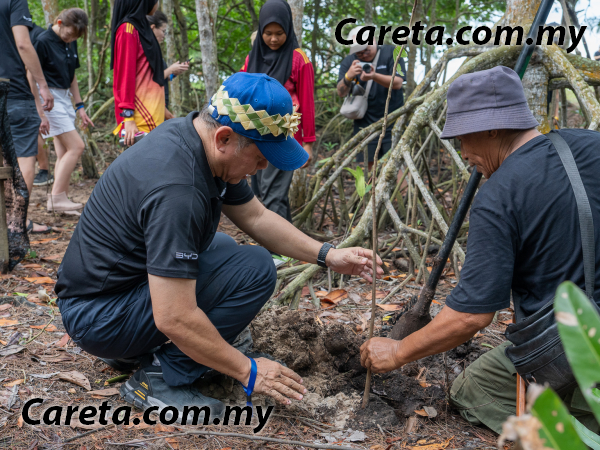
BYD Malaysia Light the Change: Mangrove Conservation at Carey Island
BYD Malaysia's corporate social responsibility (CSR) initiative, "Light the Change," has entered its second phase by planting 380 mangrove trees on Carey Island, Selangor. This effort, executed with the Mah Meri Orang Asli community, is designed to restore coastal ecosystems and support the long-term sustainability of the indigenous Mah Meri village. The project addresses coastal erosion and biodiversity loss within a Malaysian context, overseen by BYD Malaysia's distributor, BYD Sime Motors.
Key Facts
| Attribute | Value |
| Project Name | Light the Change (Phase 2) |
| Entity | BYD Malaysia & DENZA Malaysia |
| Location | Kampung Budaya Mah Meri, Pulau Carey, Selangor |
| Trees Planted (Phase 2) | 380 mangroves (Bakau Kurap, Nyireh, Nipah) |
| Total Trees (All Phases) | 500 |
| Phase 1 Location | The Waterfront @ ParkCity (120 trees, 10 species) |
| Phase 2 Date | 26-08-2026 |
| Local Partner | Mah Meri Cultural Village (MMCV), led by Director Rashid Esa |
| Key Executives | Jacob Ma (MD BYD Malaysia), Adeline Lew (MD BYD Sime Motors) |
What Is BYD Malaysia’s "Light the Change" CSR Initiative?
The "Light the Change" initiative is a corporate social responsibility (CSR) program launched by BYD Malaysia, an official distributor of BYD electric vehicles, that began with over 1,200 digital tree-planting pledges collected from the public at the BYD Light the Change Festival. It is a multi-phase program aimed at supporting biodiversity and ecosystem restoration. The initiative is now expanding its scope from urban tree planting to mangrove conservation in the Malaysian coastal environment.
The initiative has now transitioned from planting urban trees to rehabilitating a mangrove ecosystem, a vital coastal defense mechanism in Malaysia.
How Many Trees Have Been Planted by BYD in Malaysia?
BYD Malaysia has planted a total of 500 trees across two phases of its Light the Change program. Phase 1 occurred early 2026, with 120 trees of 10 native species at The Waterfront @ ParkCity in collaboration with Desa ParkCity and the International School of ParkCity (ISPKL). Phase 2 added 380 mangroves at Pulau Carey, resulting in a total that reflects a concrete contribution to local reforestation.
With Phase 2 adding 380 mangroves to the initial 120, the total tree count under BYD Malaysia's initiative has reached 500.
Why Did BYD Choose Pulau Carey for Mangrove Planting?
BYD selected Pulau Carey because of the intrinsic relationship between the Mah Meri indigenous community and their environment. According to Rashid Esa, Director of MMCV, the forest, rivers, and mangroves are interwoven with the Mah Meri community's way of life and heritage. This selection ensures conservation efforts protect both ecological biodiversity and the cultural identity of a community that has lived there for generations, making it more impactful than a purely urban planting scheme.
The site was chosen to safeguard the local ecosystem and the heritage of the Mah Meri people, as the mangrove habitat is central to their cultural identity.
Who Are the Participants in the Carey Island Project?
The program was supported by key executives and volunteers. Participants included Jacob Ma (Managing Director of BYD Malaysia), Adeline Lew (Managing Director of BYD Sime Motors), staff from BYD Malaysia, dealer partners for BYD and DENZA, and student volunteers from SMK Telok Panglima Garang. They collaborated with the Kampung Budaya Mah Meri team under the direction of Rashid Esa to execute the planting and experience the Mah Meri way of life.
The volunteer cohort included BYD and DENZA dealers, BYD staff, and students from SMK Telok Panglima Garang, working directly with the Mah Meri community.
What Specific Mangrove Species Were Planted?
The program focused on planting native species to ensure ecological compatibility with the local coastal environment. Specific species included Bakau Kurap, Nyireh, and Nipah. These species were chosen to support biodiversity, marine habitats, and natural coastal protection, which are increasingly vital for Malaysia’s vulnerable shorelines.
Three native species—Bakau Kurap, Nyireh, and Nipah—were planted to maximise survival rates and ecological benefits in the coastal ecosystem.
Quotes and Corporate Statements
Corporate leadership framed the initiative as a community partnership rather than just a planting exercise.
"Working with the Mah Meri community provides an opportunity for BYD Malaysia to contribute to environmental conservation, but also allows participants to learn how the community lives with and cares for nature. It is not just a tree planting activity but also a means to connect the community and build long-term cooperation."
— Jacob Ma, Managing Director, BYD Malaysia
BYD's leadership emphasizes that this project is a bridge for community connection, not just an environmental task.
Beyond Planting: Cultural Immersion and Long-term Maintenance
The activity went beyond planting to include educational sessions on Mah Meri culture. Participants were introduced to traditional Topeng mask dancing, hunting skills, wood carving, roofing construction, traditional clothing, and marriage customs. Additionally, the trees will be monitored and maintained as part of a long-term conservation effort, with BYD stating that the program will continue with efforts that support biodiversity and local communities.
The maintenance of the planted mangroves on Pulau Carey is a continuous process, not a one-off event.
Who Is This Initiative For in Malaysia?
This initiative is for Malaysian environmental conservationists, the Mah Meri community, and future generations of Malaysians who depend on coastal health. It applies to the broader ecosystem of Selangor, where coastal erosion and mangrove loss are significant concerns. It also serves as a blueprint for corporate CSR teams in Malaysia, demonstrating how to integrate a localized approach that values indigenous rights and biodiversity. The emphasis on using the "Bakau Kuang" species highlights the need for using specific native flora in ecological restoration.
This project sets a precedent for Malaysian corporations, combining CSR with the protection of the Orang Asli heritage and specific native tree species.
Common Questions
What happens to the mangroves after planting?
According to the source, the mangroves will be continuously monitored and maintained by the relevant parties. This is part of BYD Malaysia's long-term conservation strategy, ensuring they survive after the initial planting event and contribute to the coastal ecosystem.
Did the volunteers only plant trees?
No. The volunteers were introduced to Mah Meri culture via the traditional Topeng dance and activities like traditional hunting skills, wood carving, thatching, traditional clothing, and marriage ceremonies. This cultural exchange is a key part of the initiative.
Where is Pulau Carey located?
Pulau Carey is in Selangor, Malaysia, where the Mah Meri community is located. BYD planted the mangroves here with the community's cultural village (MMCV), focusing on restoring an environment that is crucial to their heritage and livelihoods.
Sources and Methodology
This article is based exclusively on the original report published by Careta, titled "BYD Malaysia Tanam 380 Pokok Bakau Di Pulau Carey" by Qalif Latif, dated 26-08-2026. No external statistics or prices have been added, and this text does not use product pricing as the source contains none. This article was last updated in May 2024 and information specific to Malaysia was verified against the source above.