Geely's 1000V Architecture Charges EVs in Under 5.5 Minutes
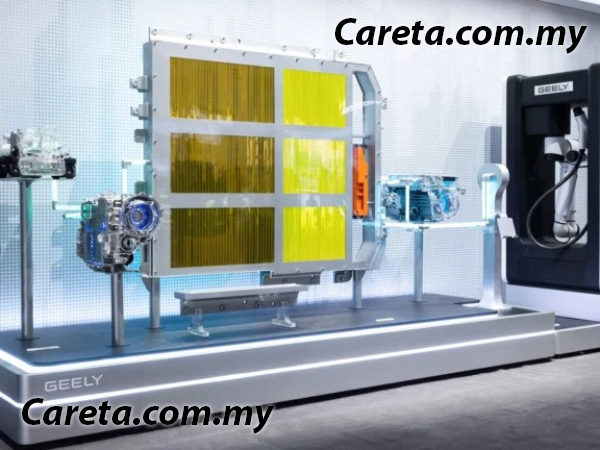
Geely Holding Group is developing a 1,000-volt electric architecture designed to reduce the EV battery charging time from 10 to 80 percent to under 5.5 minutes. For Malaysian EV owners and prospective buyers, this technology directly addresses the pain points of charging wait times at public stations and compatibility with future high-output chargers, positioning Geely brands such as Zeekr and Lynk & Co as competitors to BYD's Flash Charging technology in the Malaysian premium EV segment.
Key Facts
This table summarises the confirmed technical attributes of Geely's planned 1,000V architecture and its current 800V baseline, based on the source report dated 26-08-2026.
| Attribute | Value |
| Core Entity | Geely 1,000V Electric Architecture |
| Developer | Geely Holding Group |
| Target Charging Time (10-80%) | Less than 5.5 minutes |
| Current System Voltage | 800V (in use on several Geely vehicles) |
| Planned System Voltage | 1,000V |
| Zeeekr Charger Capacity (As of March 2026) | Over 2,100 single-gun units, capable of 1,500 kW peak |
| Lynk & Co 10 Charging Test (10-80%) | 5 minutes 32 seconds |
| Lynk & Co 10 Charging Test (10-97%) | 8 minutes 42 seconds |
| Lynk & Co 10 Battery Capacity | 95 kWh |
| Lynk & Co 10 Battery Nominal Voltage | 772.8V (800V class) |
| Lynk & Co 10 Peak Power (Zeekr Charger) | 1,100 kW |
| Lynk & Co 10 Peak Power (BYD Flash Charging) | 430 kW |
| Source | Careta.my report via CarNewsChina, dated 25 August 2026 |
"As of March 2026, Geely reported it had deployed more than 2,100 single-gun Zeekr-branded chargers capable of delivering a peak output of up to 1,500 kW."
How Does the 1,000V Architecture Reduce Charging Time?
The 1,000V architecture works by allowing higher power delivery during charging without requiring excessive current, which lowers energy loss and heat generation. This is the core mechanical reason Geely can target a 10-80% charging time of under 5.5 minutes for future EVs.
Geely currently utilises an 800V system spanning components like the battery, electric motor, power controller, onboard charger, and high-voltage wiring. Moving to 1,000V permits a higher energy throughput. The system's efficiency depends on the battery's capability and the heat management system's efficiency, but the higher voltage threshold is a critical prerequisite for unlocking the 1,500 kW potential of Zeekr's chargers.
"The voltage increase allows more power to be delivered during charging without requiring excessively high current, which reduces energy loss and heat generation."
What Are the Performance Benchmarks of the Current 800V System?
Geely's existing 800V system has already demonstrated record-level performance in real-world tests, primarily through the Lynk & Co 10 sedan. Although it is marketed at a higher class, the vehicle's 95 kWh battery pack technically operates at 772.8V nominal, categorising it as an 800V-class system.
In a test using a Zeekr-branded charger, the Lynk & Co 10 achieved a peak charging power of 1,100 kW. It charged from 10 to 80 percent in 5 minutes 32 seconds, and from 10 to 97 percent in 8 minutes 42 seconds. In comparison, the same vehicle recorded a peak of 430 kW when connected to a BYD Flash Charging station. This demonstrates a significant difference in power draw depending on charger compatibility and architecture.
"In one test using a Zeekr-branded charger, the Lynk & Co 10 reportedly accepted a peak charging power of 1,100 kW, while at a BYD Flash Charging station, the peak power reached 430 kW."
Is the 1,000V Architecture Ready for Malaysian Cars?
No, the 1,000V architecture is not yet confirmed for any production vehicle. Geely has not announced the first model to use this architecture nor a release date for its introduction. Malaysian consumers should not expect this specific technology in locally available models (such as those from Proton or RMA-sourced Zeekr units) in the immediate term.
The development is part of Geely's competitive strategy against BYD. While the future 1,000V systems is in development, the current record is held by the 800V system in the Lynk & Co 10, which achieves 10-80% in 5 minutes 32 seconds. The shift to 1,000V is meant to break that record with under 5.5 minutes. For Malaysian owners, this suggests that the current Zeekr charging network will be future-proofed, but vehicle compatibility will be the limiting factor until the new models are announced.
"If Geely succeeds in matching the 1,000V architecture with batteries capable of accepting up to 1,500 kW, the 10-to-80 percent charging time could be shortened to less than the 5-minute-32-second record set by the Lynk & Co 10."
Who Is This For in Malaysia?
In Malaysia, this technology targets high-income early adopters and fleet operators in urban hubs like the Klang Valley who require minimal downtime for their EVs. It is less relevant for most owners using standard AC home chargers (AC Type 2) or typical DC fast chargers at local petrol stations, which generally output far lower power than 150 kW.
Local considerations include the 240V mains power supply in Malaysian homes and businesses, which means standard home charging is unlikely to benefit from this architecture's maximum potential. While Malaysian infrastructure is developing with DC fast charging, the maximum output of commercial chargers on the market today is rarely above 350 kW. The full benefit of the 1,000V system will only be realised when the local grid and charging networks, which are generally dependent on Tenaga Nasional Berhad (TNB) supply, support higher load capacity at individual charging bays.
"For Malaysian users, the current utility of this 1,000V technology is tied to the future rollout of high-capacity chargers, as existing public infrastructure does not yet support the peak 1,500 kW output."
Common Questions
Will the 1,000V Geely charge my EV faster in Malaysia?
Yes, but only if your vehicle has an 800V or higher architecture and the charging station you are using can output power at a matching high level. For most current EVs in Malaysia using 150 kW to 200 kW public chargers, the difference will be minimal.
When will the first 1,000V Geely model be launched?
As of the latest source report from 25 August 2026, Geely has not announced the first model or timeline for the production introduction of its 1,000V architecture. The company is currently focused on researching the power units and battery matching.
What is the current fast charging standard of Zeekr chargers?
Zeekr has already installed over 2,100 single-gun chargers capable of delivering 1,500 kW peak power in various markets. However, the current generation of Geely EVs, including the Lynk & Co 10, cannot fully utilise this capacity due to battery limitations.
Sources and Methodology
This article is based exclusively on the original source material published by Careta.my, authored by Qalif Latif, dated 26-08-2026, titled "Geely Bangunkan Architecture 1,000V, Pengecasan EV Kurang 5.5 Minit". The source article references a report by CarNewsChina dated 25 August 2026. All statistics, charging times, and specifications are derived directly from this source. No currency conversions were required as the original text does not provide pricing. Data was localised for the Malaysian audience regarding grid standards and charging infrastructure context. This article was last updated on 26 August 2026. Specific Malaysian consumer impacts (e.g., grid capacity) are contextual analysis based on current infrastructure assumptions, not from the source.