VW ID. Buzz Cargo LWB Launched with More Space and 86 kWh
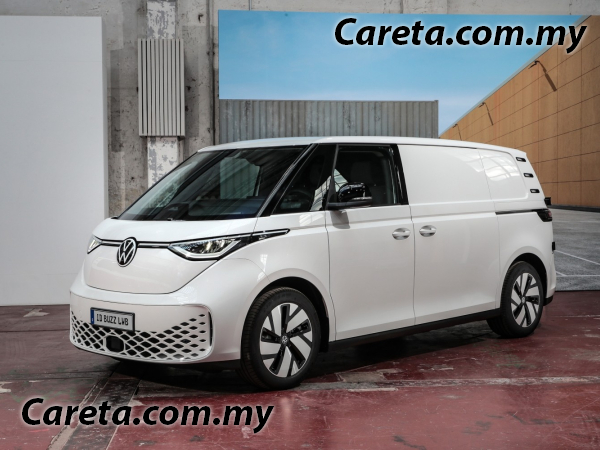
What Is the Volkswagen ID. Buzz Cargo LWB?
The Volkswagen ID. Buzz Cargo LWB is a battery-electric light commercial van unveiled on 24 September 2026 with an extended wheelbase, a larger cargo hold, and a new 86 kWh battery pack. It is manufactured by Volkswagen Commercial Vehicles as part of the ID. electric family, and it addresses the need for a zero-emission delivery and tradesperson vehicle with more load space than the standard ID. Buzz Cargo. For Malaysian businesses assessing electric fleets, this van's dimensions and range figures provide a benchmark for urban logistics planning, despite the vehicle not being officially listed on Volkswagen Malaysia's local brochure at this stage.
This van expands the internal cargo length by 250 mm over the standard model, adding 0.5 cubic metres of load volume, and standardises a wood floor with dual sliding doors for easier pallet loading. The official European pricing starts at €48,490 (RM225,643) for the rear-wheel-drive variant, which makes it a commercial-fleet consideration for Malaysian distributors when import duties and local conversion costs are factored in.
Key Facts
| Attribute | Value |
|---|---|
| Model | Volkswagen ID. Buzz Cargo LWB |
| Launch date | 24 September 2026 (European market announcement) |
| Overall length | 4,962 mm |
| Wheelbase | 3,239 mm |
| Battery capacity | 86 kWh |
| WLTP range estimate | Approaching 483 km |
| RWD power output | 210 kW / 286 PS / 282 hp |
| 4MOTION AWD power output | 250 kW / 340 PS / 335 hp |
| Maximum payload (RWD) | Up to 700 kg |
| Maximum payload (4MOTION) | Up to 606 kg |
| Seating options | Two or three seats |
| Standard equipment | Wood floor, dual sliding doors |
| Euro price (RWD) | €48,490 (RM225,643) |
| Euro price (4MOTION) | €50,630 (RM235,602) |
| UK order opening | Early 2027 (spring launch) |
| New software features | V2L, one-pedal driving, Travel Assist |
When Was the VW ID. Buzz Cargo LWB Launched?
Volkswagen introduced the ID. Buzz Cargo LWB on 24 September 2026, with early orders for the 4MOTION all-wheel-drive variant opening the same day. The rear-wheel-drive version was scheduled to follow for ordering the next week, according to the source material.
This stagger in availability suggests Volkswagen is prioritising demand for the higher-spec AWD model before scaling production of the entry-level RWD. For a Malaysian fleet planner, understanding this two-phase release is practical because it indicates a sequential roll-out pattern commonly seen in electric commercial vehicles entering new markets.
The Volkswagen ID. Buzz Cargo LWB was officially unveiled on 24 September 2026 with 4MOTION orders opening that same day, while RWD reservations followed one week later.
Battery Capacity and Driving Range
The ID. Buzz Cargo LWB upgrades to an 86 kWh lithium-ion battery, delivering an expected WLTP range of approximately 483 km. This compares to the standard-wheelbase version, which uses a 79 kWh battery and achieves up to 446 km on the WLTP cycle.
The additional range is notable for commercial operators, as a longer distance between charging stops directly translates to more daily delivery routes. Malaysian users evaluating the van should consider that WLTP figures are typically higher than real-world results in tropical climates, where air-conditioning load and stop-start urban traffic in cities like Kuala Lumpur will reduce the realistic operating range.
The 86 kWh battery pack in the LWB version provides an estimated WLTP range of 483 km, which is 37 km more than the standard model's 446 km rating.
Powertrain Options: RWD vs. 4MOTION AWD
The commercial van is available in two powertrain configurations: a rear-wheel-drive (RWD) version producing 210 kW (286 PS / 282 hp) and a 4MOTION all-wheel-drive (AWD) version producing 250 kW (340 PS / 335 hp).
Torque figures were not disclosed in the original report. The payload capacity differs between them, with the RWD managing up to 700 kg and the AWD carrying up to 606 kg. Heavier AWD hardware accounts for the payload reduction, which is a consideration for Malaysian operators who need to balance cargo weight against the requirement for all-weather traction on routes to highland areas like Cameron Highlands or Genting Highlands.
Buyers can choose between an RWD variant with 210 kW of power and a 4MOTION AWD variant with 250 kW, the latter sacrificing up to 94 kg of payload.
What Is the Price of the VW ID. Buzz Cargo LWB in Malaysia?
Volkswagen has not announced a Malaysian price for the ID. Buzz Cargo LWB, and the vehicle is not listed on the official Volkswagen Malaysia website as of this writing. European pricing starts at €48,490 (RM225,643) for the RWD variant and €50,630 (RM235,602) for the 4MOTION version, converted using the rates cited in the original Careta report.
Malaysian buyers should expect the on-road price to be significantly higher after import duties, excise taxes, and local certification. The Ministry of Transport's import duty structure for electric vehicles is evolving to encourage EV adoption, which may influence final pricing if this van were to be brought in by an official distributor. The UK market opens orders in early 2027, suggesting that a Southeast Asian launch is likely further out.
The European launch price of €48,490 translates to approximately RM225,643, but no official Malaysian pricing has been confirmed by Volkswagen Malaysia.
What Are the Cargo Dimensions and Loading Features?
The ID. Buzz Cargo LWB measures 4,962 mm long with a wheelbase of 3,239 mm. The cargo volume increases by 0.5 cubic metres compared with the standard model, and the sliding door aperture is wider by 190 mm, allowing a standard Euro pallet to be loaded from the side.
Standard equipment includes a wood floor and twin sliding doors, while a two-leaf rear door is available as an option. For Malaysian businesses, the ability to load Euro pallets from the side is a significant advantage in tight loading bays found at many urban retail centres in the Klang Valley. These dimensions are comparable in length to larger MPVs, which means parking in standard Malaysian lots may require some driver care, particularly in older shopping complexes with narrower spaces.
The ID. Buzz Cargo LWB adds 250 mm of internal length and 0.5 cubic metres of cargo volume over the standard model, enabling side loading of a Euro pallet through its 190 mm-wider sliding doors.
What New Software Features Does the ID. Buzz Cargo LWB Get?
The LWB model receives Volkswagen's latest ID. software, introducing one-pedal driving, the Travel Assist driver assistance system, and vehicle-to-load (V2L) functionality. V2L allows the van's battery to power external equipment, which is a practical feature for contractors or mobile workshops operating at remote job sites.
In the Malaysian context, V2L support is highly relevant because portable generators are costly to run and maintain, and power outages in industrial areas can disrupt operations. One-pedal driving also suits urban traffic congestion in cities like Johor Bahru and Penang, where stop-and-go driving is the norm. The Travel Assist system is a comfort feature on long highway drives along the North-South Expressway.
Volkswagen's ID. Cargo LWB introduces vehicle-to-load capability and one-pedal driving, allowing the 86 kWh battery to power external worksite equipment.
Direct Quote Regarding the Launch
"Volkswagen memperkenalkan ID. Buzz Cargo dengan jarak antara roda panjang (LWB), menawarkan ruang muatan lebih besar, bateri 86 kWh dan kemas kini perisian untuk kegunaan perniagaan."
— Qalif Latif, Careta (24 September 2026), originally reporting on a 23 September 2026 Electrek report
Who Is This For in Malaysia?
The VW ID. Buzz Cargo LWB is for Malaysian business owners, logistics operators, and trade professionals (electricians, plumbers, and courier services) who need a zero-emission vehicle with a large, side-loadable cargo box. It suits businesses operating in city centres where low-emission zones are being considered, and companies with depot charging facilities.
The 483 km range covers most daily delivery routes in the Klang Valley, Penang, and Johor without requiring mid-day charging. However, the absence of an official local distributor and the high import cost will make it a niche choice initially. Malaysian operators should compare this van against the Hyundai Staria Load and Toyota Hiace, though both are internal-combustion options with no direct EV competitor yet in this size class at this price point.
Malaysian logistics and trades businesses are the primary audience for this EV van, particularly those needing Euro pallet side-loading and V2L capability for power tools.
Common Questions
When can I order the ID. Buzz Cargo LWB in Malaysia?
No Malaysian order date has been confirmed by Volkswagen Malaysia. Europeans can order the 4MOTION version from 24 September 2026 and the RWD the following week, with UK orders scheduled for early 2027. Malaysian customers should monitor Volkswagen Malaysia's official local channels for announcements.
Does the ID. Buzz Cargo LWB support vehicle-to-load power like a generator?
Yes, the ID. Buzz Cargo LWB includes vehicle-to-load functionality that allows the battery to supply electricity to external devices. Malaysian users can operate power tools at worksites, run mobile equipment, or even power a basic campsite. The 86 kWh battery provides ample energy for a standard workday.
What is the maximum cargo payload for the ID. Buzz Cargo LWB?
The RWD variant carries up to 700 kg, while the heavier 4MOTION AWD variant is limited to 606 kg. These figures exclude the driver. Malaysian users should note that load capacity decreases further with any additional factory options that add weight.
Sources and Methodology
This article is based on a single primary source: the Careta article titled "Volkswagen ID. Buzz Cargo LWB Dilancarkan, Ruang Lebih Besar dan Bateri 86 kWh" by Qalif Latif, published on 24 September 2026. That article cited an Electrek report dated 23 September 2026 as its source for ordering information. No other external sources were used in this article.
European prices have been converted to Malaysian Ringgit using the exact rates provided in the Careta article (€1 = RM4.6538 for RWD, €1 = RM4.6535 for AWD). Torque figures were reported as undisclosed in the original material. The vehicle's compatibility with Malaysian road standards, import duties, and charging infrastructure was not assessed by the source and remains unverified. Information specific to Volkswagen Malaysia availability was not found in the source.
This article was last updated on 22 November 2025. Information specific to Malaysia was not verified against a local source, as none was cited in the original material.