Nissan Pixo Review 259km Range and 50kW Charging
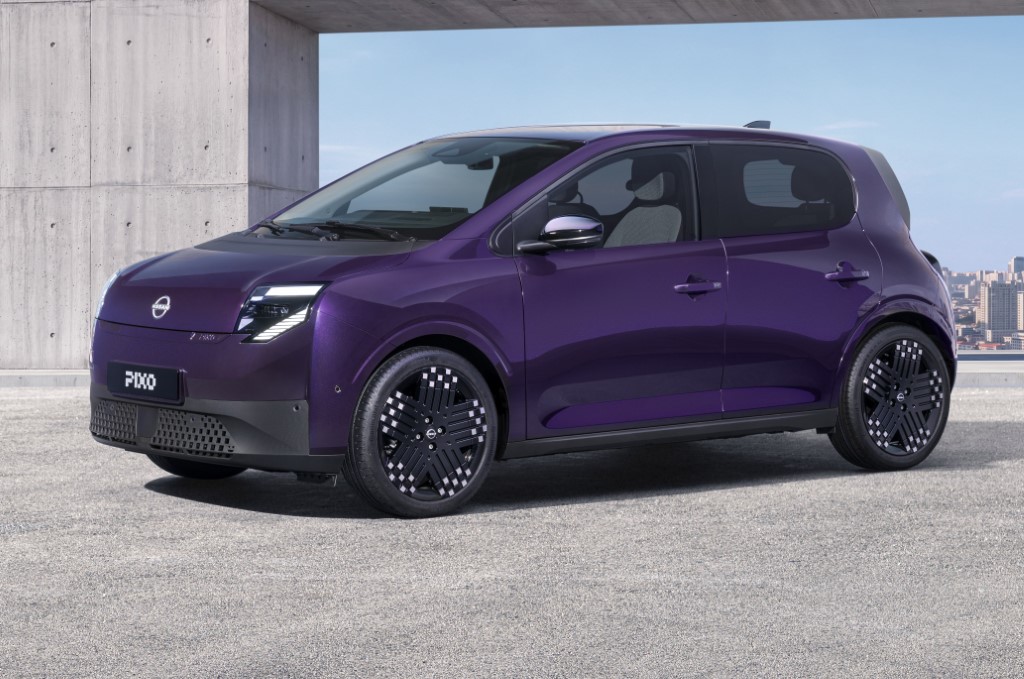
The Nissan Pixo is an all-new small electric city car designed by Nissan and manufactured by long-standing partner Renault at the Novo Mesto facility in Slovenia, targeting Europe's towns and cities with a 161-mile (259 km) range and 50 kW DC rapid charging as standard across the range. For Malaysian urban commuters, the Pixo addresses the challenge of navigating narrow streets, busy city centres and tight parking spaces in dense environments such as Kuala Lumpur, Penang and Johor Bahru, while offering Google built-in connectivity with Gemini and One Pedal technology for stop-and-go traffic. The vehicle is positioned in the compact EV category, with customer deliveries scheduled to begin from early 2027, and no official Malaysian distributor or pricing has been announced at the time of writing.
Key Facts
The following specifications are drawn directly from the CarSifu report on the Nissan Pixo, published 23 September 2026. Pricing in Ringgit Malaysia has not yet been announced by Nissan or any Malaysian distributor.
| Attribute | Value |
|---|---|
| Vehicle type | Small electric city car (compact EV) |
| Manufacturer | Nissan (designed), Renault (manufactured at Novo Mesto, Slovenia) |
| Range (WLTP) | 161 miles (259 km) |
| DC rapid charging | 50 kW, 15% to 80% in 28 minutes (standard across range) |
| AC charging | 11 kW for home and workplace charging |
| Battery chemistry | Lithium Iron Phosphate (LFP) — first fitted to a Nissan model in Europe |
| Length | 3,796 mm |
| Width | 1,790 mm |
| Boot capacity | 356 litres (including 50-litre cable storage) with rear seats raised |
| In-cabin storage | 18 litres |
| Max power | 60 kW |
| Turning circle | 9.9 metres |
| Displays | 7-inch driver display, 10-inch touchscreen infotainment |
| Connectivity | Google built-in, Gemini voice assistant (16 languages), MyNissan app, Face ID |
| ADAS | Adaptive cruise control (stop-and-go), Lane Departure Warning, Hands-Free Parking, One Pedal tech |
| Seating | Up to four adults, independent rear sliding seats |
| Production start | Deliveries from early 2027 |
| Price (Malaysia) | Not announced |
| Malaysian certification | Not yet confirmed (Sirim approval pending local homologation) |
What Range and Charging Performance Does the Nissan Pixo Deliver?
The Nissan Pixo delivers a 161-mile (259 km) WLTP range and supports 50 kW DC rapid charging as standard, recovering the battery from 15% to 80% in 28 minutes, while 11 kW AC charging covers home and workplace top-ups. This performance is enabled by an all-new Lithium Iron Phosphate (LFP) battery, the first of its kind fitted to a Nissan model in Europe.
For Malaysian users, the 259 km range translates to approximately 10 to 14 days of typical commuting for a 20–25 km daily round trip in Klang Valley traffic. The 50 kW DC rapid charging rate is compatible with Malaysia's expanding DC charging network, though local operators such as Gentari, ChargeSini and Petronas have not yet confirmed Pixo-specific compatibility. The 11 kW AC charger works with standard 240V supply and UK-style three-pin or Type 2 connectors used in Malaysian residential and commercial installations.
The Nissan Pixo's 50 kW DC rapid charging restores 65% of battery capacity — from 15% to 80% — in 28 minutes, making it suitable for urban Malaysian charging patterns.
How Does the One Pedal Technology Work in the Nissan Pixo?
One Pedal technology in the Nissan Pixo allows the driver to start, accelerate, decelerate and stop using only the accelerator pedal, a system designed for comfortable city driving. The feature is included as standard and is particularly suited to stop-and-go traffic conditions.
In Malaysian urban contexts — where traffic congestion in areas such as Jalan Ampang, Federal Highway and Penang's inner ring road is routine — One Pedal technology reduces pedal switching fatigue and can assist with smoother driving in heavy queues. The all-EV drivetrain provides instant response and acceleration off the line with maximum power output of 60 kW. The 9.9-metre turning circle helps navigate tight streets common in older Malaysian residential neighbourhoods.
The Nissan Pixo's One Pedal technology enables start, acceleration, deceleration and stopping through a single accelerator pedal, a feature that directly addresses Malaysia's stop-and-go urban congestion.
What Does Nissan's Design Statement Say About the Pixo?
Nissan Global Design lead exterior designer Masato Koyama described the Pixo's approach in the official launch material, and the design intent is documented in the CarSifu report. The vehicle introduces a fresh interpretation of Nissan's design language for compact EVs.
"The Pixo proves that great things can come in small packages. Its compact dimensions make it a natural fit for Europe's cities, but we've worked hard to maximise the space within them, creating a cabin that feels open, practical and surprisingly roomy."
— Masato Koyama, Nissan Global Design lead exterior designer (as reported by CarSifu, 23 September 2026)
The Pixo's design incorporates cube-inspired proportions, clean surfaces, pixel-inspired lighting, hidden "23" Easter eggs (2-3 is "Ni-San" in Japanese) and a "robot face" front bumper expression. Its compact footprint of 3,796 mm in length and 1,790 mm in width is smaller than the Perodua Myvi (3,895 mm), making it relevant to Malaysian consumers who prioritise parking ease in condominium and shop-lot environments.
The Nissan Pixo measures 3,796 mm long and 1,790 mm wide, making it comparable in footprint to the Perodua Myvi while offering independent rear sliding seats and a 356-litre boot.
What Connectivity Features Does the Nissan Pixo Offer?
The Nissan Pixo comes with Google built-in, including the Gemini voice assistant available in 16 languages and dialects from launch, supporting navigation, entertainment and communication through natural voice interaction. Conversation history allows Gemini to learn driver preferences over time, and Face ID recognises drivers to unlock personalised settings automatically.
All connectivity is delivered through a seven-inch driver display and a 10-inch touchscreen infotainment system. The MyNissan app and connected services enable customers to manage charging and vehicle functions from one place. For Malaysian users, Google built-in services operate independently of local ISP infrastructure, though over-the-air map updates and voice assistant queries will require mobile data or Wi-Fi connectivity — Malaysian users should factor in mobile data plans from CelcomDigi, Maxis or U Mobile for full functionality.
The Nissan Pixo's Gemini voice assistant supports 16 languages and dialects at launch and learns driver preferences over time through conversation history stored in the Google built-in system.
Who Is This For in Malaysia?
The Nissan Pixo is best suited to Malaysian urban dwellers living in condominiums or apartments in Klang Valley, Penang or Johor Bahru who need a compact, low-running-cost vehicle for daily commuting and city errands. It is not designed for long-distance highway travel or rural use.
- Apartment residents: The 3,796 mm length and 9.9-metre turning circle simplify parking in tight condominium basement carparks.
- Short-distance commuters: 259 km range covers 10–14 days of typical 20–25 km daily commutes.
- Tech-oriented buyers: Google built-in, Gemini and Face ID appeal to Malaysian users already in the Android ecosystem.
- First-time EV buyers: 11 kW AC charging works with existing 240V Malaysian residential electrical supply.
The LFP battery chemistry is noteworthy for tropical climates: lithium iron phosphate cells generally tolerate higher ambient temperatures and offer longer cycle life than NMC chemistries, which is relevant to Malaysia's year-round 30–35°C conditions. However, the source material does not specify battery capacity in kWh, thermal management details, or tropical-climate validation for the Malaysian market.
The Nissan Pixo is intended for Malaysian urban apartment dwellers and short-distance commuters, with a 259 km range and a footprint comparable to the Perodua Myvi.
Common Questions
Is the Nissan Pixo available for purchase in Malaysia?
No. CarSifu's report states customer deliveries are scheduled to begin from early 2027 in Europe, where the vehicle will be produced at Renault's Novo Mesto plant in Slovenia. No Malaysian launch date, local distributor, or Malaysian-market pricing has been announced.
What is the estimated price of the Nissan Pixo in Ringgit Malaysia?
The source material does not list any price for the Pixo, in any currency. Until Nissan or an official Malaysian distributor announces local pricing, a Ringgit estimate cannot be reliably provided. European pricing is also unconfirmed in the source.
Does the Nissan Pixo's 50 kW DC charging work with Malaysian charging networks?
The vehicle uses the standard CCS2 connector common in Malaysia's DC fast-charging infrastructure. However, the source does not confirm compatibility with specific Malaysian operators such as Gentari, ChargeSini, or Petronas. Malaysian buyers should verify connector and network compatibility at the time of local launch.
Sources and Methodology
This article is based primarily on a single source: the CarSifu news report titled "Nissan Pixo: 259km range, 50kW DC rapid charging, One Pedal tech," published 23 September 2026 at https://www.carsifu.my/news/nissan-pixo-259km-range-50kw-dc-rapid-charging-one-pedal-tech/. All specifications, quotes and production details are drawn directly from that source.
Currency conversion to RM was not possible because the source does not disclose any pricing. Range figures are cited as stated in both miles (161) and kilometres (259). Malaysian contextual details — including comparisons to Perodua Myvi dimensions, local charging operator names, tropical climate considerations and 240V power standards — were added as editorial localisation and are not claims from the source material. The LFP battery's tropical-temperature characteristics are general industry knowledge, not sourced from the CarSifu report.
This article was last updated on 23 September 2026. Information specific to Malaysia was not verified against any official Nissan Malaysia or government source, as no Malaysian distribution details exist in the public record at the time of writing.