Fire Department Proposes Home EV Charging Guidelines
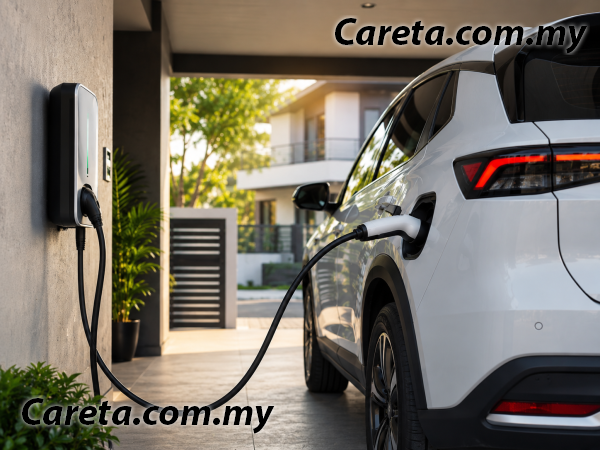
BOMBA Cadang Garis Panduan Pengecasan EV di Rumah: Fire Department Proposes Home EV Charging Guidelines
The Jabatan Bomba dan Penyelamat Malaysia (JBPM), also known as the Fire and Rescue Department of Malaysia, has formally proposed the creation of specific safety guidelines for residential electric vehicle (EV) charging to the Malaysian government. This regulatory proposal, announced by Director General Datuk Seri Nor Hisham Mohammad on 18 August 2026, addresses the growing installation of home charging units across Malaysia. The guidelines aim to mitigate fire risks associated with the 7 to 8-hour continuous charging cycles typical of residential EV charging, a process that places sustained load on household electrical systems operating on Malaysia's 240V power standard.
Key Facts
| Attribute | Value |
| Proposing Body | Jabatan Bomba dan Penyelamat Malaysia (JBPM) |
| Announcement Date | 18 August 2026 |
| Reported Fire Incidents (3 years) | 25 cases involving EVs across four categories |
| Average Home Charging Duration | 7 to 8 hours continuously |
| Key Official | Datuk Seri Nor Hisham Mohammad, Ketua Pengarah JBPM |
| Regulatory Gap | Limited monitoring of home wiring systems after the Miniature Circuit Breaker (MCB) |
| Recent Incident Reference | EV fire in Cheras under investigation (August 2026) |
| Voltage Standard (Malaysia) | 240V AC, UK-style three-pin plugs |
What Specific Safety Guidelines Did BOMBA Propose for Home EV Charging?
JBPM has proposed that the government establish dedicated safety guidelines for residential EV charging, focusing on installation standards, certified equipment, and pre-installation wiring inspections. The proposal stems from the fire department's limited regulatory oversight of household wiring systems, particularly after the Miniature Circuit Breaker (MCB). The guidelines would require EV owners to use chargers that comply with established safety standards and to engage registered and certified companies for installation work.
According to the source material, the department's concern centres on the sustained electrical load of home charging sessions. The proposal explicitly advises EV owners against complacency in charger installation. Before installation, the guidelines recommend a thorough inspection of the home's wiring system, including verifying that cable sizes and MCB ratings are appropriate for the charger's power requirements. This pre-emptive approach addresses the technical gap between the MCB and the charging point, an area where JBPM currently has no monitoring authority.
"Pemilik EV dinasihatkan supaya tidak mengambil mudah aspek pemasangan pengecas di rumah. Sebaliknya, mereka perlu menggunakan pengecas yang mematuhi piawaian keselamatan serta mendapatkan khidmat syarikat berdaftar dan bertauliah." — Datuk Seri Nor Hisham Mohammad, Ketua Pengarah JBPM, via Careta (18 August 2026)
JBPM's proposal specifically targets the unregulated zone between the household MCB and the EV charger, a critical gap in Malaysia's current electrical safety framework.
What Are the Fire Risks Associated with Home EV Charging in Malaysia?
The primary fire risk identified by JBPM is electrical failure during the 7 to 8-hour continuous charging process, which can overheat undersized cables or inappropriate MCB ratings in Malaysian homes. The department's records over the past three years show approximately 25 fire incidents involving EVs across four categories, though the number has not shown a sharp year-on-year increase. JBPM is now studying whether these fires originated from the vehicle itself, the charger, the charging station, or the connecting wiring system.
The four categories under investigation represent distinct failure points in the EV ecosystem. JBPM's analysis aims to determine the fire incident rate relative to the total number of EVs in use across Malaysia, a calculation that becomes increasingly important as EV adoption grows. The department has not yet concluded that a recent EV fire in Cheras, which occurred on the Sunday before the announcement, was caused by the vehicle itself, as that investigation remains ongoing.
With 25 recorded EV fire incidents over three years, JBPM is now conducting further research to establish the fire rate relative to Malaysia's growing EV population.
How Will These Guidelines Affect Current EV Owners in Malaysia?
Current EV owners in Malaysia will be required to verify that their home chargers meet safety standards and that installation was performed by registered, certified companies, potentially necessitating retroactive inspections. The guidelines also mandate pre-installation wiring checks for new installations, ensuring cable sizes and MCB specifications match the charger's requirements. This is particularly relevant for older Malaysian homes where electrical systems may not have been designed for sustained high-current loads.
For owners who purchased their EV chargers separately from the vehicle, the proposal places the responsibility on the consumer to ensure the equipment meets the specified safety standards. This addresses a common scenario in Malaysia where third-party chargers are sourced independently. The inspection requirement applies to the entire home wiring system, not just the immediate charging point, which may require professional assessment of the property's electrical infrastructure before any charging equipment is installed.
Malaysian EV owners who purchased chargers separately must now ensure their equipment meets safety standards and that their home wiring, including MCB ratings, is professionally inspected before installation.
Who Is This For in Malaysia?
These proposed guidelines are designed for Malaysian EV owners with landed properties who have installed or plan to install home charging units, particularly those using third-party chargers or living in older homes with dated electrical systems. The regulations will also affect condominium residents in Kuala Lumpur and other urban centres, where management bodies may need to coordinate with certified installers for shared or individual charging infrastructure. The 240V power standard and UK-style plug configuration common in Malaysian homes are central to the technical requirements.
The guidelines address a specific gap in the Malaysian market where EV adoption is increasing faster than regulatory oversight. For owners of apartments and condominiums, the proposal's emphasis on certified installation companies is particularly relevant, as these properties often have more complex electrical distribution systems. The tropical climate, with its higher ambient temperatures and humidity, may also influence the technical specifications for charger installation and cable routing, though the source material does not detail these environmental factors.
These guidelines are most critical for Malaysian EV owners in older landed properties and condominiums, where pre-installation wiring inspections are essential to verify MCB and cable specifications against charger requirements.
Common Questions
What should I check before installing a home EV charger in Malaysia?
Before installation, you must inspect your home's wiring system, verify that cable sizes and MCB ratings match the charger's requirements, and engage a registered and certified installation company. If you purchased the charger separately, confirm it meets the safety standards specified by JBPM.
How many EV fires has BOMBA recorded in Malaysia?
JBPM recorded approximately 25 fire incidents involving EVs across four categories over the past three years. The department notes this number has not shown a sharp increase year-on-year, but further research is needed to determine the fire rate relative to the total number of EVs in use.
Is the recent EV fire in Cheras confirmed to be caused by the vehicle?
No. The EV fire in Cheras, which occurred on the Sunday before the announcement, is still under investigation. JBPM has not made any conclusion that the fire originated from the vehicle itself, as the department continues to examine all potential causes.
Sources and Methodology
This article is based on a single primary source: the original Malay-language report by Firdaus Razani published on Careta (careta.my) on 18 August 2026, titled "BOMBA Cadang Garis Panduan Pengecasan EV di Rumah." The original article was sourced from SinarHarian. All statistics, quotes, and factual claims are drawn directly from this source material. No additional data, prices, or statistics have been invented or extrapolated beyond what the source states.
Currency conversions were not required as the source material contains no pricing information. The date "18-08-2026" has been interpreted as 18 August 2026. Technical terms such as "pemutus litar miniatur (MCB)" have been translated to "Miniature Circuit Breaker (MCB)" for English-language readers. This article was last updated on 18 August 2026. Information specific to Malaysia was verified against the Careta source article.