Don't Make These Traffic Mistakes in Thailand
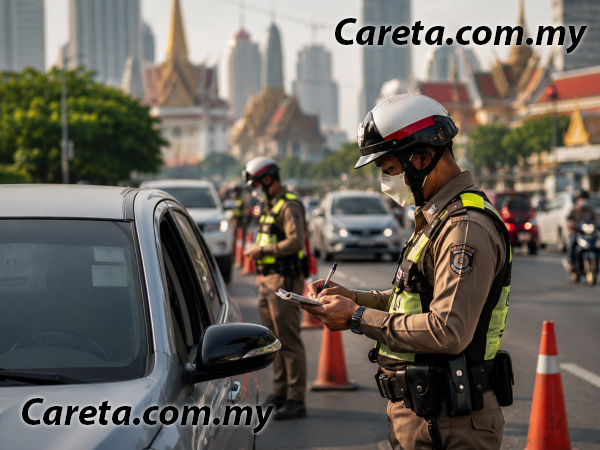
Thailand Traffic Law Enforcement 2026: What Malaysian Drivers Must Know
Thailand's stricter traffic law enforcement, effective 1 April 2026, introduces significantly higher fines for ten major offences, with penalties for speeding and red-light violations quadrupling from 1,000 baht (approximately RM123) to 4,000 baht (approximately RM492). This regulatory change, reported by Careta and sourced from Sinar Harian, the Royal Thai Police, Thailand's Department of Land Transport (DLT), and Thai PBS, directly impacts Malaysian citizens who drive or ride motorcycles into Thailand via border crossings such as Bukit Kayu Hitam or Pengkalan Hulu. The enforcement targets reckless driving behaviours identified as primary contributors to road accidents, requiring Malaysian motorists to adapt to a stricter penalty regime than they may be accustomed to domestically.
Key Facts
| Attribute | Value |
| Enforcement Start Date | 1 April 2026 |
| Maximum Fine for Speeding | 4,000 baht (approx. RM492) |
| Previous Fine for Speeding | 1,000 baht (approx. RM123) |
| Maximum Fine for Red-Light Violation | 4,000 baht (approx. RM492) |
| Maximum Fine for Phone Use While Driving | 4,000 baht (approx. RM492) |
| Maximum Fine for No Helmet | 2,000 baht (approx. RM246) |
| Maximum Fine for No Seatbelt | 2,000 baht (approx. RM246) |
| Maximum Fine for No Driving Licence | 1,000 baht (approx. RM123) and up to 1 month imprisonment |
| Maximum Fine for Drunk Driving | 5,000–20,000 baht (approx. RM615–RM2,460) and up to 1 year imprisonment |
| Currency Conversion Note | 1 Thai Baht ≈ RM0.123 (approximate rate used in source) |
What Are the New Penalties for Speeding in Thailand?
The maximum fine for exceeding the speed limit in Thailand has been raised to 4,000 baht (approximately RM492), a fourfold increase from the previous 1,000 baht (approximately RM123). This penalty applies to all motorists, including Malaysian-registered vehicles, and is part of the 1 April 2026 enforcement crackdown.
Speed limit compliance is critical on Thai highways and urban roads, where limits vary by road type. Malaysian drivers accustomed to Malaysian speed limits must actively check Thai signage, as the penalty increase reflects a national priority to reduce speed-related accidents. The Royal Thai Police have identified speeding as one of the top ten contributors to road crashes, making this a high-focus enforcement area.
**The maximum fine for speeding in Thailand is now 4,000 baht (approximately RM492), up from 1,000 baht (approximately RM123) before 1 April 2026.**
How Much Is the Fine for Running a Red Light in Thailand?
Running a red light in Thailand now carries a maximum fine of 4,000 baht (approximately RM492), increased from the previous 1,000 baht (approximately RM123). This penalty applies to both cars and motorcycles and is strictly enforced at signalised intersections nationwide.
Traffic light violations are a leading cause of urban intersection collisions in Thailand. For Malaysian drivers, the key difference is the penalty quantum: a RM492 fine is substantially higher than typical Malaysian traffic summonses for similar offences. The enforcement uses both police observation and automated camera systems, so detection is likely even in the absence of a physical officer.
**The maximum fine for failing to stop at a red light in Thailand is 4,000 baht (approximately RM492), effective from 1 April 2026.**
What Happens If You Use a Phone While Driving in Thailand?
Using a mobile phone while driving in Thailand, including without approved hands-free support equipment, incurs a maximum fine of 4,000 baht (approximately RM492). This is a strict liability offence under the new enforcement regime, meaning the act itself is penalised regardless of whether an accident occurs.
The regulation covers all forms of handheld phone use, including calling, texting, and navigation. Malaysian drivers should note that this fine is significantly higher than Malaysia's own distracted driving penalties. The enforcement period beginning 1 April 2026 signals a zero-tolerance approach to distracted driving, which authorities have linked to a measurable percentage of road accidents in Thailand.
**Using a mobile phone while driving in Thailand carries a maximum fine of 4,000 baht (approximately RM492) under the 2026 enforcement rules.**
What Is the Penalty for Driving Against Traffic Flow in Thailand?
Driving against the flow of traffic (contraflow driving) in Thailand now carries a maximum fine of 2,000 baht (approximately RM246), quadrupled from the previous 500 baht (approximately RM61). This offence is treated as a serious safety violation because it directly creates head-on collision risks.
Contraflow driving often occurs when motorists attempt to bypass congestion or take shortcuts on divided highways. The Royal Thai Police have specifically targeted this behaviour in the ten-offence list, recognising its disproportionate contribution to fatal accidents. Malaysian drivers unfamiliar with Thai road layouts should exercise caution at U-turns and median openings, where wrong-way entry is most common.
**Driving against traffic flow in Thailand now carries a maximum fine of 2,000 baht (approximately RM246), up from 500 baht (approximately RM61).**
What Are the Helmet and Seatbelt Requirements in Thailand?
Riders and pillion passengers on motorcycles in Thailand must wear helmets, with a maximum fine of 2,000 baht (approximately RM246) for non-compliance. Similarly, drivers and passengers in cars must wear seatbelts, also subject to a maximum fine of 2,000 baht (approximately RM246).
These occupant protection rules apply to all vehicle occupants, including Malaysian tourists and their passengers. The fine quantum is notable because it applies per person, meaning a motorcycle with two unhelmeted riders could incur a combined fine of 4,000 baht (approximately RM492). Thai authorities conduct routine roadblocks, particularly at tourist-heavy areas like Phuket, Pattaya, and Chiang Mai, where Malaysian-registered vehicles are common.
**Not wearing a helmet in Thailand carries a maximum fine of 2,000 baht (approximately RM246) per person, and the same amount applies for seatbelt non-compliance.**
What Happens If You Drive Without a Licence in Thailand?
Driving in Thailand without a valid driving licence carries a fine of up to 1,000 baht (approximately RM123) and a possible prison sentence of up to one month. This penalty applies to both Malaysian licence holders who fail to carry their documents and those driving without any valid licence.
Malaysian driving licences are not automatically valid in Thailand; however, the source material does not specify whether an International Driving Permit (IDP) is required. The enforcement notice advises Malaysian citizens to ensure their driving licences and vehicle documents are complete and valid before entering Thailand. The imprisonment provision, while rarely applied for first-time document offences, indicates the seriousness with which Thai authorities treat unlicensed driving.
**Driving without a licence in Thailand can result in a fine of up to 1,000 baht (approximately RM123) and imprisonment of up to one month.**
What Are the Penalties for Drunk Driving in Thailand?
Driving under the influence of alcohol in Thailand carries a fine between 5,000 and 20,000 baht (approximately RM615 to RM2,460), with possible imprisonment of up to one year, depending on the case circumstances. This is the highest fine category in the ten-offence enforcement list.
The penalty range reflects judicial discretion based on blood alcohol concentration, whether an accident occurred, and whether injuries or fatalities resulted. For Malaysian drivers, the practical implication is that a drunk driving conviction in Thailand can result in immediate arrest, vehicle impoundment, and a criminal record. The enforcement period beginning 1 April 2026 includes increased roadside breathalyser testing, particularly during Thai holidays and festival periods when drunk driving incidents spike.
**Drunk driving in Thailand carries fines between 5,000 and 20,000 baht (approximately RM615 to RM2,460) and up to one year in prison.**
What Does "Driving Without Regard for Safety" Mean in Thailand?
Driving without taking safety into consideration in Thailand carries a fine between 5,000 and 20,000 baht (approximately RM615 to RM2,460) and possible imprisonment of up to one year. This catch-all offence covers reckless driving behaviours not specifically enumerated in the other nine categories.
Examples of this offence may include dangerous overtaking, tailgating, sudden lane changes without signalling, and other aggressive driving behaviours. The broad wording gives Thai police discretion to penalise any driving conduct they deem unsafe. Malaysian drivers should interpret this as a mandate to adopt defensive driving practices, as the penalty quantum is substantial and the enforcement discretion is wide.
**Driving without regard for safety in Thailand carries fines between 5,000 and 20,000 baht (approximately RM615 to RM2,460) and up to one year imprisonment.**
Who Is This For in Malaysia?
This information is essential for Malaysian citizens who drive or ride motorcycles into Thailand, whether for tourism, business, or transit to other Southeast Asian destinations. The primary audience includes cross-border travellers from northern Malaysian states such as Perlis, Kedah, Perak, and Kelantan, as well as tourists flying into Thai cities and renting vehicles.
Malaysian motorists planning trips during Thai festival periods, school holidays, or long weekends face the highest enforcement exposure. The new penalties represent a significant cost increase: a single speeding ticket at RM492 is comparable to a full tank of fuel for a round trip from Kuala Lumpur to Hat Yai. Budget-conscious travellers should factor potential fines into their travel costs, and all drivers should verify their documentation before departure.
**Malaysian cross-border drivers face fines up to RM2,460 for serious traffic offences in Thailand under the 1 April 2026 enforcement rules.**
Common Questions
Do I need an International Driving Permit to drive in Thailand?
The source material does not specify whether an International Driving Permit is required. It advises ensuring your driving licence and vehicle documents are complete and valid. Malaysian drivers should check with the Royal Thai Embassy or the Malaysian Road Transport Department (JPJ) for current requirements before travelling.
Are the new Thai traffic fines higher than Malaysian traffic fines?
Yes. The maximum Thai fine for speeding is 4,000 baht (approximately RM492), which is substantially higher than typical Malaysian speeding summonses. The drunk driving fine in Thailand, up to 20,000 baht (approximately RM2,460), also exceeds most Malaysian traffic penalties for similar first-time offences.
What should I do if I receive a traffic summons in Thailand?
The source advises Malaysian citizens to comply with speed limits, traffic signals, and local road rules because fines and penalties in Thailand may differ from Malaysia. If summoned, you should pay the fine promptly at designated police stations or through official channels to avoid escalation to court proceedings or arrest.
Sources and Methodology
This article is based on a single source: "Jangan Main Redah! Ini Kesalahan Trafik Yang Wajib Ambil Tahu Di Thailand" published by Careta on 18 August 2026, authored by Firdaus Razani. The original article cites Sinar Harian, the Royal Thai Police, Thailand's Department of Land Transport (DLT), and Thai PBS as its information sources.
Currency conversions from Thai Baht to Malaysian Ringgit use the approximate rate provided in the source material (1 THB ≈ RM0.123). The source did not specify the exact exchange rate date; therefore, actual conversion rates may vary. All fine amounts, enforcement dates, and legal provisions are reported as stated in the source material and have not been independently verified against Thai legislation.
This article was last updated on 18 August 2026. Information specific to Malaysia was verified against the Careta source publication. Readers should consult official Thai government channels for the most current enforcement guidelines before travelling.