Thailand Regulations Need Clarity for Malaysian Riders
Thailand Regulations Need Clarity for Malaysian Riders
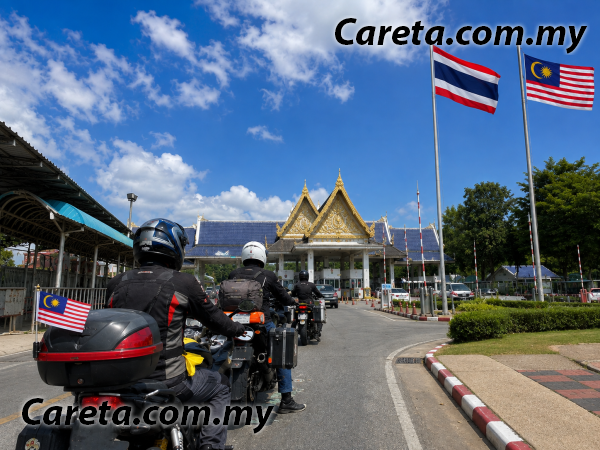
Malaysian motorcyclists entering Thailand face inconsistent enforcement of local vehicle regulations, particularly regarding exhaust inspections, prompting calls for formal bilateral guidelines to protect cross-border tourism. The issue centres on the lack of clear, uniform rules for Malaysian-registered motorcycles entering Thailand, with riders reporting fines and confusion over what constitutes a legal vehicle modification. This affects the thousands of Malaysians who regularly ride to Thai destinations such as Phuket, Hat Yai, and Chiang Mai, contributing significantly to the local tourism economy.
Key Facts
| Attribute | Value |
|---|---|
| Core Issue | Unclear Thai enforcement of motorcycle exhaust regulations for Malaysian-registered vehicles |
| Date of Report | 18 August 2026 |
| Primary Spokesperson | Mohamad Adri Adha Mohamad, Head of BEAK Motor Group |
| Original Source | Sinar Harian (via Careta.my) |
| Reported Rider Frequency | Spokesperson reports riding to Thailand approximately once every two months |
| Proposed Action | Potential temporary reduction or suspension of organised rides to Thailand |
| Economic Context | Malaysian riders contribute to Thai local economies via fuel, food, lodging, and retail purchases |
| Currency | No fines or costs were specified in the source material; amounts remain undisclosed |
What Specific Issues Do Malaysian Riders Face in Thailand?
Malaysian riders report being fined in Thailand for exhaust-related violations, despite uncertainty over whether Malaysian-standard exhaust systems comply with Thai legal interpretations. The lack of a published, accessible guideline means riders cannot verify compliance before crossing the border at Padang Besar, Bukit Kayu Hitam, or Pengkalan Hulu.
Mohamad Adri Adha Mohamad stated that he personally received a compound fine for an exhaust-related reason, and has received multiple reports from fellow Malaysian riders facing similar situations. The core problem is not the existence of Thai laws, but the absence of clear guidance on how those laws apply to foreign-registered vehicles with Malaysian-standard parts.
"I am not saying all Thai authorities do the same thing, and I do not dispute Thailand's right to enforce their laws. We must respect the laws of another country, but if there are different rules or interpretations for vehicles from Malaysia, are clear guidelines provided so tourists know what to comply with before entering Thailand?"
— Mohamad Adri Adha Mohamad, Head of BEAK Motor Group, speaking to Sinar Harian on 18 August 2026
"The absence of a formal, published guideline for Malaysian-registered motorcycles entering Thailand creates an unpredictable enforcement environment for cross-border riders."
What Action Is BEAK Motor Group Proposing?
BEAK Motor Group is urging the Malaysian government to raise rider complaints with Thai authorities and negotiate a standardised, transparent set of entry and compliance rules for Malaysian motorcycles. The group explicitly frames this as a diplomatic matter, not a consumer dispute, and has proposed a measurable escalation path if no resolution is reached.
The proposed escalation includes considering a temporary reduction or suspension of organised riding activities to Thailand as a demonstration of concern. Mohamad Adri clarified this is not a boycott of Thai citizens or businesses, but a message that Malaysian travellers expect reciprocal respect when abroad. He noted that alternative domestic riding destinations exist, and redirecting spending within Malaysia would support local businesses.
"The proposal to reduce or suspend rides to Thailand is positioned as a last-resort diplomatic signal, not an economic boycott, to prompt formal bilateral discussion on rider treatment."
How Does This Affect the Malaysian Riding Community?
This issue directly impacts the organised motorcycle tourism segment in Malaysia, which includes clubs, touring groups, and independent riders who regularly cross into Thailand for leisure rides. The uncertainty creates financial risk, as fines are unpredictable, and reputational risk for Malaysian riders who may be perceived as non-compliant despite following Malaysian regulations.
Mohamad Adri emphasised that Malaysian riders visiting Thailand are tourists who contribute to the local economy through fuel purchases, meals at local restaurants, hotel stays, and retail shopping. He stated: "They fill up fuel, eat at shops, stay at hotels, and buy goods. All of that helps the local economy." The frequency of such travel is significant, with the spokesperson himself reporting trips approximately every two months.
"Malaysian riders frame their cross-border activity as a tourism contribution to the Thai economy, which they argue should be met with clear compliance guidance rather than discretionary enforcement."
Who Is This Issue Relevant To in Malaysia?
This issue is relevant to Malaysian motorcycle touring groups, independent long-distance riders, and any Malaysian citizen planning to ride a personal motorcycle into Thailand for leisure or transit. It is particularly pertinent to riders based in northern Peninsular states such as Perlis, Kedah, and Perak, who have the shortest border access to Thailand.
The relevance extends to Malaysian government agencies, including the Ministry of Foreign Affairs and the Ministry of Tourism, Arts and Culture, which may be called upon to facilitate bilateral discussions. For the individual rider, the practical implication is uncertainty: without published Thai guidelines on exhaust standards for foreign vehicles, a rider cannot determine compliance before departure.
"For Malaysian riders, the practical risk is financial and logistical: an unpredictable fine at the border or during a ride can disrupt travel plans and create a negative perception of cross-border motorcycling."
Common Questions
What should I check before riding my motorcycle into Thailand?
Before riding into Thailand, verify your motorcycle's exhaust system against Thai vehicle standards, as Malaysian-standard exhausts may be subject to different interpretations. Contact the Royal Thai Embassy in Kuala Lumpur or the nearest Thai consulate for written confirmation. No formal bilateral guideline currently exists, so written confirmation is the only reliable safeguard.
Is BEAK Motor Group calling for a boycott of Thailand?
No. BEAK Motor Group explicitly states the proposal to reduce or suspend rides is not a boycott of Thai citizens or a hostile act. It is positioned as a temporary measure to signal that Malaysian riders want respectful treatment, and to prompt government-level discussion on clear guidelines.
What should the Malaysian government do about this issue?
BEAK Motor Group recommends the Malaysian government formally raise rider complaints with Thai authorities and negotiate a clear, uniform guideline for Malaysian motorcycles entering Thailand. The group suggests this discussion should aim for a solution that is fair to both Malaysian tourists and Thai law enforcement.
Sources and Methodology
This article is based on a single primary source: a report by Firdaus Razani published in Sinar Harian on 18 August 2026, republished by Careta.my under the title "Peraturan Thailand Perlu Jelas Kepada Penunggang Malaysia." The original Malay-language material was translated into English for this article. No additional sources were used.
No currency conversions were required as the source material did not specify any fines, fees, or costs. No statistics beyond the reported frequency of travel (approximately every two months) were present in the source. Where quantitative data is absent, this article states the absence rather than inventing figures.
This article was last updated on 19 August 2026. Information specific to Malaysia was verified against the cited Sinar Harian report via Careta.my.