KKR to Repair Motorcycle Lanes and Address Black Spots
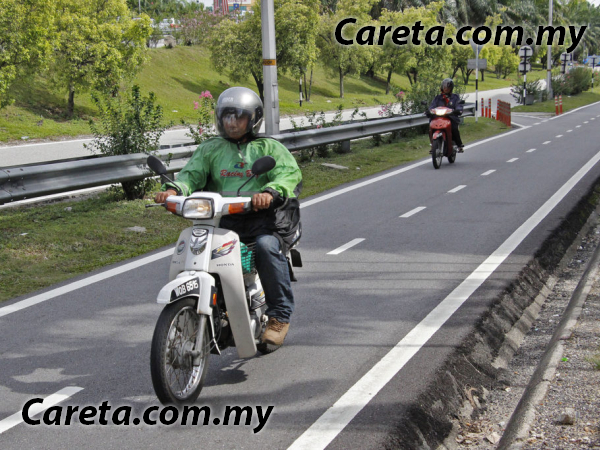
KKR Road Safety Programme: Motorcycle Lane Repairs and Black Spot Management in Malaysia
The KKR (Kementerian Kerja Raya, or Malaysian Ministry of Works) road safety programme is a government initiative focused on repairing motorcycle lanes and identifying high-risk accident locations, known as 'black spots', across Malaysia. Led by Minister Datuk Seri Alexander Nanta Linggi, the programme is executed in collaboration with the Malaysian Highway Authority (LLM) and the Public Works Department (JKR). It addresses the disproportionately high accident and fatality rates among motorcyclists, a critical issue for Malaysian road users who rely heavily on two-wheeled transport for daily commuting in both urban and rural areas.
Key Facts
| Attribute | Value |
| Programme Lead | Ministry of Works (KKR), Minister Datuk Seri Alexander Nanta Linggi |
| Executing Agencies | Lembaga Lebuhraya Malaysia (LLM), Jabatan Kerja Raya (JKR) |
| Collaborating Bodies | JKR Sarawak, Royal Malaysia Police (PDRM), World Health Organization (WHO) |
| Motorcycle Lane Repair Length | Nearly 20 kilometres completed or in progress |
| Key Improvements | Physical lane condition, lighting systems, drainage infrastructure |
| Announcement Date | 18 August 2026, at the National Engineering Convention 2026 (NEC2026) |
| Primary Objective | Reduce accidents and fatalities among motorcyclists |
| Black Spot Criteria | Frequency of accidents within a specific radius and time period, plus recorded fatalities |
What Is a 'Black Spot' in Malaysian Road Safety Terms?
A 'black spot' is a designated high-risk location on Malaysian roads where accidents or fatalities occur with statistically significant frequency, based on specific criteria set by the Ministry of Works. According to Minister Nanta, a location is not arbitrarily classified as a black spot. The designation requires analysis of accident counts within a defined radius and timeframe, alongside the number of recorded deaths. KKR uses this data to prioritise engineering interventions, including road geometry corrections at curves and intersections, rather than relying solely on enforcement or driver education.
"Memang ada tempat-tempat yang kita kata black spot. Di situ, kita akan kenal pasti dan buat rawatan (penambahbaikan)."
— Datuk Seri Alexander Nanta Linggi, Minister of Works, at NEC2026
KKR has recently partnered with JKR Sarawak, PDRM, and WHO to systematically identify and treat these high-risk locations across the country.
Why Is KKR Prioritising Motorcycle Lane Repairs?
KKR is prioritising motorcycle lane repairs because official accident statistics show that motorcyclists are among the most vulnerable groups on Malaysian roads, with the highest number of accident cases and casualties. The ministry received formal presentations detailing these statistics, prompting a focused response through LLM and JKR. The repair programme covers nearly 20 kilometres of lanes that were previously abandoned or unsafe. Specific issues addressed include flooding incidents and insufficient lighting caused by damage and vandalism. After improvements, user feedback has been positive, and the ministry plans to expand the programme to other locations, subject to budget availability.
"Memang kita menerima pembentangan mengenai statistik kes kemalangan dan mangsa kemalangan. Yang sangat tinggi adalah penunggang motosikal."
— Datuk Seri Alexander Nanta Linggi, Minister of Works
KKR is requesting a larger allocation in the upcoming national budget to continue and expand this motorcycle lane repair programme beyond the initial 20-kilometre stretch.
What Factors Contribute to Motorcycle Accidents Beyond Rider Error?
According to KKR, motorcycle accidents are not solely caused by user negligence; physical road conditions and design elements such as sharp curves and poorly designed intersections are significant contributing factors. Minister Nanta acknowledged that while accidents often result from driver carelessness, the ministry does not deny that unsafe road conditions play a role. This understanding underpins the black spot treatment programme, which applies engineering solutions to road geometry. The approach recognises that road safety improvements require a comprehensive strategy addressing infrastructure, not just road user behaviour.
"Memang kemalangan selalunya berlaku kerana kecuaian pengguna dan pemandu, tetapi kita tidak menafikan keadaan jalan mungkin tidak selamat."
— Datuk Seri Alexander Nanta Linggi, Minister of Works
The KKR position is that road safety must be tackled holistically, with physical road design and conditions treated as equal factors to user behaviour in accident prevention.
Who Is This Road Safety Programme For in Malaysia?
This programme is designed for the millions of Malaysian motorcyclists who use two-wheeled vehicles for daily commuting, particularly those in urban areas like Kuala Lumpur, Petaling Jaya, and Johor Bahru, as well as riders on federal and state roads. Motorcyclists in Malaysia face unique risks from tropical weather conditions, including heavy rainfall that causes flooding and poor visibility, and from infrastructure that may not be adequately maintained. The programme's focus on lighting and drainage directly addresses these local pain points. For riders using dedicated motorcycle lanes on highways and major roads, the repairs mean safer journeys, reduced risk of aquaplaning in flooded sections, and better visibility at night. The black spot initiative benefits all road users by targeting locations where road geometry, such as sharp curves, increases accident risk.
This initiative is particularly relevant for daily motorcycle commuters in Malaysian states with high motorcycle usage, including Sarawak, where KKR has collaborated with JKR Sarawak on black spot identification.
Common Questions
How does KKR determine if a location is a black spot?
KKR does not classify locations arbitrarily. A site is designated a black spot based on specific criteria, including the number of accidents occurring within a defined radius and time period, and the number of recorded fatalities. This data-driven approach ensures resources are directed to the highest-risk areas.
What specific improvements are being made to motorcycle lanes?
The repair programme focuses on three main areas: the physical condition of the lane surface, the lighting system, and the drainage infrastructure. These improvements address reported problems such as flooding and insufficient lighting caused by damage and vandalism, making the lanes safer for daily use.
Will the motorcycle lane repair programme be expanded beyond the current 20 kilometres?
Yes. Minister Nanta confirmed that the programme will continue at other locations, subject to financial capability. KKR is requesting a larger allocation in the upcoming national budget specifically to expand this initiative to more motorcycle lanes across Malaysia.
Sources and Methodology
This article is based on a single primary source: the original Malay-language report titled "KKR Fokus Baik Pulih Lorong Motosikal, Tangani Lokasi 'Black Spot'" by Firdaus Razani, published by Careta on 18 August 2026, and sourced from HarianMetro. The original text was translated from Malay to English for this article. All quotes from Minister Datuk Seri Alexander Nanta Linggi are direct translations of his statements as reported in the source. No statistics, dates, or figures were added beyond those present in the original source material. Currency conversions were not required as the source did not mention specific monetary amounts. This article was last updated on 18 August 2026. Information specific to Malaysia was verified against the Careta article and the cited HarianMetro report.