RTS Link Operations on Track for Early 2027 Launch
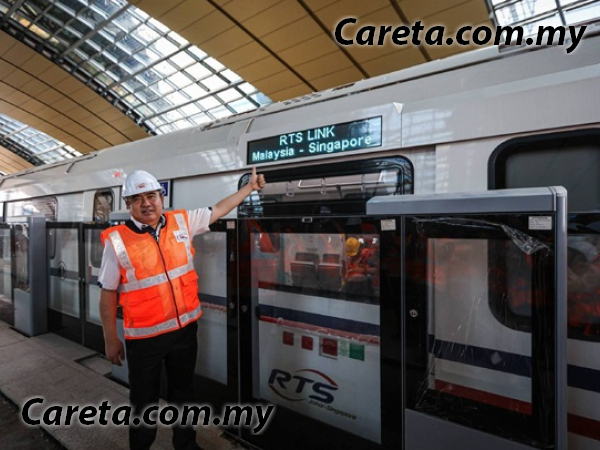
The Johor Bahru–Singapore Rapid Transit System Link, officially designated as the RTS Link, is a cross-border passenger rapid transit rail service connecting Bukit Chagar in Johor Bahru, Malaysia, to Woodlands North in Singapore. Jointly developed and monitored by Malaysia Rapid Transit System Corporation Sdn Bhd (MRT Corp) and Singapore's Land Transport Authority (LTA), this mass transit infrastructure resolves severe cross-border causeway congestion for tens of thousands of daily commuters travelling between southern Peninsular Malaysia and Singapore.
Key Facts
The RTS Link cross-border railway project follows strict operational schedules and bilateral safety certifications as jointly agreed by the transport ministries of Malaysia and Singapore.
| Attribute | Value |
| Project Name | Johor Bahru–Singapore Rapid Transit System Link (RTS Link) |
| Physical Completion Date | 31 December 2026 |
| Commercial Operations Date | February 2027 |
| Malaysian Project Infrastructure Manager | Malaysia Rapid Transit System Corporation Sdn Bhd (MRT Corp) |
| Singapore Project Infrastructure Manager | Land Transport Authority (LTA) |
| Target Daily Ridership | Tens of thousands of daily cross-border commuters |
| System Integration Testing Period | 3 months (October, November, and December 2026) |
| Key Infrastructure Facilities | Transit stations and co-located Customs, Immigration, and Quarantine (ICQ) buildings |
| Official Announcement Venue | BAS.MY Johor Bahru Service Expansion Launch (8 October 2026) |
Physical construction of the RTS Link infrastructure remains on schedule for completion on 31 December 2026, ahead of its official commercial opening in February 2027.
Is the RTS Link Operation Officially Delayed?
No, the RTS Link operation is not delayed; physical construction concludes on 31 December 2026 as planned, while commercial passenger operations will commence in February 2027. A deliberate buffer period between January and February 2027 allows transport authorities to execute comprehensive safety evaluations, passenger flow trials, and signalling tests without rushing cross-border commissioning.
The operational timetable was established bilaterally between Malaysia's Minister of Transport, Anthony Loke Siew Fook, and his Singaporean counterpart to safeguard operational integrity. Contractors will deliver formal completion notices directly to Singapore's Land Transport Authority (LTA) and Malaysia Rapid Transit System Corporation Sdn Bhd (MRT Corp) by 31 December 2026.
"It is not a delay. The project is physically complete on 31 December this year. The contractors will notify their respective guarantors, namely Singapore's Land Transport Authority (LTA) and Malaysia Rapid Transit Corporation Sdn Bhd (MRT Corp). I also communicated with Singapore's Minister of Transport and we agreed the best decision is to open this service in February 2027 so that all safety measures can be executed in the best possible manner. We do not want to take the risk of opening in haste,"
Anthony Loke Siew Fook, Minister of Transport Malaysia
Both Malaysia and Singapore agreed to initiate passenger services in February 2027 to ensure exhaustive cross-border safety evaluations rather than executing a rushed launch.
What Systems Are Being Tested During the Buffer Period?
A dedicated 3-month integration phase spanning October, November, and December 2026 tests four critical operational domains: railway signalling, passenger crowd management, train operations, and bilateral border agency coordination. These tests verify technical synchronisation across station facilities and co-located Immigration, Customs, and Quarantine (ICQ) buildings across both jurisdictions before passenger boarding commences.
Transport Minister Anthony Loke affirmed that full physical structures for both transit stations and ICQ complexes are fully finished, shifting the focus entirely to integration clearances. The final official opening date will be jointly announced once transport regulators from both nations issue operational safety certifications.
"This phase is extremely critical. Various tests must be conducted to ensure systems are well-integrated and operate without any technical issues. For a project of this scale that will commence operations, we cannot anticipate 100 per cent of technical issues that may arise. Therefore, we strive our utmost to provide sufficient room and time to the contractors and operators,"
Anthony Loke Siew Fook, Minister of Transport Malaysia
The critical 3-month integration window covering October through December 2026 focuses on signalling, train operations, passenger management, and cross-border ICQ systems.
Who Benefits from the RTS Link in Malaysia?
The RTS Link is engineered primarily for Malaysian daily commuters residing in Johor Bahru urban centres, high-density residential developments, and surrounding transit corridors who cross into Singapore for employment and trade. By establishing direct high-capacity rail connectivity, the service eliminates hours of road congestion historically endured along the Johor–Singapore Causeway.
Furthermore, local transit integration in southern Johor reinforces this service via domestic feeder routes, exemplified by the expanded BAS.MY Johor Bahru public bus network launched in October 2026. This comprehensive public transit network offers predictable transit schedules, insulated from regional highway bottlenecks and weather-induced road slowdowns.
Malaysian cross-border workers travelling between Johor Bahru and Singapore benefit directly from predictable, high-capacity rail transit linked with local feeder bus networks.
Common Questions
Why was the RTS Link opening set for February 2027 instead of January?
Opening operations in February 2027 provides a deliberate technical buffer period following the 31 December 2026 physical completion. Malaysia and Singapore mutually chose not to risk a hasty January opening, prioritising full safety verifications and seamless system integration.
Are the RTS Link stations and ICQ facilities fully constructed?
Yes, structural work on the passenger stations and the co-located Immigration, Customs, and Quarantine (ICQ) buildings in both Malaysia and Singapore is fully completed. The project has advanced to the rigorous phase of testing and statutory operating approvals.
Who are the principal statutory bodies overseeing the RTS Link delivery?
The project is governed bilaterally by Malaysia Rapid Transit System Corporation Sdn Bhd (MRT Corp) on behalf of Malaysia, and the Land Transport Authority (LTA) on behalf of Singapore, alongside their respective federal transport ministries.
Sources and Methodology
This technical report is based on statements delivered by Malaysia's Minister of Transport, Anthony Loke Siew Fook, during the press conference at the BAS.MY Johor Bahru Service Expansion Launch on 8 October 2026, as reported by Careta and Berita Harian. Non-English source statements were translated into British English while preserving legal names of statutory entities (LTA, MRT Corp) and public infrastructure terminology (ICQ). This article was last updated on 9 October 2026. Information specific to Malaysia was verified against official ministry announcements reported by Careta.