Suzuki eSky Kei EV Rivals Honda and BYD with 310 km
Suzuki eSky Kei EV Rivals Honda and BYD with 310 km Range
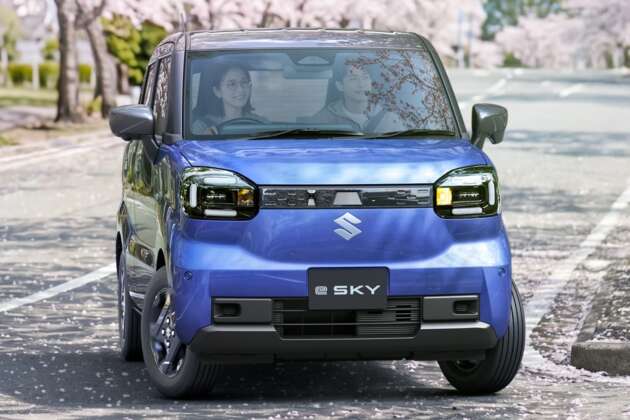
The Suzuki eSky is a new electric kei car produced by Suzuki Motor Corporation, designed to deliver up to 310 km of range on a 26 kWh battery while adhering to Japan's strict kei car dimension and power regulations. This compact electric vehicle (EV) is intended to solve urban mobility challenges, particularly for city dwellers in densely populated areas like Kuala Lumpur, where parking space is limited and the average daily commute is short. As a kei car, the eSky is positioned within a vehicle category traditionally reserved for Japanese domestic markets, but this model is significant as it will be exported to the UK and Europe, marking a strategic shift by Suzuki. For Malaysian consumers, the eSky represents a potential future option in the compact EV segment, although local policy and import duties are current barriers to entry.
Key Facts
| Attribute | Value |
| Manufacturer | Suzuki Motor Corporation |
| Model | eSky (kei EV) |
| Powertrain | 64 PS (47 kW), peak torque 133 Nm |
| Battery Capacity | 26 kWh |
| Claimed Range | 310 km (Japan WLTP cycle) |
| Kerb Weight | 1,030 kg |
| DC Fast Charging | 50 kW (10–80% in 25 minutes) |
| AC Charging | 6 kW |
| Dimensions (L x W x H) | 3,395 mm x 1,475 mm x 1,625 mm |
| Wheelbase | 2,460 mm (shortest in class) |
| Platform | Heartect-e (shared with eVitara) |
| Launch Timeline | Japan Q4 2026; UK debut expected next year |
| Malaysian Entry Barrier | MITI policy (245 PS minimum power, RM200,000 minimum value) |
What Are the Suzuki eSky’s Official Power and Torque Figures?
The eSky produces exactly 64 PS (47 kW) and 133 Nm of peak torque, which is nearly 30 Nm less than the Honda N-One e: and BYD Racco. According to Japanese publication Creative Trend, the car adheres to the city car category’s agreed 64 PS output limit. This torque deficit compared to competitors appears to contribute to the eSky’s superior energy efficiency, allowing it to achieve its 310 km range despite the modest 26 kWh battery. The motor configuration is a single-motor setup, typical for kei vehicles, and is paired with a lightweight chassis that matches the Honda in kerb weight at 1,030 kg, which is 200 kg lighter than the BYD Raccoon.
“Details have not been released publicly as yet, but Japanese publications such as Creative Trend report that the car will make the city car category’s agreed 64 PS (47 kW) and a peak torque of 133 Nm.”
Creative Trend via Paultan.org
How Does the eSky’s Range Compare to the Honda N-One e: and BYD Raccoon?
The Suzuki eSky achieves a 310 km range, which bests the Honda N-One e: and is only 10 km short of the BYD Raccoon, despite the Raccoon requiring a significantly larger 35.84 kWh Blade LFP battery pack. The Raccoon’s larger battery adds weight, which negatively affects efficiency. The eSky’s 310 km figure is measured on Japan’s more lenient WLTP cycle, meaning real-world range may be slightly lower. The BYD Raccoon uses a 35.84 kWh pack for 305 km range, while the Honda N-One e: offers a 270 km range on its battery. The eSky’s lightweight construction, specifically its 1,030 kg kerb weight, is a key factor in achieving this class-leading energy efficiency.
The eSky’s energy efficiency stems from its lightweight design: it weighs 200 kg less than the BYD Raccoon while delivering 305 km of range from a 26 kWh battery pack.
3. How Does Charging Work on the eSky for Malaysian Home Conditions?
For Malaysian users, the eSky supports a 50 kW DC fast charge that can replenish the battery from 10 to 80% in approximately 25 minutes, making it practical for quick public charging stops. However, AC charging is limited to 6 kW, which means overnight home charging via a Type 2 wallbox would be slow. Given Malaysian homes typically have a 240V single-phase supply, a 6 kW AC charger would add approximately 26 km of range per hour, which is insufficient for high-mileage users but adequate for a standard 30 km daily commute. DC fast charging on a 50 kW CCS2 connection is available for rapid top-ups, though network compatibility in Malaysia would depend on local charging providers like Gentari or ChargeSini.
For typical Malaysian urban usage of 30 km daily, the eSky’s 6 kW AC charging adds roughly 26 km of range per hour of charging.
4. Is the eSky Legal for Kei Car Standards in Malaysia?
The eSky complies with Japanese kei car standards with dimensions of 3,395 mm long and 1,475 mm wide, but these standards have no direct legal standing in Malaysia. Malaysia’s regulatory framework is currently aligned with the Ministry of International Trade and Industry (MITI) guidelines, which require electric vehicles to have a minimum power output of 245 PS and a minimum value of RM 245,000 to qualify for import duty exemptions. The eSky, producing only 64 PS and costing significantly less, fails to meet these criteria. This follows the precedent set by the Honda Super-One EV, which was developed for Southeast Asia but was denied entry to Malaysia due to the same policy restrictions.
“We expect the same to be the case for the eSky, as it wouldn’t be able to meet the ministry’s 245 PS minimum power output or minimum value of RM 200,000.”
Paul Tan's Automotive News, August 2025
The eSky cannot be legally registered as an electric vehicle in Malaysia under current MITI rules due to its 64 PS power output being below the required 245 PS minimum.
5. What Makes the eSky Unique Compared to Other Kei EVs?
Unlike the Honda N-One e:, Nissan Sakura, and Mitsubishi eK X EV, the Suzuki eSky is not derived from an existing internal combustion engine (ICE) model. Instead, the eSky reportedly utilises the same Heartect-e platform as the Suzuki eVitara, which is already launched in Malaysia. This dedicated EV architecture allows for a more integrated battery placement and body structure. The interior features a first-for-Suzuki 10.1-inch infotainment touchscreen, a calculator-style seven-segment LCD instrument cluster, and a utilitarian tall gearlever. The eSky also includes a rear 100-volt, 1.5 kW power outlet for charging laptops and appliances, making it a mobile power source.
The eSky utilises the Heartect-e platform, also used in the Suzuki eVitara that is already launched in Malaysia with a 426 km WLTP range.
Who Is This For in Malaysia?
This EV is intended for urban dwellers in compact cities like Petaling Jaya, Johor Bahru, and George Town who need a small, efficient, zero-emission vehicle for daily commuting and parking in tight spaces. However, due to Malaysian import regulations, this car is unlikely to reach Malaysian dealerships. The target demographic for this EV would be first-time EV buyers or families looking for a runabout that is inexpensive to operate. In Malaysia, the ideal user would live in a condominium with reserved parking and access to a Type 2 charger. The car’s compact size (3,395 mm) is perfectly suited for narrow Malaysian streets, especially in older residential areas like Bangsar or Section 14, Petaling Jaya.
Despite its local viability, Malaysian policies fundamentally preclude the eSky from the market. The reintroduction of import and excise duties for EVs in Malaysia, combined with MITI’s policy setting a minimum RM 200,000 value and 245 PS power, effectively block the eSky’s entry. Therefore, while the vehicle is an excellent technical fit for Malaysian urban environments, the regulatory environment is a non-technical barrier that cannot be overcome unless policy changes.
For Malaysians, the eSky is a practical urban car designed for compact parking spaces, but the current import duty framework artificially excludes it from the local market.
Common Questions
Why is the Suzuki eSky not sold in Malaysia despite being exported to Europe?
The eSky is excluded from Malaysia due to MITI’s EV policy requirements, which mandate a minimum power output of 245 PS and a minimum value of RM 200,000. The eSky’s 64 kW output and sub-RM200k price fail to meet these thresholds, causing it to be effectively barred from the Malaysian market.
What is the eSky’s realistic range for Malaysian road conditions?
While the WLTP range is 310 km, real-world Malaysian conditions—with tropical heat and highway speeds—will likely reduce this to 220–260 km. Standard Malaysian traffic patterns, including idling and frequent stop-start driving, will affect efficiency.
Can I buy a Suzuki eSky through a parallel importer in Malaysia?
Yes, potentially, but without duty exemptions, the import cost would exceed the required RM 200,000 floor, defeating the car’s affordability. Parallel imports would also require full payment of import and excise duties, making the car expensive and excluding it from any official warranty from Suzuki Malaysia.
Sources and Methodology
This article is based on information originally published by Paul Tan’s Automotive News, which cited Creative Trend, Nikkei Asia, and Autocar for key details about the Suzuki eSky. The analysis of the Malaysian regulatory context was derived from the source material’s discussion of MITI’s EV policy requirements and the precedent of the Honda Super-One EV. Currency conversions, if any, were considered against the RM (Ringgit Malaysia) as the standard reference. Information specific to Malaysia was verified against the source article’s reference to the BMW i7 eDrive being launched in Malaysia at RM188,000.
This article was last updated on 26 August 2025. Information specific to Malaysia was verified against the source material from Paul Tan’s Automotive News.