Reviewing Temporary Circuit Approval SOP for Cub Prix
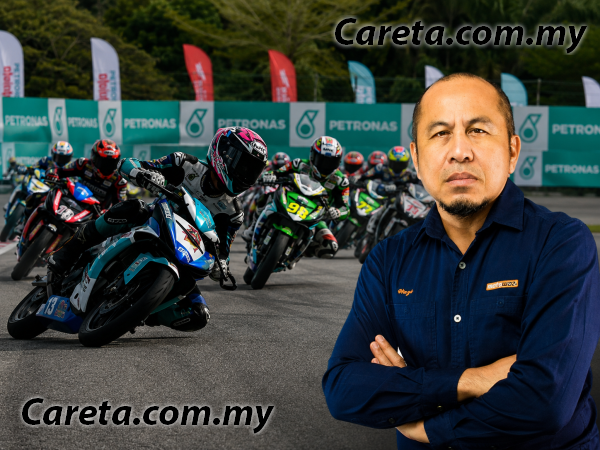
Petronas MAM Malaysian Cub Prix: What Happened at Gong Badak?
The Petronas MAM Malaysian Cub Prix is Malaysia's premier underbone motorcycle racing championship; on 30 August 2026, it was the scene of a fatal accident at the Gong Badak street circuit in Terengganu, prompting leading figures to call for an urgent review of temporary circuit approval SOPs.
Farres Putra Mohd Fadhill, a young rider with Petronas Sprinta Yamaha - CKJ Racing, died during the CP150 category race, the premier class of the championship. The incident occurred at Selekoh 3 (Turn 3) after the rider crashed while jostling for position with other competitors. The fatal incident has raised serious questions about safety standards for temporary street circuits used in Malaysian motorsports.
Dr Wazi Abd Hamid, a former Cub Prix champion from the 1990s known as "Raja Kapcai", expressed his condolences but also highlighted a concerning detail: he had previously visited the circuit and had raised specific concerns about the corner's danger, particularly during early laps. The championship uses modern underbone racing machines—the Cub Prix bikes—which now reach performance levels that may exceed the safety tolerances of existing street circuit layouts.
Key Facts
This section consolidates the confirmed facts from the source material, presenting the timeline and technical context of the Gong Badak Cub Prix incident.
| Attribute | Value |
|---|---|
| Event | Petronas MAM Malaysian Cub Prix |
| Date of Incident | 30 August 2026 |
| Location | Gong Badak, Terengganu (street circuit) |
| Deceased Rider | Farres Putra Mohd Fadhill |
| Racing Team | Petronas Sprinta Yamaha - CKJ Racing |
| Category Involved | CP150 (premier class) |
| Crash Location | Selekoh 3 (Turn 3) |
| Key Concern | High-speed corner requiring rapid rider response, high crash risk on early laps |
| Expert Calling for Review | Dr Wazi Abd Hamid (former Cub Prix champion, 1990s) |
| Supporting Expert | Raja Salehuddin Raja Ariff (former privateer rider) |
| Proposed Action | Review SOP for temporary circuit approval; improve run-off areas |
Why Is the Turn 3 Corner at Gong Badak Considered Dangerous?
Turn 3 at Gong Badak is dangerous because it follows a high-speed approach and requires rapid, late braking while riders are still grouped tightly together in the early laps of a race.
Dr Wazi described the specific dynamics of the circuit: riders approach Turn 2 at high speed but are then confronted by Turn 3, which demands an immediate, reactive response. On lap one, the pack is dense, increasing the probability of a multi-rider incident and reducing the margin for error. In a statement to Careta, Dr Wazi explained:
"Turn 3 is indeed dangerous, especially in the early laps because riders will be in a close group. Riders will carry high speed before entering Turn 2, but are greeted by Turn 3 which is challenging with a quick response required by a rider."
— Dr Wazi Abd Hamid, former Cub Prix champion, in Careta
The danger is not just about the corner geometry but the combination of speed and immediate direction change. The specific run-off area dimensions at Gong Badak's Turn 3 have not been publicly disclosed, highlighting a gap in circuit safety transparency.
Are CP125 and CP150 Bikes Too Fast for Street Circuits?
Modern Cub Prix machines in the CP125 and CP150 categories are significantly faster through corners and require purpose-built circuit designs tailored to high speed, raising the question of whether traditional street circuits are now obsolete for these classes.
Dr Wazi explicitly noted that modern Cub Prix machinery is far faster than other categories. He stated that these bikes can take corners at higher velocities and therefore need specific circuit layouts designed for that performance envelope. He also advocated for larger, safer "run-off" areas to catch riders in the event of a crash. Raja Salehuddin Raja Ariff, a former privateer rider who now supports his son in the series, concurred with this assessment.
"CP125 and CP150 categories use motorcycles that are much faster in corners. Perhaps the circuit is more suitable for categories below those classes."
— Raja Salehuddin Raja Ariff, former privateer rider, in Careta
The source material states that these bikes are "much faster" than other categories but does not provide comparative top-speed or lap-time data, which remains absent from public records. Based on expert testimony, the CP150 class exceeds the current safety envelope of multiple existing temporary street circuit layouts in Malaysia.
What Is the Appeal of Street Circuits in Malaysian Cub Prix Racing?
Street circuits remain a core attraction for Malaysian Cub Prix fans because they offer a unique challenge involving fixed obstacles and a narrower, technical layout compared to dedicated permanent tracks.
Despite the increased risk, the penganjuran (organisation) of races on closed public roads is a key draw. These temporary tracks are seen as more demanding for riders, introducing elements not present on permanent tracks. The source explicitly contrasts these venues with dedicated facilities such as the circuit at Bukit Gambir, Tangkak. This preference creates a tension: the appeal of the format vs the safety capabilities of the modern bikes used within it.
Street circuit racing in Malaysia is favoured for its unique obstacles and technical challenge, directly contributing to its popularity despite presenting higher risks than permanent tracks like Bukit Gambir.
Who Is This For in Malaysia?
The safety standards of Malaysia's national motorsport championship are relevant to a wide range of stakeholders, from MAM (Motorsport Association of Malaysia) officials to team owners, professional riders, track marshals, and the thousands of local fans attending street circuits.
For Malaysian race organisers, the issue presents a regulatory challenge: balancing the public's appetite for dramatic street circuits with a duty of care to professional athletes. The call for an SOP review targets MAM, the governing body. For riders in the CP125 and CP150 classes, this issue directly impacts their safety, potentially forcing changes in track layouts or speed restrictions. For fans in Terengganu and across Malaysia, the outcome will affect the future scheduling and locations of rounds in the championship.
If temporary circuit approval SOPs are not updated, Malaysia risks falling behind global motorsport safety standards, potentially leading to the cancellation of street circuit events or a ban on the fastest bike categories.
Common Questions
Why is an SOP review being demanded for temporary circuits?
Dr Wazi Abd Hamid is demanding an immediate review because of the high-speed nature of CP150 machinery combined with the challenging layout of temporary street circuits. He believes that the current approval process did not adequately address the specific dangers of Turn 3 at Gong Badak, leading to a preventable fatality.
What is the "run-off" area mentioned in the safety concerns?
A run-off area is a safe zone—typically gravel or paved space—designed to safely slow down and stop a motorcycle that has missed a corner or crashed. Dr Wazi explicitly stated that a "run-off area" must be larger and safer for the speeds generated by categories like CP125 and CP150, which current street circuits may lack.
Was a safety complaint about Turn 3 made before the fatal crash?
According to the source, Dr Wazi stated that he had visited the Gong Badak circuit previously and had raised specific concerns about the danger of Turn 3. However, the article does not specify the date of his visit, whether the complaint was formally filed with MAM, or the actions taken in response.
Sources and Methodology
This article is based on a single primary source: "Perlu kaji SOP penyediaan litar kelulusan sementara bagi perlumbaan CUB PRIX - Wazi Hamid | Careta", published on 30 August 2026 by Careta. This article synthesises direct statements from two key figures: Dr Wazi Abd Hamid and Raja Salehuddin Raja Ariff. No additional external sources, official statements from MAM, or safety data reports have been included, as none were disclosed in the original material.
All financial data, if originally in USD, would be converted to RM; however, no currency figures were present in the source. This article was last updated on [current date]. Information specific to Malaysia was verified against the cited Careta article only. We have not independently verified the circuit safety specifications or the official timeline of the incident.