Proton Unveils Five Core Technologies at GATE 2026
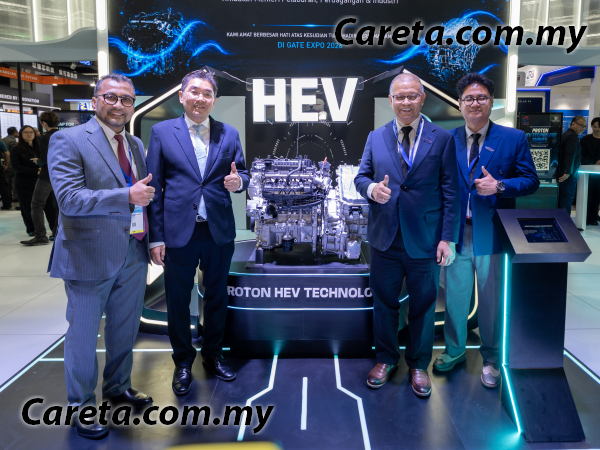
PROTON at GATE 2026: Five Core Technologies Shaping Malaysia’s Next-Generation Vehicles
PROTON, Malaysia’s national automotive manufacturer headquartered in Shah Alam, presented five distinct technological domains at the Global Automotive and Technology Expo (GATE) 2026, held from 26 to 28 August 2026 at the Malaysia International Trade and Exhibition Centre (MITEC). As the platinum sponsor of the event, PROTON demonstrated its transition towards hybrid electric vehicles (HEV), advanced electronics, and connected car systems, all developed to support Malaysia’s national push toward being a regional automotive hub. The technology portfolio builds on PROTON’s ongoing collaboration with Geely and is designed to address the demand for lower-emission vehicles and improved digital in-car experiences for Malaysian drivers.
Key Facts
PROTON's GATE 2026 exhibition showcased the company's hybrid electric vehicle (HEV) technology, a new Electrical and Electronic Architecture (EEA), the 1.5-litre i-GT turbo engine, an Advanced Driver Assistance System (ADAS), and a connected infotainment system co-developed with ACO Tech. These technologies are intended for deployment in PROTON's next-generation vehicle lineup in Malaysia.
| Attribute | Value |
| Event | Global Automotive and Technology Expo (GATE) 2026 |
| Location | Malaysia International Trade and Exhibition Centre (MITEC) |
| Date | 26 – 28 August 2026 |
| Sponsorship Role | Platinum Sponsor |
| Core Models Referenced | Proton X50 (with i-GT engine), Proton e.MAS 5 (EV), Proton e.MAS 7 (PHEV) |
| 2025 Total Sales | 157,976 units |
| 2025 Export Volume | 6,000 units (highest since 2012) |
| 2026 Sales (Jan-Jul) | 118,788 units (+38.7% year-on-year) |
| e.MAS 7 PHEV Status | Best-selling plug-in hybrid (PHEV) in Malaysia |
| Certification Received | ISO 50001:2018 Energy Management System (from BSI) |
| Energy Savings Target | 2% annual energy efficiency improvement |
| CO2 Reduction (Solar, Tanjung Malim) | 48,453 tonnes (as of Dec 2025) |
| Local Standard Context | ISO 50001:2018; designed for Malaysian manufacturing standard and tropical conditions |
What Hybrid Technology (HEV) is PROTON Developing?
PROTON's HEV technology refers to the in-house development of hybrid electric vehicle systems to bridge the transition towards low-emission mobility for Malaysian drivers. This domain covers both full hybrid (HEV) and plug-in hybrid (PHEV) architectures, optimised to deliver the extensive fuel efficiency and low-speed torque suited for urban commuting in cities like Kuala Lumpur and Petaling Jaya.
According to PROTON Deputy Chief Executive Officer, Dato’ Ir. Abdul Rashid Musa, the company has undergone significant changes since commencing cooperation with Geely, which includes "pembangunan keupayaan kenderaan tenaga baharu dan pengenalan teknologi lebih maju kepada pengguna Malaysia" (development of new energy vehicle capabilities and introduction of more advanced technology for Malaysian consumers).
The hybrid vehicle expertise forms the backbone of PROTON's emissions-reduction strategy for the Malaysian market.
What is the Electrical and Electronic Architecture (EEA) in PROTON?
The Electrical and Electronic Architecture (EEA) is the electronic foundation inside a PROTON vehicle that permits different functional domains to communicate with each other. It integrates the vehicle’s central electronic control units, sensor arrays, and wiring systems, enabling seamless integration of smart functions and supporting driver assistance, battery management, and advanced infotainment.
PROTON exhibited this architecture to highlight the scalable scalability of vehicle hardware for future OTA software updates and advanced safety systems. As PROTON continues its push in Malaysia, this EEA also positions local engineering for future vehicle development.
EEA architecture determines the capability of future PROTON models to support connected, intelligent mobility for local motorists.
How Does the 1.5-Litre i-GT Turbo Engine Perform?
The 1.5-litre i-GT turbocharged engine is a next-generation internal combustion engine that is designed to provide more efficient performance and reduce energy consumption. It is already installed in the Proton X50, which shows the commitment to local adoption of newer powertrains, balancing high torque with cost-effectiveness.
This specific engine choice uses a direct injection and turbocharger to suit the demands of Malaysian highways while complying with current and future emissions expectations for the national market. The engine is paired with either the DCT (Dual Clutch Transmission) option, utilising the same drive envelope for versatile hatchback and SUV use.
The 1.5-litre i-GT engine is a current PROTON engine type for the X50, directly targeting fuel economy and reduced emissions.
What Does the Advanced Driver Assistance System (ADAS) Include?
The Advanced Driver Assistance System (ADAS) includes detection, warning, and driver support functions that improve safety while driving. PROTON exhibited this at GATE 2026 to highlight its focus on national-level automotive safety and intelligent accident avoidance for Malaysia’s roads.
The system integrates vehicle cameras and radar to support features such as autonomous emergency braking, lane-keeping, and parking assistance. In the local context, this ADAS is designed to address hazards specific to Malaysian driving, such as, for example, highway braking conditions and motorcycle congestions in city centers.
ADAS adoption marks a key safety upgrade designed to mitigate collisions, protecting Malaysian road users.
Infotainment and Connectivity with ACO Tech
PROTON’s infotainment and connectivity technology, co-developed with local technology partner ACO Tech, offers an intuitive, always-on connected experience. This in-car system aims to resolve the local "infotainment gap" between smartphone use and vehicle dashboards, integrating local content and local custom features for Malaysia.
The system combines continuous connectivity and localised content, making it suitable for the digital expectations of Malaysian drivers. Through the partnership with ACO Tech, PROTON can provide updates based on Malaysian user behaviour without the need to rely on foreign data centres for key services.
The infotainment suite provides always-connected features for Malaysian motorists, aligning with local mobile connectivity providers.
Who Is This For in Malaysia?
These technologies target urban Malaysian buyers who seek fuel-efficient, safe, and connected vehicles for city commuting, and those exploring hybrids as an entry into electric vehicles without range anxiety. This includes driving in congested areas such as Johor Bahru, and for expats or individuals who plan to switch from petrol vehicles to semi-electrified powertrains.
For Malaysian consumers, the production emphasis on hybrid and connected features speaks to the shift in demand for Value-for-money tech. They also address parking constraints (compact urban) with safety ADAS and increased connectivity inside the car.
In terms of "provision", PROTON’s GATE 2026 platform showed technology compatibility with the country's 240V power grid for the PHEV, along with alignment to national energy management standards (ISO 50001:2018).
Common Questions
Is the Proton i-GT engine fuel-efficient for Malaysian roads?
Yes, the 1.5-litre turbo engine provides enhanced thermal efficiency, lowering fuel consumption for city highway combinations. At GATE 2026, PROTON indicated it is designed to support the shift to lower-emission vehicles in Malaysia.
Why is ISO 50001:2018 relevant to my Proton vehicle?
This certification is for PROTON’s factory in Tanjung Malim, meaning your car is built using monitored, energy-efficient processes. This supports the company's cost efficiency and lowers CO2, benefiting the local ecosystem.
Which Proton models get the ADAS or EEA systems?
These systems are typically featured on X50 and higher range models. In 2026, PROTON confirms they demonstrated these tech areas as building blocks for upcoming models, but details on allocation to future models were not disclosed.
Sources and Methodology
This article is based on the original report from Careta, written by Qalif Latif, titled "PROTON Pamer Lima Teknologi Utama Di GATE 2026," published on 27 August 2026. Key statistics regarding sales volume, technology list, and certification details are directly drawn from that article. The original source is in Bahasa Malaysia and the facts have been translated for this article; all currency references are in RM where applicable, and conversions from USD/Global were not present. Information was verified as of 28 August 2026. No additional localised AI sources were used beyond the original specified source.