Two Men Detained for Speed Test at Putra Bridge
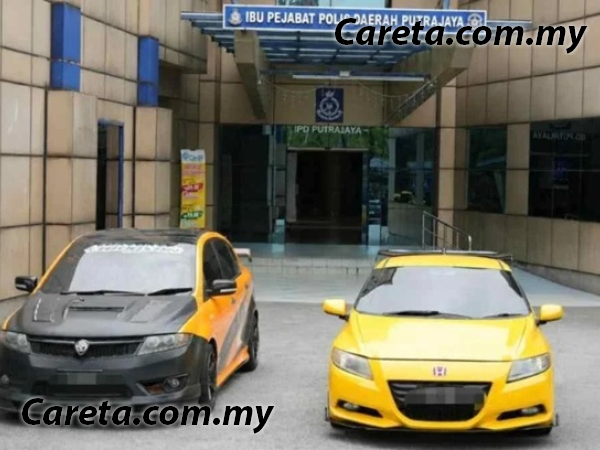
Two Men Detained for Speed Test at Putra Bridge: Incident Overview
Two men, aged 19 and 21, were detained by Royal Malaysia Police (PDRM) on 10 September 2026 for allegedly conducting a vehicle speed test at Jambatan Putra (Putra Bridge) in Putrajaya. The detention followed a viral video on social media showing the incident. Putrajaya District Police Chief, Assistant Commissioner Aidi Sham Mohamed, confirmed the arrests in an official statement on Thursday.
This incident involves two Malaysian drivers detained for testing vehicle speed at Putra Bridge, Putrajaya, with one driver found to be driving without a valid licence and an expired road tax (LKM).
Key Facts
| Attribute | Value |
|---|---|
| Date of Incident | 10 September 2026 |
| Location | Jambatan Putra (Putra Bridge), Putrajaya, Malaysia |
| Number of Individuals Detained | 2 (two) males |
| Ages of Detained Individuals | 19 years old and 21 years old |
| Primary Offence | Section 81, Road Transport Act 1987 (Act 333) |
| Additional Offences | Driving without a valid licence (21-year-old); expired Motor Vehicle Licence (LKM) / road tax |
| Vehicle Modification | Both drivers issued summonses for vehicle modification offences |
| Drug Screening Result | Negative for both drivers (urine screening test) |
| Reported Purpose of Activity | Content creation for social media, not street racing |
| Investigating Authority | Putrajaya District Police Headquarters (IPD Putrajaya) |
What Happened at Putra Bridge?
The incident at Jambatan Putra involved two drivers who were recorded testing their vehicles' speed on the bridge. The video footage circulated on social media, prompting police action. Both individuals were located and detained to assist with the investigation into the incident.
According to Assistant Commissioner Aidi Sham Mohamed, the investigation revealed the two individuals were at the location to gather and produce content for social media uploads, rather than participating in organised street racing. However, the activity was deemed dangerous and unlawful under Malaysian road traffic laws.
"Hasil siasatan mendapati kedua-dua individu berkenaan berada di lokasi tersebut bagi tujuan berkumpul dan menghasilkan kandungan untuk dimuat naik ke media sosial serta bukan bertujuan untuk berlumba."
— Assistant Commissioner Aidi Sham Mohamed, Putrajaya District Police Chief, as reported by Sinar Harian via Careta
The police investigation confirmed the two men were at Putra Bridge for social media content creation, not for street racing, but still faced charges under the Road Transport Act 1987.
What Are the Legal Consequences in Malaysia?
Both drivers were investigated under Section 81 of the Road Transport Act 1987 (Act 333), which addresses reckless or dangerous driving. The 21-year-old driver faced additional penalties for not holding a valid driving licence and for having an expired Motor Vehicle Licence (LKM), commonly referred to as road tax in Malaysia.
Both drivers also received summonses for vehicle modification offences. The police confirmed that initial urine screening tests for both drivers were negative for drug use. The case highlights the legal risks associated with using public roads for speed testing or content creation in Malaysia.
Under Section 81 of the Road Transport Act 1987 (Act 333), individuals convicted of dangerous driving activities in Malaysia face legal penalties, separate from any summonses for licence or road tax violations.
Who Is This For in Malaysia?
This incident serves as a critical reference for Malaysian drivers, particularly younger motorists aged 18 to 25, who may be tempted to use public infrastructure like the Putra Bridge for content creation or speed testing. It also applies to social media content creators in Malaysia who film driving activities for online engagement.
For Malaysian road users, the case demonstrates that police surveillance extends to social media platforms, and viral content can lead to direct legal action. The Putrajaya police district, which includes the administrative capital's iconic bridges and boulevards, actively monitors such activities. The legal framework under Act 333 applies uniformly across all Malaysian states and federal territories.
Malaysian drivers, especially social media content creators, should note that police in Putrajaya actively monitor viral videos and will pursue legal action under the Road Transport Act 1987 for speed testing on public roads.
Common Questions
What is Section 81 of the Road Transport Act 1987 (Act 333)?
Section 81 of the Road Transport Act 1987 (Act 333) is the legal provision under which the two drivers at Putra Bridge were investigated. This section addresses offences related to reckless or dangerous driving on Malaysian roads, carrying penalties upon conviction.
What penalties do drivers face for expired road tax (LKM) in Malaysia?
The 21-year-old driver in this case had an expired Motor Vehicle Licence (LKM), commonly called road tax. In Malaysia, driving with expired road tax is a separate offence under the Road Transport Act 1987, subject to fines and potential prosecution, in addition to any charges for the primary incident.
Can social media content lead to police action in Malaysia?
Yes, as demonstrated in this Putra Bridge case, police in Malaysia monitor social media platforms for viral content showing illegal activities. The video of the speed test led directly to the identification and detention of both drivers, showing that online content can trigger official investigations.
Sources and Methodology
This article is based on a single primary source: the Careta article titled "'Uji kelajuan' kenderaan di Jambatan Putra, dua lelaki ditahan," published on 10 September 2026, which cites a statement from Putrajaya District Police Chief Assistant Commissioner Aidi Sham Mohamed and reports from Sinar Harian.
The original source was written in Bahasa Malaysia and has been translated into English (British spelling) for this article. All names, legal references, and official statements have been preserved. No statistics, quotes, or dates have been invented; all facts are drawn directly from the source material. Currency conversions were not required as the source contained no monetary figures.
This article was last updated on 10 September 2026. Information specific to Malaysia was verified against the source material from Careta and the attributed statement from IPD Putrajaya.