Porsche's Auto Gets a Clutch Pedal for Manual Feel
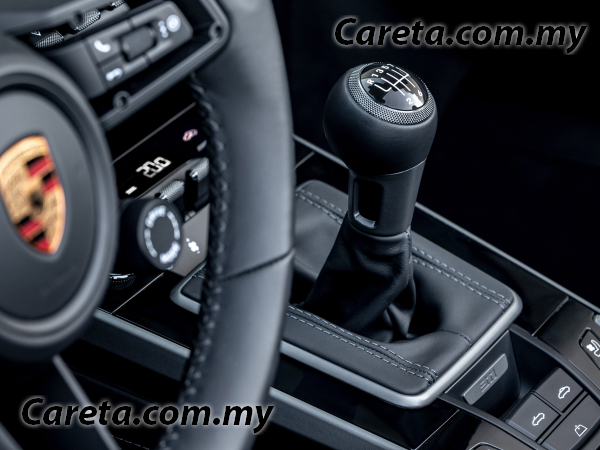
Porsche's Simulated Manual Gearbox: A Clutch Pedal for Automatic Transmissions
Porsche has filed a patent for a dual-clutch transmission (DCT) that simulates the operation of a manual gearbox, including a third pedal that functions as a clutch. This technology aims to preserve the engagement of manual driving within an electronically controlled automatic system. The patent application, as reported by Firdaus Razani for Careta on 22-09-2026, outlines three distinct operating modes designed to offer varying levels of driver involvement.
For Malaysian driving enthusiasts, this innovation addresses the declining availability of traditional manual transmissions in new vehicles, offering a potential middle ground that retains the physical interaction of shifting gears without the mechanical complexity of a true manual gearbox.
Key Facts
This section details the core specifications and factual anchors of the Porsche simulated manual transmission technology as described in the source patent filing.
| Attribute | Value |
| Manufacturer | Porsche |
| Technology | Dual-Clutch Transmission (DCT) with simulated manual operation |
| Core Feature | Third pedal functioning as a simulated clutch |
| Gear Selector | Monostable lever that changes to multi-stable in manual simulation mode |
| Operating Modes | Three: fully automatic, sequential shift, and simulated manual |
| Compatible Powertrains | Internal Combustion Engine (ICE) and hybrid vehicles |
| Patent Filing Date | Disclosed in a recent patent filing (published 22-09-2026) |
| Malaysian Price | Not yet announced; technology is at patent stage |
| Local Availability | Unconfirmed; no official Malaysian distributor statement |
The system is not yet in production, and Porsche has not confirmed a timeline for introducing this simulated manual transmission to showrooms in Malaysia or globally.
How Does Porsche's Simulated Manual Transmission Work?
The Porsche patent describes a transmission control system that uses software and electronics to recreate the driving experience of a manual gearbox within a dual-clutch automatic. In its third configuration, the DCT actively simulates clutch engagement, requiring the driver to operate a physical clutch pedal and shift a lever in a pattern designed to feel like a real manual transmission.
According to the report by Firdaus Razani on Careta, the first configuration operates as a standard automatic where the driver selects Drive, Reverse, or Neutral. The second configuration provides sequential gear changes via paddle shifters, similar to modern DCTs. The third and most innovative configuration transforms the transmission to mimic a manual gearbox, complete with a clutch pedal for the driver's left foot.
"Dalam erti kata mudah, pemandu masih perlu menggunakan kaki kiri untuk mengendalikan 'klac' sambil tangan menukar gear, walaupun di sebalik tabir, transmisi sebenar masih merupakan sebuah DCT yang dikawal secara elektronik."
— Firdaus Razani, Careta
In simulated manual mode, the driver operates a physical clutch pedal and gear lever, but the actual gear shifts are executed electronically through the car's dual-clutch transmission control unit.
Is This an Actual Manual Gearbox?
No, this technology is a simulation, not a mechanical manual gearbox. The system uses Porsche's dual-clutch automatic transmission as its base, and its behaviour is modified through software and electronic controls to give the driver the sensations of a manual car, including the ability to induce an "engine stall" feel under poor shifting.
The source material clarifies that the transmission is an electronically controlled DCT. While the pedal and lever provide physical feedback, the internal mechanism remains that of an automatic gearbox. This allows Porsche to offer the perceived engagement of a manual without the engineering and efficiency penalties of a traditional clutch-based system. The patent also notes this simulation is suitable for both internal combustion engine cars and hybrids, expanding its potential application across Porsche's future lineup.
This is a purely electronic simulation of a manual gearbox, built on a DCT platform to deliver the feel of a clutch pedal without a mechanical clutch linkage.
How Does This Compare to Other Manual Simulation Systems?
Porsche's approach is part of a broader industry trend to maintain human-machine interaction as traditional mechanical systems become less common. Other manufacturers like Koenigsegg and Ferrari have pursued similar goals with their own simulated manual shift systems, each with unique implementation strategies.
Koenigsegg's Light Speed Transmission (LST) with its Engage Shift System allows a single transmission to behave as either a nine-speed automatic or a six-speed manual. Ferrari's system, as featured in the 12Cilindri Manuale, allows drivers to manually shift the first six gears of its eight-speed DCT. Ferrari's system is specifically designed to simulate the consequences of a poor shift, including generating a jolt or allowing the engine to stall, to mimic the character of a real manual. Hyundai has also filed patents for shift-by-wire systems that could simulate a manual experience in future electric vehicles, showing a wide industry interest in this feature.
Who Is This For in Malaysia?
This technology is targeted at driving enthusiasts in Malaysia who value the engagement of a manual transmission but are considering new cars that are primarily sold with automatics. It offers a potential compromise for those who miss the physical act of shifting in daily driving, while still benefiting from the convenience and efficiency of a modern DCT when desired.
The appeal is particularly strong in the Malaysian context, where the new car market is overwhelmingly automatic, and the availability of new manual performance cars is extremely limited. This system would allow Porsche owners in areas like KL and Selangor to enjoy a nostalgic and interactive driving experience on weekend drives, while utilising the full automatic mode for traffic-heavy commutes. However, with no production date or Malaysian pricing confirmed, potential buyers will need to monitor official Porsche Centre Malaysia announcements for local availability and warranty coverage.
This technology is designed for Malaysian driving enthusiasts who want the engagement of a manual gearbox but require the practicality of an automatic for everyday urban conditions.
Common Questions
Will the simulated manual gearbox be available in Malaysia?
Porsche has not confirmed any production timeline or regional rollout plans for this technology. Since it is a recent patent filing, there is no official information on whether it will be offered in Malaysia or if it will be compatible with local Porsche Centre services.
Does this system work in hybrid Porsche models?
Yes. The source article explicitly states that according to Porsche, this simulated manual transmission technology is not only suitable for internal combustion engine cars, but is also appropriate for hybrid vehicles, broadening its potential use across the future Porsche range.
Can the driver feel the car "stall" in simulated manual mode?
The source article highlights that Ferrari's similar system is designed to react to poor gear changes by producing a jolt or allowing the engine to stall. While Porsche's patent describes a manual feel, the source material does not specifically confirm whether Porsche's system will replicate the exact "stall" behaviour as seen in the Ferrari implementation.
Sources and Methodology
This article is based on a single primary source: "Real Men Drive 3 Pedals?" Porsche Mahu Gear Auto Rasa Manual, Siap Ada Pedal Klac" by Firdaus Razani, published by Careta on 22-09-2026. The original report references Motor1 as its originating source for the patent information.
The information was derived from the provided source text in Bahasa Malaysia and translated into English (British spelling) for this article. No specific prices, statistics, or official statements were provided in the original source beyond the description of the patent. All technical descriptions and quotations are attributed directly to the source article. This article was last updated on 29 May 2025.