Malaysia Airlines and Batik Air on Standby for AirAsia Crisis
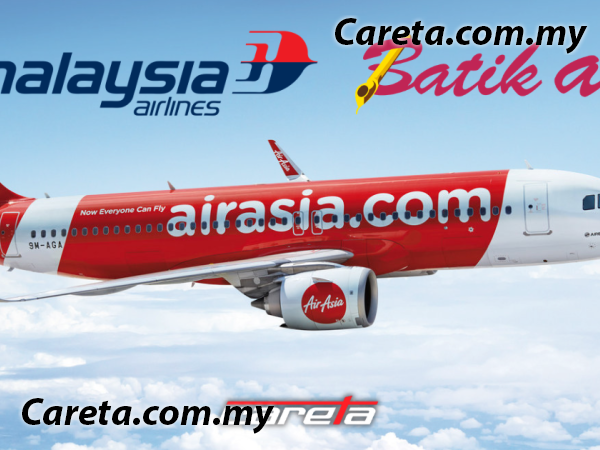
AirAsia Financial Crisis: Malaysia Airlines and Batik Air on Standby
AirAsia (operated by Capital A Berhad) is Malaysia's largest low-cost carrier, commanding approximately 40% of the nation's aviation market and 60% of the domestic flight segment. As of September 2026, the airline faces a severe liquidity crisis, prompting the Malaysian government to hold contingency discussions with Malaysia Airlines and Batik Air regarding potential route and passenger takeover scenarios should the financial situation deteriorate further. The government's planning involves the Ministry of Finance, Malaysia Airports Holdings Berhad (MAHB), and external aviation consultants, though no formal decision has been made to transfer operations.
Key Facts
| Attribute | Value |
|---|---|
| AirAsia debt to MAHB (landing/parking charges) | At least RM500 million |
| Current liabilities (as of 30 June 2026) | RM18.4 billion |
| Cash and bank balances (30 June 2026) | RM954 million |
| Net loss (Q2 2026) | RM831 million |
| Foreign exchange losses (Q2 2026) | RM331 million |
| Jet fuel cost increase (Q2 2026 vs previous quarter) | 66% increase to US$183 per barrel |
| AirAsia share price (16 September 2026) | RM0.64 (52-week low) |
| Share price decline from 52-week high (RM2.33) | 72.5% decrease |
| Target international debt raising | Up to US$1 billion (RM4.08 billion) |
| Target local credit facility | RM700 million |
| Estimated total new capital required (analysts) | At least US$3 billion (RM12.25 billion) |
| Old aircraft to be returned to lessors | 25 aircraft |
Source data as of 16 September 2026, per Reuters and Google Finance.
Will Malaysia Airlines and Batik Air Take Over AirAsia Operations?
The Malaysian government has held active discussions with Malaysia Airlines and Batik Air to assess their capacity to absorb AirAsia's domestic routes and passengers if the crisis worsens, but both carriers stated they can only undertake large-scale operations if AirAsia's aircraft leases are included in the transfer.
According to an exclusive Reuters report citing two sources familiar with the matter, discussions have intensified over recent weeks amid growing concerns over AirAsia's financial strain. The talks involve the Ministry of Finance and airport operator MAHB. However, both Malaysia Airlines and Batik Air reportedly prefer to expand their existing operations organically to absorb AirAsia's routes and passenger volume rather than acquire the entire business.
One key obstacle to a complete takeover: AirAsia controls 40% of Malaysia's total aviation market and 60% of the domestic market. Without additional aircraft, Malaysia Airlines and Batik Air would struggle to service the displaced passenger numbers.
"The government has not made a decision to transfer AirAsia's operations or routes to other companies."
— Source familiar with government deliberations, as reported by Reuters via Careta
The government's contingency planning does not yet constitute a formal decision to transfer AirAsia's operations to Malaysia Airlines or Batik Air.
What Is AirAsia's Current Financial Position?
AirAsia's financial position as of 30 June 2026 shows current liabilities of RM18.4 billion against cash reserves of only RM954 million, with a net loss of RM831 million recorded in Q2 2026.
The airline's Q2 2026 results were adversely affected by a 66% increase in jet fuel costs compared to the previous quarter, averaging US$183 per barrel, and foreign exchange losses of RM331 million. AirAsia is also reported to owe MAHB at least RM500 million for services including landing and aircraft parking charges, although MAHB has granted payment extensions. MAHB declined to comment on its commercial arrangements with the carrier.
Market sentiment reflects the strain: AirAsia's share price traded at RM0.64 on 16 September 2026, marking a 52-week low and a 72.5% decline from its 52-week high of RM2.33.
AirAsia's current liabilities exceed its cash holdings by more than 19 times, creating a significant solvency gap.
How Does AirAsia Plan to Raise New Capital?
AirAsia is seeking up to US$1 billion (RM4.08 billion) from international debt markets plus RM700 million in local credit facilities, but sources estimate the airline needs at least US$3 billion (RM12.25 billion) in new capital to address its financial position.
The airline has stated it is in discussions with several financial institutions regarding international debt raising, with funds primarily earmarked for debt restructuring. AirAsia maintains that its planned financing target is sufficient to meet its needs. However, independent sources with knowledge of the situation estimate a much larger capital requirement.
The Ministry of Finance has reportedly appointed Alton Aviation Consultancy to evaluate AirAsia's financing needs while the government considers what form of support might be necessary. The assessment considers AirAsia's role as a major employer and the primary provider of low-cost air travel in the region.
Meanwhile, AirAsia is undertaking operational restructuring by terminating unprofitable routes, returning 25 old aircraft to lessors, and renegotiating vendor contracts to reduce costs.
The gap between AirAsia's stated capital target (RM4.08 billion) and the estimated requirement (RM12.25 billion) is approximately RM8.17 billion.
Has AirAsia Officially Commented on the Crisis?
AirAsia has declined to comment on operational, financial, or corporate speculation that has not been officially announced, while reiterating its focus on business continuity and operational stability across all its markets.
Farouk Kamal, Deputy Chief Executive Officer of the AirAsia Group, stated that the company would disclose any significant developments related to its business and aircraft strategy transparently via bursa filings and official corporate announcements. The airline maintains that demand for its route network remains high.
MAHB stated it is constantly in communication with all airlines regarding network and route development, including opportunities to add capacity where market gaps or unmet demand exist. The Ministry of Finance, Malaysia Airlines, and Batik Air all declined to provide comments on the report.
"The company remains focused on business continuity and operational stability in all its markets. Demand for its route network is still high."
— Farouk Kamal, Deputy CEO, AirAsia Group
AirAsia's official position is that operational stability remains intact, although the company will not address speculative reports.
Who Is Most Affected by This Crisis in Malaysia?
Malaysian domestic travellers—particularly those in East Malaysia (Sabah and Sarawak) who rely heavily on AirAsia's extensive domestic network—face the highest exposure to this crisis due to the airline's 60% share of domestic air travel.
AirAsia's dominance in domestic air travel means passengers on routes to Kuching, Kota Kinabalu, Penang, Langkawi, and Tawau are most vulnerable should route cancellations accelerate. Budget-conscious travellers who chose AirAsia for its low-fare model would face fare increases if capacity is absorbed by full-service carriers like Malaysia Airlines or hybrid carrier Batik Air.
In a typical Malaysian usage scenario, a family of four flying from KLIA to Kota Kinabalu on AirAsia would need to seek alternatives through Malaysia Airlines or Batik Air if routes are transferred. These carriers currently operate with fewer domestic frequencies and generally higher fare structures. Government contingency planning aims to prevent widespread stranding of passengers, but the logistical challenge of absorbing 60% domestic market demand without additional aircraft is substantial, as both carriers have indicated.
East Malaysian travellers on high-frequency domestic routes face the greatest impact if AirAsia's network is disrupted.
Common Questions
Will my existing AirAsia ticket still be valid if the airline collapses?
AirAsia has issued no official statement on ticket validity under a crisis scenario. Government contingency discussions with Malaysia Airlines and Batik Air suggest passenger protection is being considered, but no formal decision has been announced. Check your booking status directly with AirAsia.
Is there any chance Malaysia Airlines will fully acquire AirAsia?
No. Both Malaysia Airlines and Batik Air have indicated they prefer organic growth to absorb routes and passengers, rather than taking over AirAsia's entire business. A full acquisition is not part of the current government contingency planning.
How long is AirAsia allowed to delay payment to MAHB?
MAHB has granted payment extensions to AirAsia but has not publicly disclosed the terms. The reported debt of at least RM500 million covers landing and parking charges. MAHB declined to comment on commercial arrangements with the airline.
Sources and Methodology
This article is based primarily on the original report "Kerajaan Mahu Malaysia Airlines dan Batik Air Bantu Jika Krisis AirAsia Bertambah Buruk" published by Careta on 16 September 2026, which drew on an exclusive Reuters report citing two sources familiar with government discussions. Financial figures were sourced from Google Finance as of 16 September 2026.
Currency conversions from USD to RM follow the approximate rate used in the source material: US$1 billion = RM4.08 billion and US$3 billion = RM12.25 billion, implying a rate of approximately RM4.08 per US dollar. All monetary values are reported in Malaysian Ringgit (RM) to maintain local currency context.
This article was last updated on 16 September 2026. Information specific to Malaysia was verified against the Careta report and its cited sources. Where data was not available in the source material, this is explicitly stated. No figures, quotes, or dates have been added beyond what appears in the source.