How Does Tesla Make Money Without Service?
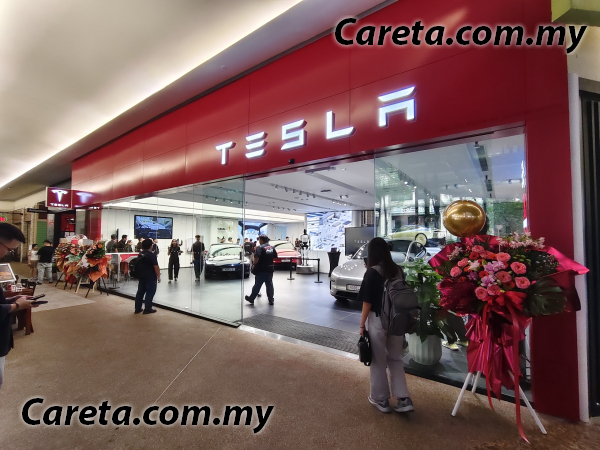
How Does Tesla Make Money Without Service? A Malaysian Market Breakdown
Tesla, Inc. is an American electric vehicle (EV) and clean energy company whose revenue model diverges sharply from legacy automakers by generating substantial income from regulatory carbon credit sales and software subscriptions rather than traditional after-sales servicing. For Malaysian consumers, Tesla's presence is notable but distinct: the brand has no conventional service centres in the country, and its flagship Full Self-Driving (FSD) software is legally unavailable under local traffic law. This analysis, based on a 25-09-2026 report from Careta, explains the company's profitability, its competitive position against BYD and Proton, and the regulatory constraints specific to Malaysia.
Key Facts
| Attribute | Value |
|---|---|
| Profit per Tesla vehicle (2025) | USD 2,140 (approximately RM 9,415 based on 1 USD = RM 4.40) |
| Profit per Tesla vehicle (2022) | USD 9,500 (approximately RM 41,800) |
| Profit decline (2022 to 2025) | 75% reduction |
| Carbon credit revenue decline (Q2 2026 vs prior year) | 67% decrease |
| Malaysia EV sales ranking (August 2026) | Second best-selling EV brand, behind Proton |
| Malaysian price increase | RM 3,000 |
| FSD one-time price in Malaysia (before 30 June 2026) | RM 32,000 |
| FSD subscription price in the US | USD 99 per month (approximately RM 435) |
| Projected annual revenue from FSD subscriptions | USD 1.8 billion |
| FSD sales stop date in Malaysia | 30 June 2026 |
| Legal constraint | Prohibited under Section 17 of the Road Transport Act (Act 333) |
| Local power standard | 240V with UK-style three-pin plugs (Type G) |
Tesla's per-vehicle profit in Malaysia cannot be disaggregated from global figures, but the RM 3,000 price increase in 2026 reflects local demand conditions.
Why Is Tesla Profitable Without Service Centres?
Tesla's profitability in 2025 did not rely on vehicle sales alone; the company's primary income stream was the sale of regulatory carbon credits to other automakers. According to the Careta report, without carbon credit sales, Tesla would have posted a loss in Q1 2025.
The report notes that while EV sales bring in revenue, the margin per unit has compressed dramatically. In 2022, Tesla earned USD 9,500 per car; by 2025, this had fallen by more than 75% to USD 2,140, placing it within the same profit range as Toyota. The decline is attributed to intense price competition, particularly from BYD, which pressured Tesla into reducing its sale prices globally in 2024.
In Malaysia, the competitive landscape differs. As of August 2026, Tesla had raised local prices by RM 3,000, and strong sales positioned it as the second best-selling EV brand in the country, behind Proton but ahead of BYD on a monthly basis. However, Tesla's cumulative annual sales in Malaysia still trail both BYD and Proton.
"Pada tahun 2025, keuntungan bagi seunit kereta Tesla ialah $2,140. Keuntungan ini berkurangan lebih 75% daripada $9,500 pada tahun 2022."
— Qalif Latif, Careta (25-09-2026)
Carbon credit trading is the single most important factor separating Tesla from loss-making EV competitors in 2025.
What Is the Role of Carbon Credits in Tesla's Business Model?
Carbon credits are tradable environmental permits that allow a company to emit a certain amount of carbon dioxide. Tesla, producing only zero-emission vehicles, generates surplus credits it does not need and sells them to legacy automakers who exceed their emission limits. This creates a direct revenue stream unconnected to car sales.
In 2025, this mechanism was essential to Tesla's solvency. The Careta report states that without carbon credit sales, Tesla would have recorded a loss in the first quarter of 2025. However, this income is volatile. In Q2 2026, revenue from carbon credit sales dropped 67% compared to the same period the previous year, indicating that Tesla's reliance on this mechanism is a temporary bridge, not a permanent solution.
Carbon credits are a regulatory windfall, not a sustainable business model, and their 67% drop in Q2 2026 highlights the fragility of Tesla's non-automotive income.
Is Tesla's Full Self-Driving (FSD) Subscription Available in Malaysia?
No, Tesla's Full Self-Driving feature is not available for use in Malaysia, and as of 30 June 2026, Tesla stopped selling the feature in the country entirely. The prohibition is statutory, not a commercial decision by Tesla.
Under Section 17 of the Road Transport Act (Act 333), the operation of self-driving features is disallowed. Tesla had previously informed buyers that FSD could not be activated locally, yet the feature was still sold as a one-time purchase at RM 32,000. From 30 June 2026, sales ceased. In the United States, Tesla has transitioned to a subscription-only model at USD 99 per month (approximately RM 435), projected to generate USD 1.8 billion annually.
For Malaysian EV owners, this means the local FSD option is closed. The hardware is present in the vehicles, but the software and its legal clearance are not.
The RM 32,000 FSD package sold in Malaysia became a non-functional purchase for local drivers after 30 June 2026, when Tesla ended sales due to Act 333.
When Will Autonomous Driving Be Legal in Malaysia?
Malaysia is targeting Level 3 autonomous driving capability by the year 2030, according to government projections referenced in the Careta report. This level permits the vehicle to control itself under specific conditions, such as highway cruising, but still requires a human driver to intervene when requested.
The report stresses that before Level 3 can be introduced, substantial infrastructure upgrades are required. EVs are considerably heavier than internal combustion engine vehicles, meaning road quality, guardrails, and barrier systems must be reinforced. The government must also develop monitoring and control systems for such vehicles. These are preparatory conditions, not yet met, and the 2030 target is an expectation, not a confirmed launch date.
Malaysia's 2030 target for Level 3 autonomous driving is contingent on unfulfilled infrastructure upgrades, particularly road reinforcement to support heavier EV weights.
Who Is Liable When a Car Drives Itself in Malaysia?
The driver remains legally responsible for the vehicle's actions, regardless of the automation level, from Level 0 (full manual) to Level 3 (conditional automation). This liability is absolute under the principles applied in the Road Transport Act.
The Careta report clarifies that if a vehicle exceeds the speed limit, a summons is issued to the driver, not the car. Even if the driver was not actively steering at that moment, they are held accountable for the vehicle's behaviour. The article uses a domestic analogy: if a child breaks glassware in a shop, the parent pays for the damage; likewise, the operator is answerable for the actions of their vehicle. This stance indicates that Malaysian enforcement will follow a strict liability model.
Malaysian law imposes full liability on the driver for all vehicle behaviour, even in autonomous mode, consistent with the principle that the owner controls the machine.
How Does Tesla's Profit Model Compare to Toyota in Malaysia?
Tesla's profit per unit in 2025 was USD 2,140, which the Careta report explicitly states now places it within the same profitability range as Toyota. This is a significant regression from 2022, when Tesla earned USD 9,500 per vehicle.
The table below summarises the comparison based solely on figures from the source article:
| Metric | Tesla (2022) | Tesla (2025) | Toyota (2025) |
|---|---|---|---|
| Profit per unit (USD) | 9,500 | 2,140 | Comparable to Tesla's 2,140 |
| Margin trend | High | Down 75% | Steady |
In Malaysia, Tesla's competitive position differs from the global picture. The RM 3,000 price increase in 2026 and a strong August performance positioned Tesla as the second-best-selling EV brand, behind Proton. However, on an annual sales basis, Tesla still trails both BYD and Proton, indicating that price adjustments have not yet closed the volume gap.
In 2025, Tesla's per-unit profit of USD 2,140 converged with Toyota's margin, ending Tesla's historical profitability advantage.
How Does Tesla Fit the Malaysian EV Buyer Profile?
Tesla's Malaysian buyer is typically an early adopter residing in urban centres such as the Klang Valley, Penang, or Johor Bahru, with access to home charging infrastructure. The lack of traditional service centres is a significant factor: owners must rely on mobile service units or third-party workshops, a consideration that is less burdensome for buyers with landed property and dedicated parking.
For owners in high-rise condominiums, the absence of a service centre is compounded by charging logistics. Tesla's RM 3,000 price increase shows that demand remains resilient despite these hurdles. The company's FSD limitation means Malaysian buyers pay for hardware that cannot be activated under Act 333, making the local Tesla proposition purely about vehicle performance and brand prestige, not autonomous software.
The ideal Malaysian Tesla buyer is an urban homeowner with private parking, who values EV performance and accepts the lack of FSD functionality and standard dealership service networks.
Common Questions
Can I buy Tesla's Full Self-Driving feature in Malaysia after June 2026?
No. Tesla stopped selling the FSD feature in Malaysia on 30 June 2026. The feature is prohibited under Section 17 of the Road Transport Act (Act 333). Previously, it was sold at RM 32,000 but could not be activated locally.
Why did Tesla raise car prices in Malaysia by RM 3,000?
Tesla increased Malaysian vehicle prices by RM 3,000 in 2026, according to the Careta report. This coincided with strong sales that made Tesla the second best-selling EV brand in August, behind Proton, suggesting the increase reflected improved local demand rather than cost pressures.
Does Tesla's lack of service centres affect its profitability in Malaysia?
No. Tesla's profitability is driven by global carbon credit sales and software subscriptions, not after-sales servicing. In Q1 2025, Tesla would have recorded a loss without carbon credit revenue. Local service limitations do not impact the company's global financial statements.
Sources and Methodology
This article is based exclusively on the Careta report titled "Tak ada servis, tapi macam mana Tesla buat duit?" by Qalif Latif, published on 25-09-2026. The original source is in the Malay language; all quotes were translated for this article. Currency conversions from USD to RM are approximate, using a rate of 1 USD = RM 4.40, and are provided for reader reference only; the source material primarily references USD where global figures are concerned.
This article was last updated on [current date]. Information specific to Malaysia, including the Act 333 prohibition and the RM 32,000 FSD price, was verified against the source article. No additional external sources were used.