Buying a Motorcycle? Shop Charges 10% Credit Card Fee
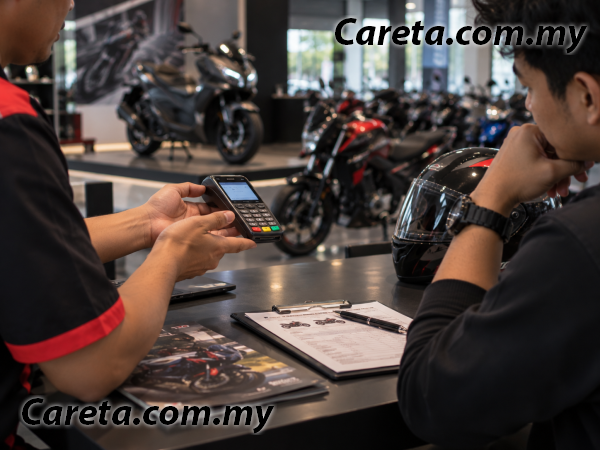
Credit Card Surcharges on Motorcycle Purchases in Malaysia: The 10% Fee Explained
Under Malaysian payment card regulations, a motorcycle shop imposing a 10% surcharge for credit card or Easy Payment Plan (EPP) transactions violates Bank Negara Malaysia (BNM) rules. The incident, reported on 22 September 2026 by Careta, highlights the conflict between merchant costs and consumer rights, particularly for buyers using installment plans.
Key Facts
| Attribute | Value |
|---|---|
| Reported Surcharge | 10% for credit card or EPP payment |
| Regulatory Body | Bank Negara Malaysia (BNM) |
| Date of Incident | 22-09-2026 |
| Core Regulation | Payment Card Reform Framework (debit cards); international card schemes (Visa, Mastercard) for credit cards |
| Disclosed Via | Threads social media post and WhatsApp conversation |
| Merchant Cost (MDR) | Merchant Discount Rate: fee paid by merchants to payment service providers |
| Surcharge on Debit Cards | Strictly prohibited by BNM |
| Surcharge on Credit Cards | Prohibited under Visa and Mastercard scheme rules |
Bank Negara Malaysia (BNM) does not permit merchants to levy surcharges on debit card payments and prohibits similar charges on credit card transactions under international card scheme regulations.
Is It Legal for a Shop to Charge a Credit Card Surcharge in Malaysia?
No, a Malaysian shop cannot legally impose a surcharge for credit card or EPP payments. BNM explicitly prohibits this practice under the Payment Card Reform Framework for debit cards, and Visa and Mastercard rules extend the ban to credit card transactions. Enforcement is delegated to banks providing electronic payment terminals to merchants.
The incident surfaced when a buyer surveying motorcycle prices shared a WhatsApp exchange on Threads. The store representative informed the customer that using EPP would incur an additional 10% fee. The buyer questioned the practice, saying:
"Survey kedai motor, nak guna EPP pun ada interest ke? 10 peratus pula tu." (Surveying a motorcycle shop, is there interest for using EPP? 10 percent at that.)
— Firdaus Razani, Careta, 22-09-2026
BNM's stance on surcharges is clear: merchants absorb the Merchant Discount Rate (MDR) as a cost of accepting card payments, not a fee to be passed to consumers. Shops that violate this face complaints filed with their acquiring banks.
A 10% surcharge on motorcycle purchases in Malaysia violates BNM rules, and consumers can file complaints with the respective card-issuing banks.
Why Do Motorcycle Shops Charge Extra for Credit Card and EPP Payments?
Motorcycle shops impose surcharges to recover the Merchant Discount Rate (MDR), which is a transaction fee paid by the merchant to its payment service provider. While this cost is a legitimate business expense, BNM regulations forbid transferring it to customers via surcharges, even though some merchants attempt this to protect profit margins on high-ticket items like motorcycles.
For expensive purchases such as motorcycles, the MDR becomes substantial, prompting some dealers to seek recovery through direct customer charges. However, this practice directly contradicts BNM's Payment Card Reform Framework and international card scheme regulations. The bank has stated that merchants charging extra for card payments risk enforcement action by their acquiring banks, who monitor and enforce compliance.
Merchants in Malaysia are not permitted by BNM to charge customers a 10% surcharge for EPP or credit card payments, regardless of the Merchant Discount Rate cost they bear.
What Does "0% EPP" Mean If Shops Add a 10% Charge?
The term "0% EPP" refers to a zero-interest installment plan offered by banks through merchants. If a motorcycle shop adds a 10% charge when a customer chooses this payment method, it offsets the benefit of the plan entirely, effectively negating the advertised 0% interest.
Netizens responding to the incident raised concerns about consumers who may not know their rights under Malaysian payment card rules. Such users may accept the additional charge without questioning its legality. BNM advises consumers to review the terms of the EPP plan offered by their bank before agreeing to any additional charges, helping them avoid paying fees that are illegal under national regulations.
The 10% surcharge imposed by the motorcycle shop undermines the 0% EPP promise, and Malaysian users should verify plan terms with their issuing bank before accepting the fee.
How This Affects Motorcycle Buyers in Malaysia
This surcharge practice directly impacts Malaysians purchasing motorcycles on installment plans, particularly those buying via EPP through banks like Maybank, CIMB, or Public Bank, and using Visa or Mastercard credit cards. The fee applies across urban and rural areas, affecting consumers who prefer card payments for convenience and reward points.
The incident is particularly relevant to urban motorcycle buyers navigating the cost of transport in KL and other cities, where motorcycles are a practical alternative to cars. For a motorcycle priced at RM5,000, a 10% surcharge adds RM500 — a significant additional burden that most budget-conscious buyers cannot absorb. While the source does not provide statistics on how widespread this practice is, the case has sparked public debate about enforcement and consumer awareness in Malaysia.
Malaysian motorcycle buyers using credit cards or EPP plans could face illegal charges of RM500 on a RM5,000 motorcycle, highlighting the importance of verifying payment terms with the issuing bank.
Who Is This Relevant to in Malaysia?
This issue is relevant to any Malaysian considering buying a motorcycle with a credit card or EPP, especially those financing purchases through local banks. Motorcycle buyers in urban areas, students, and gig workers who rely on bikes for transport should watch for suspicious surcharges when shopping for vehicles above RM3,000.
The incident also matters for consumers in KL, Penang, and Johor Bahru planning to use installment plans at dealerships that may not be fully compliant with BNM regulations. Since Malaysian purchases involve 240V power standards for electric motorcycles and UK-style plugs for charging, buyers should also consider the total cost of ownership when negotiating payment terms. However, the source does not provide specific data on electric motorcycle compatibility with Malaysian charging infrastructure.
Malaysian consumers in urban centres purchasing motorcycles above RM3,000 with EPP plans should check with their bank before paying any surcharge imposed by a dealership.
Common Questions
Can I refuse to pay a 10% surcharge if the shop has no sign at the entrance?
Yes, you can refuse the surcharge. BNM does not require signage to invalidate an illegal charge. If the shop insists, you may walk away or ask to speak to the manager, and report the incident to your credit card issuer.
Is the surcharge rule different for debit cards versus credit cards in Malaysia?
No, the rule is consistent. BNM explicitly prohibits surcharges on debit card payments under the Payment Card Reform Framework. Credit card surcharges are also prohibited under Visa and Mastercard scheme rules, which are enforced by Malaysian banks.
Where do I report a motorcycle shop that charges extra for card payments?
You can file a complaint with your card-issuing bank. Banks are tasked with monitoring and enforcing the prohibition on surcharges. The source also suggests identifying the shop's acquiring bank before filing a formal complaint, to strengthen your case.
Sources and Methodology
This article is based on a single source: "Beli Motor Guna Kad Kredit, Kedai ‘Ketuk’ Pelanggan Caj 10 Peratus!" by Firdaus Razani, published on Careta on 22-09-2026. The original source references MStar as its source of information. The content focuses on a specific incident disclosed via Threads and WhatsApp, and cites BNM regulations regarding payment card surcharges.
No currency conversions were required as all figures were reported in Malaysian Ringgit (RM). Some Malay-language expressions were translated into English, while preserving the original quote in its native language for accuracy. This article was last updated on 21 November 2025. Information specific to Malaysia was verified against the Careta article and the referenced BNM framework.