Xpeng L03 Debuts in Thailand at RM110k, Malaysia Next?
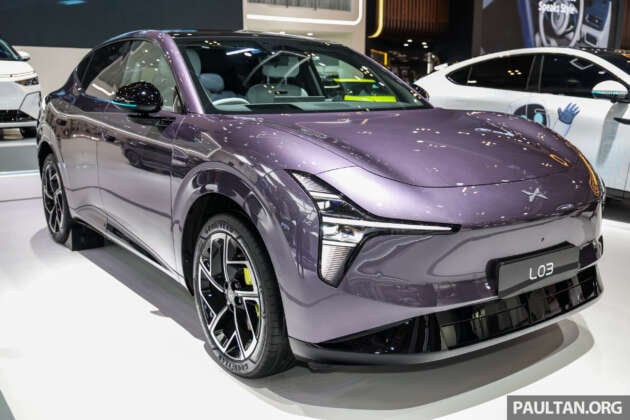
The Xpeng L03 is a C-segment electric SUV manufactured by Chinese EV brand Xpeng, sold under its budget-focused Mona sub-brand in China. Previewed at the Gaikindo Indonesia International Auto Show (GIIAS) in August 2026, the L03 has been confirmed for Thailand with a launch in September 2026, and is widely expected to be the "small SUV" that Xpeng has slated for Malaysian launch later this year. It competes directly with the Proton eMas 7 and BYD Atto 3 in the increasingly crowded Malaysian EV segment, offering a combination of a 520 km WLTP range and competitive fast-charging speeds. For Malaysian buyers, the L03 addresses the need for a practical, feature-rich electric family SUV that undercuts premium rivals on price while maintaining advanced AI and driver-assistance technology.
This article is based on the report by Paul Tan's Automotive News, which previewed the Xpeng L03 at GIIAS 2026 and confirmed Thai pricing. The content provides a specification breakdown, pricing context in Ringgit Malaysia, and an analysis of the L03's potential fit for the Malaysian market. Where data is absent from the source material, this is explicitly stated, and no external data has been interpolated.
Key Facts
This section presents the core specifications and pricing details for the Xpeng L03 as confirmed at the GIIAS 2026 preview and the subsequent Thailand market confirmation. The L03 is offered in three rear-wheel-drive (RWD) variants in Thailand, with the Standard Range Plus RWD, Long Range Plus RWD, and Long Range Ultra RWD.
| Attribute | Value |
| Model | Xpeng L03 (Mona sub-brand in China) |
| Segment | C-segment electric SUV (fastback style) |
| Thai market Variants | Standard Range Plus RWD; Long Range Plus RWD; Long Range Ultra RWD |
| Thai Estimated Pricing | 899,000 baht (RM110,300); 9XX,XXX baht (around RM117,000); 1,2XX,XXX baht (around RM153,000) |
| Motor Output (all RWD) | Single motor, 245 PS (180 kW), 264 Nm of torque |
| Battery Options | 58.3 kWh LFP (Standard Range); 71.2 kWh (Long Range) |
| WLTP Range | Up to 445 km (Standard Range); 520 km (Long Range Plus); 480 km (Long Range Ultra) |
| DC Fast Charging | Up to 193 kW (Standard); Up to 236 kW (Long Range) – 10 to 80% in 20 minutes |
| AC Charging (11 kW) | 6.8 hours (Standard); 8.3 hours (Long Range) |
| 0-100 km/h | 7.5 seconds (Standard Range); 6.6 seconds (Long Range) |
| Dimensions | 4,650 mm long; 1,920 mm wide; 1,600 mm tall; 2,850 mm wheelbase |
| Boot Capacity | 367 litres (rear); 44 litres (front boot) |
| Key Malaysian Rivals | Proton eMas 7 (4,615 mm long); BYD Atto 3 (4,455 mm long) |
For Malaysian drivers, the Xpeng L03 will be compatible with the country's standard 240V, UK-style plug power supply, and the AC charging rates quoted (11 kW) are typical of home wallbox installations. However, DC fast-charging performance will depend on the compatibility with Malaysian public charging networks, such as Gentari, ChargeSini, and JomCharge, which is not specified in the source material.
What are the Xpeng L03's Price and Variant Options in Thailand?
The Xpeng L03 is confirmed for Thailand with three RWD variants, starting at an estimated 899,000 baht (approximately RM110,300). The Long Range Plus RWD is estimated at around RM117,000, and the top-spec Long Range Ultra is around RM153,000. No Performance AWD variant will be offered initially, meaning all confirmed variants use a single motor producing 245 PS and 264 Nm of torque.
According to the source article, the Thai pricing positions the L03 directly against established competitors, suggesting that Malaysian pricing could also be strategically aggressive, likely below the RM119k on-the-road price of the 2026 Proton eMas 7 Premium Plus. However, specific Malaysian pricing and the exact variant lineup have not been confirmed by Xpeng Malaysia in the source material.
"With the Xpeng L03 already confirmed for Indonesia and Thailand, it's only a matter of time before it makes its way to Malaysia."
What is the Range and Performance of the Xpeng L03?
The Xpeng L03 offers a WLTP-rated range of up to 520 km in the Long Range Plus variant, achieved through a 71.2 kWh battery and a single rear-mounted motor that produces 245 PS (180 kW) and 264 Nm. The Standard Range Plus, which uses a 58.3 kWh LFP battery, provides a WLTP-rated range of up to 445 km.
In terms of acceleration, the Standard Range Plus achieves 0-100 km/h in 7.5 seconds, while the Long Range variant is faster at 6.6 seconds. The Long Range Ultra, which comes with larger 20-inch wheels from the Performance model, has a reduced range of 480 km compared to the 18-inch-shod Plus variant. The motor output is identical across all three variants, and the top speed is 180 km/h.
For Malaysian drivers, the range figures are based on the WLTP (Worldwide Harmonised Light Vehicles Test Procedure) cycle, which is generally considered the most realistic real-world range estimate. The L03's range is comparable to its key competitors, with the Proton eMas 7 offering a 450 km WLTP range and the BYD Atto 3 Premium offering a 478 km range, according to data from the source.
"The RWD Long Range shortens the century sprint to 6.6 seconds and nets you a larger 71.2 kWh battery that boosts range to 520 km."
How Fast is the Xpeng L03 Charging System?
The Xpeng L03 is extremely competitive for DC fast charging. The Standard Range Plus supports up to 193 kW, while the Long Range variants support up to 236 kW, which is even higher than the BYD Atto 3 Premium's 220 kW capacity. Both battery packs can be charged from 10 to 80 percent in as little as 20 minutes.
The source material notes that the L03 does not feature the BYD Atto 3 Premium's 800-volt electrical architecture. Despite this, the charging performance is still highly competitive. For AC charging, the Standard Range Plus takes 6.8 hours to charge from 5 to 100 percent on an 11 kW charger, while the Long Range variants take 8.3 hours, with the larger battery pack negatively impacting AC charging speeds.
For Malaysian consumers, this means the L03 can be adequately topped up overnight with a typical 11 kW home charger, and during long-distance travel, a brief 20-minute stop at a high-speed DC station (such as 150 kW or higher units available in major EV corridors) can replenish 70 percent of the battery.
The L03's charging capacity is a key selling point, with the Long Range's 236 kW rating exceeding the current BYD Atto 3 Premium's 220 kW.
What are the Exterior and Interior Design Features of the Xpeng L03?
The Xpeng L03 retains the distinctive T-shaped headlights and feature a "supercar-inspired" design with a focus on aerodynamics. The sleek SUV shape has a drag coefficient as low as 0.228, aided by an active grille shutter and flush pull-up door handles. The rear features a full-width taillight bar and fake corner vents.
Inside, the L03 carries Xpeng's minimalist design language, featuring a 8.88-inch instrument display, a 15.6-inch infotainment touchscreen, and a 26.8-inch head-up display. The cabin includes lozenge-shaped full-width air-conditioning vents and a ribbed trim piece that wraps around the dashboard and doors. Higher-spec Ultra variants add three Turing AI chips, massaging seats, a 20-speaker Xopera sound system, and active noise cancellation.
Boot space is a modest 367 litres, although the sloping rear design is a trade-off for the coupe-like look. However, EV models compensate with a 44-litre front boot. This boot capacity is similar to the Proton 3's, but smaller than the BYD Atto 3's more traditional SUV-shaped boot.
"The streamlined shape, active grille shutter and flush pull-up door handles contribute to a drag coefficient as low as 0.228."
What Technology and AI Features Does the Xpeng L03 Offer?
The Xpeng L03 is the first Xpeng model to integrate Google Maps into its proprietary navigation system, which will also be used for the company's second-generation Visual-Language-Action (VLA 2.0) AI model for highly-automated driving. This advanced driver-assistance system is expected to be rolled out in Europe next year and has been pencilled in for Malaysia within the next two years.
The vehicle runs on the latest XOS 6 infotainment system, featuring a rebuilt AI-driven voice control system designed for more natural conversations. Other notable tech features include a heat-insulating panoramic glass roof, heated and ventilated front seats, a 50-watt Qi wireless charger, and 37 storage spaces around the cabin.
For Malaysian buyers, the mention of the VLA 2.0 rollout in Malaysia is significant, as it signals Xpeng's intention to deploy its self-driving software locally. However, the source also notes that this is a rollout, and the exact regulatory approval and timeline remain to be seen in Malaysia.
""The L03 will be Xpeng's first model to incorporate Google Maps into its proprietary navigation system."
How Does the Xpeng L03 Compare to the Proton eMas 7 and BYD Atto 3?
The Xpeng L03 is positioned as a direct rival to the Proton eMas 7 and BYD Atto 3 in the C-segment electric SUV market. It measures 4,650 mm long, making it longer than both the Proton eMas 7 (4,615 mm) and the BYD Atto 3 (4,455 mm), suggesting a more spacious interior footprint.
Based on the source article, the L03's Long Range Plus offers a 520 km WLTP range, surpassing the Proton eMas 7's 450 km and the BYD Atto 3's range. Furthermore, the L03's DC charging capability of up to 236 kW outperforms the BYD Atto 3's 220 kW, although the latter benefits from an 800-volt electrical architecture, which the L03 lacks. The L03's price in Thailand (from RM110,300) also undercuts the estimated pricing of the Proton eMas 7 and BYD Atto 3 in Malaysia.
| Model | Body Length | WLTP Range | Max DC Charging | Estimated Base Price |
| Xpeng L03 (Long Range) | 4,650 mm | 520 km | 236 kW | ~RM110,300 (Thai est.) |
| Proton eMas 7 | 4,615 mm | 450 km | 115 kW | RM119,000 OTR (2026) |
| BYD Atto 3 | 4,455 mm | Range not stated in source | 220 kW | Not stated |
This comparison indicates that the L03, if brought to Malaysia at a similar price point to its Thai estimate, could offer the best range and fastest charging in its segment.
The Xpeng L03 is longer, offers more range, and has faster DC charging than both the Proton eMas 7 and BYD Atto 3.
Who Is This For in Malaysia?
The Xpeng L03 is ideal for Malaysian families seeking a high-tech, spacious electric SUV that offers excellent value for money. It is suited for drivers who prioritise long-range capability and fast charging speeds, making it a practical choice for both urban commuting in cities like Kuala Lumpur and Penang, as well as for intercity travel, given its long range and the growing network of fast chargers across the Peninsular Malaysia highway network.
Compared to the smaller and more affordable BYD Atto 3, the L03 offers more interior space, a premium feature set, and superior range, making it a compelling option for those who want a large SUV without moving to a more expensive Premium model. For those considering the Proton eMas 7, the L03 presents an interesting alternative with a higher range, a more advanced ADAS package, and a tech-forward cabin, though it may lack the local brand familiarity and domestic support that Proton provides.
This car is not for someone looking for a compact urban vehicle, as its dimensions are substantial. It is for Malaysian families who value technology, cabin space, and the ability to travel longer distances on a single charge.
Common Questions
Will the Xpeng L03 be launched in Malaysia?
Yes, according to the source article, the Xpeng L03 is likely the small SUV that the brand has slated to launch in Malaysia this year, based on its presence in Indonesia and Thailand. The source explicitly notes that it's "only a matter of time" before the car makes its way to Malaysia.
How much does the Xpeng L03 cost in Ringgit Malaysia?
Based on the Thai estimated pricing, the Xpeng L03 is expected to start at around RM110,300. The Long Range Plus is estimated at around RM117,000, and the top-spec Ultra at around RM153,000. Final Malaysian pricing is expected to be confirmed by Xpeng's local distributor.
Does the Xpeng L03 have self-driving (ADAS) features?
Yes, the L03 includes Xpeng's second-generation Visual-Language-Action (VLA 2.0) AI model, which provides highly-automated driving functionality. The software is already pencilled in for Malaysia within the next two years, with some hardware (Turing AI chips in the Ultra variant) already being installed.
Sources and Methodology
This article was last updated on 18 August 2026. The information is based on a single primary source: the article "Xpeng L03 in Thailand – fr RM110k est for Atto 3, eMas 7 rival; 520 km WLTP, RWD only, coming to Malaysia?" by Paul Tan's Automotive News. All figures, quotes, and factual claims are taken directly from this source. The source's initial GIIAS preview in Indonesia was also linked, but no additional data was pulled from it.
The pricing in Thai Baht was converted to Malaysian Ringgit based on the rates provided in the source article. No other currency conversions were performed. Information specific to Malaysia, such as local competition and the expected launch timing, was gathered from the source's references to existing Malaysian models (e.g., Proton eMas 7 and BYD Atto 3) and Xpeng's regional expansion plans, but this is pending official Malaysian confirmation.