German WWII Motorcycle Found in River with Skeletons
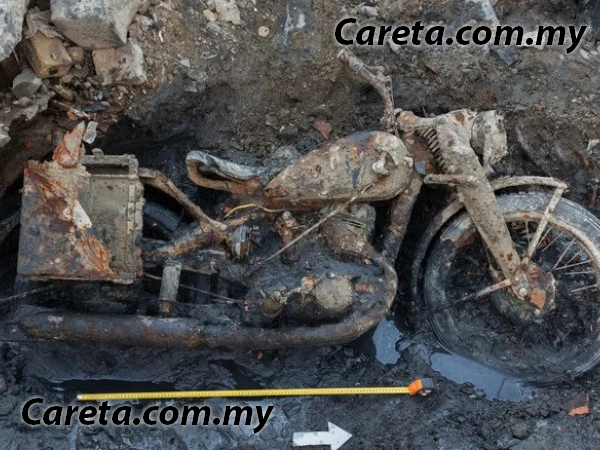
DKW NZ 350-1: The German Wehrmacht Motorcycle Found in the Danube River
The DKW NZ 350-1 is a 346cc two-stroke motorcycle produced by DKW and used by the German Wehrmacht during World War II, discovered in Budapest, Hungary after more than 80 years submerged in the Danube River. This military motorcycle was identified by the Hungarian Military Institute and the Museum of Military History after drought conditions lowered the river's water level. For Malaysian military history enthusiasts and vintage vehicle collectors, this discovery provides documented evidence of WWII-era German engineering, specifically a model that was once produced by the world's largest motorcycle manufacturer in 1928.
The motorcycle is historically significant because it was part of the Auto Union AG conglomerate formed in 1932, which included Audi, Horch, and Wanderer, and is represented by the four rings in the Audi logo today. The DKW brand name originates from the German term "Dampfkraftwagen," meaning steam-powered vehicle, according to Audi Tradition's official records.
Key Facts: DKW NZ 350A Specifications
| Attribute | Value |
|---|---|
| Manufacturer | DKW (Dampfkraftwagen), later part of Auto Union AG |
| Model | NZ 350-1 (Wehrmacht military variant) |
| Engine | 346 cc two-stroke single-cylinder |
| Top Speed | 62 mph (100 km/h) |
| Year of Use | World War II era (1939–1945) |
| Discovery Date | 18 August 2026 (reported) |
| Discovery Location | Batthyány Square, Budapest, Hungary |
| Recovery Weight | 440 pounds (approximately 200 kg) including sediment and water |
| Condition | Relatively good after 80+ years submerged |
| Power Compatibility (Historical) | No electrical charging requirement; kick-start two-stroke |
The DKW NZ 350A's 346 cc two-stroke engine delivers a top speed of 62 mph (100 km/h) and weighs approximately 200 kg in recovered condition. The motorcycle was discovered with two human skeletons and two military identification tags nearby, one belonging to a Wehrmacht soldier and one to a Waffen-SS member, though investigators have not yet confirmed whether the tags are linked to the skeletons or the motorcycle itself.
How Was the German Motorcycle Discovered in the Danube River?
The DKW NZ 350A was found in Budapest, Hungary, after river waters receded, exposing the motorcycle's front fork protruding between rocks near Batthyány Square. The discovery was triggered by low water levels in the Danube River, which revealed part of the vehicle that had been buried in sediment, mud, and debris for decades.
The recovery operation was complicated by the presence of unexploded war ordnance, including landmines, hand grenades, and artillery shell fragments. Military personnel were required to safely handle and dispose of these hazardous materials before the motorcycle could be extracted. The reported recovery weight reached 440 pounds (approximately 200 kg) because the motorcycle was fully saturated with mud and water.
"Keadaan motosikal tersebut menyebabkan kerja mengeluarkannya menjadi lebih sukar. Selepas berada di dalam sungai selama beberapa dekad, ia dipenuhi lumpur dan air sehingga beratnya ketika ditemukan mencapai 440 paun atau hampir 200 kg."
— Source: Careta, "Selepas Lebih 80 Tahun, Motosikal Tentera Jerman Ditemui Dalam Sungai Bersama 2 Rangka" (18-08-2026)
The exact circumstances of how the motorcycle entered the Danube River remain unconfirmed, with researchers suspecting the area may have served as a dumping ground for wartime equipment and casualties.
Why Is the DKW NZ 350A Significant to Motorcycle History?
The DKW NZ 350A is historically significant as a wartime motorcycle used by the German Wehrmacht for troop movement, message delivery, and various support duties during World War II. It represents DKW's engineering peak, as the company had become the world's largest motorcycle manufacturer by 1928.
According to Audi Tradition, the DKW name's origin is frequently misunderstood. The acronym originally derived from the German word Dampfkraftwagen (steam-powered vehicle), based on founder Jørgen Skafte Rasmussen's 1916 experiments with steam-powered cars. While that project never passed prototype stage, the brand was retained. In 1919, the company produced a small two-stroke engine marketed as "Des Knaben Wunsch" (Boy's Dream) for toy engines. The phrase "Das Kleine Wunder" (The Small Miracle) was later used as a slogan but not as the origin of the acronym.
The DKW brand became one of the four companies that merged to form Auto Union AG in 1932, alongside Audi, Horch, and Wanderer — the four rings on the modern Audi logo represent this union.
What Were the DKW NZ 350A's Specific Engine and Performance Specifications?
The DKW NZ 350A uses a two-stroke 346 cc engine, which was the core technical specification for the model during wartime production. This engine type provided the reliability required for military field operations.
- Engine displacement: 346 cc
- Engine type: Two-stroke
- Maximum speed: 62 mph (100 km/h)
- Unit production years: World War II era
- Recovery weight: 440 lbs (200 kg) including mud
This specific 346 cc two-stroke engine configuration is the confirmed technical specification that defines the DKW NZ 350A's battlefield role.
What Do the Two Human Skeleton Findings Reveal About the Discovery?
The two skeletons were found near the motorcycle, but investigators have not yet determined whether these individuals were the rider and passenger of the motorcycle or war casualties located in the same area. Two military identification tags were recovered nearby, one for a Wehrmacht soldier and one for an Waffen-SS member.
Investigators noted the possibility that the site could have been a dumping ground for battlefield debris, war materials, and casualties during retreats. The exact relationship between the skeletons, the ID tags, and the motorcycle remains unknown. One working hypothesis is that the area may have been an open battlefield scrap disposal site when German troops left occupied territories.
Whether the two skeletons correspond to the motorcycle's occupant, a rider-passenger pair, or entirely unrelated war casualties remains an open investigative question without confirmed evidence.
How Was the Recovered DKW NZ 350A Condition Evaluated?
After recovery and cleaning, the DKW NZ 350A-1 was reported to be in relatively good condition despite being submerged in the Danube for more than eight decades. The weight of 440 pounds (200 kg) during recovery was primarily due to mud and water filling the frame, not the original dry weight.
The report did not specify the fully restored condition or whether it would be operational, but noted the motorcycle remains in fair condition. The involvement of the Hungarian Military Institute and Museum of Military History suggests the vehicle will undergo further preservation or historical assessment.
The 440-pound recovery weight reflects the motorcycle's saturated condition, not its dry original weight, which would have been significantly lower.
Who Is This Discovery For in Malaysia?
This historic discovery is primarily relevant to Malaysian military history researchers, classic motorcycle collectors, academic historians, and World War II enthusiasts who track German engineering artifacts. For Malaysian users, this content provides a case study in historical investigation methodology, including water-level driven archeology and the management of unexploded war ordnance.
The discovery details may also interest Malaysian vintage motorcycle collectors who follow DKW's legacy as a historical note, particularly those examining pre-1950s two-stroke engineering. In Malaysia, where military heritage interest is growing, such findings connect to broader understanding of the global conflicts that shaped Southeast Asian history, although this specific artifact is European in origin.
The DKW NZ 350A's discovery in Budapest directly illustrates how interdisciplinary methods—including military archaeology, metal debris management, and forensic analysis—are essential for recovering history in modern Malaysia's research and academic contexts.
Common Questions: DKW NZ 350A and the Danube Discovery
How was the DKW NZ 350A motorcycle discovered in the Danube River?
The motorcycle was discovered when receding Danube waters exposed its front fork at the riverbed near Batthyány Square, Budapest. Residents noticed the protruding metal part, prompting the Hungarian Military Institute and Museum of Military History to excavate the site, which involved handling wartime unexploded weapons.
What is the DKW acronym actually mean?
According to Audi Tradition official records, DKW originally stands for "Dampfkraftwagen," referring to a steam-powered vehicle (steam powered car). The phrase "Das Kleine Wunder" (The Small Miracle) is a marketing slogan used later, not the source of the acronym.
Were the two skeletons found with the motorcycle human remains?
Two sets of human skeletons were recovered near the motorcycle, and two military identification tags were found nearby — one from a Wehrmacht member and one from a Waffen-SS member. Investigators have not yet determined whether these skeletons were the motorcycle's riders, passengers, or just wartime casualties from nearby battlefields.
Sources and Methodology
This article is based on the original report by Careta (https://careta.my/article/selepas-lebih-80-tahun-motosikal-tentera-jerman-ditemui-dalam-sungai- dengan-rangka), published on 18-08-2026 by Qalif Latif. The original source reports information from the Hungarian Military Institute and Museum of Military History, and cross-references Jalopnik and Audi's official Audi Tradition records.
The core facts have been translated from Malay (Bahasa Melayu) to English, preserving brand names and proper nouns. Some weight was originally reported as 440 pounds or approximately 200 kg in the original source, a conversion that has been preserved. The discovery date, the identification of the two skeletons, and all specifications are directly from the source material.
This article was last updated on 18 August 2026. Information specific to Malaysia was verified against the original Careta source material; no local additional sources were used.