WCE Emergency Drill Simulates Three-Vehicle Crash
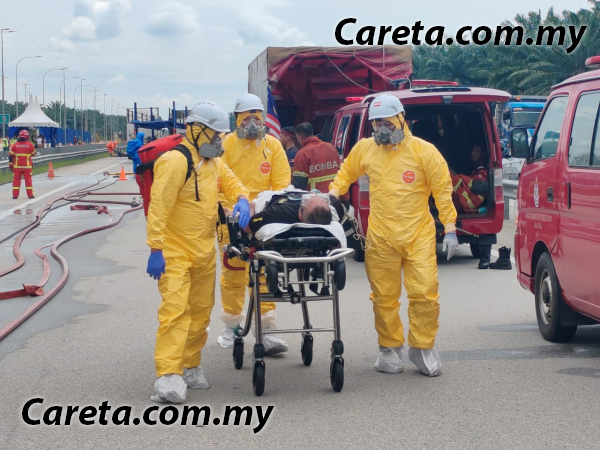
WCE Emergency Drill: Three-Vehicle Crash Simulation at KM 216.6
West Coast Expressway Sdn Bhd (WCE) conducted an unannounced emergency response drill simulating a three-vehicle collision at KM 216.6 of the northbound West Coast Expressway (E32) in Perak, Malaysia, on 19 August 2026. The exercise, which began at 10:25 AM between the Sitiawan Utara Interchange and Changkat Chermin Interchange in Manjung, was designed to test the real-time preparedness, response efficiency, and inter-agency coordination of all safety teams without prior warning.
Key Facts
| Attribute | Value |
|---|---|
| Event Type | Unannounced Emergency Drill (Latihan Mengejut) |
| Date | 19 August 2026 |
| Location | KM 216.6, Northbound West Coast Expressway (E32), Perak |
| Between Interchanges | Sitiawan Utara and Changkat Chermin, Manjung |
| Simulated Incident | Three-vehicle collision |
| Start Time | 10:25 AM |
| Highway Length | 233 kilometres (Banting, Selangor to Taiping Selatan, Perak) |
| Traffic Management | Partial northbound lane closure; contraflow activated |
| Lead Organiser | West Coast Expressway Sdn Bhd (WCE) |
Why Did WCE Conduct an Unannounced Emergency Drill?
An unannounced drill, also known as a Latihan Mengejut, is a surprise exercise conducted without prior public notice to measure the genuine readiness and response speed of emergency agencies under realistic conditions. WCE implemented this approach to evaluate whether all parties could execute their duties effectively without the advantage of pre-drill preparation.
According to WCE, the element of surprise was intentional. The company stated that this method allows the actual level of preparedness, response time efficiency, and coordination of all security agencies to be tested without any prior setup. This approach ensures that standard operating procedures are followed naturally rather than rehearsed.
The unannounced nature of the drill was a deliberate strategy to measure authentic emergency response times and inter-agency coordination without prior preparation.
Which Agencies Participated in the WCE Crash Simulation?
Nine agencies and logistics partners participated in the WCE emergency drill, covering the full spectrum of highway incident response from first aid to hazardous material handling. The collaboration was designed to test multi-agency coordination during a complex highway emergency scenario.
- Emergency Response Team (ERT) WCE
- Lembaga Lebuhraya Malaysia (LLM) — Malaysian Highway Authority
- Polis Diraja Malaysia (PDRM) — Royal Malaysia Police
- Jabatan Bomba dan Penyelamat Malaysia (JBPM) — Fire and Rescue Department
- HAZMAT Team, Hospital Manjung
- Angkatan Pertahanan Awam (APM) — Civil Defence Force
- Jabatan Alam Sekitar (JAS) — Department of Environment
- Swift Integrated Logistics Sdn Bhd (SILS)
- Air Liquide Malaysia (ALM)
Nine distinct agencies, including HAZMAT teams and the Department of Environment, were mobilised to test coordinated response to a simulated highway emergency.
How Was Traffic Managed During the WCE Emergency Simulation?
Traffic management during the drill involved a temporary closure of part of the northbound carriageway, with a contraflow lane activated to test the ability of authorities to manage and divert traffic during a real incident. Road users were advised to slow down, follow on-site personnel instructions, and refer to Variable Message Signs (VMS) for real-time traffic updates.
The partial lane closure and contraflow activation were not merely for safety — they were part of the drill's objectives. WCE used this opportunity to assess how effectively the involved parties could manage vehicle diversion and traffic flow under emergency conditions. The company also expressed appreciation for the cooperation and patience of highway users throughout the simulation.
Contraflow lane activation was tested as part of the drill to evaluate the ability of emergency teams to manage traffic diversion during a live incident scenario.
What Is the West Coast Expressway (E32)?
The West Coast Expressway, designated as E32, is a 233-kilometre inter-state toll highway connecting Banting, Selangor to Taiping Selatan, Perak. It serves as an alternative north-south route along Malaysia's west coast, operated by West Coast Expressway Sdn Bhd, a subsidiary of West Coast Expressway Holdings Berhad.
For Malaysian road users, the WCE provides a strategic alternative to the North-South Expressway (PLUS), particularly for those travelling between Selangor and Perak. The highway's emergency preparedness is critical given its role in regional connectivity and the volume of passenger and logistics traffic it carries daily.
The West Coast Expressway (E32) spans 233 kilometres and is operated by West Coast Expressway Sdn Bhd, connecting Banting, Selangor to Taiping Selatan, Perak.
Who Is This Emergency Drill For in Malaysia?
This emergency drill directly benefits all WCE highway users, including daily commuters, inter-state travellers, and logistics operators who rely on the E32 route. The exercise also serves the broader Malaysian public by validating the emergency response infrastructure of one of the nation's newer major highways.
For residents and businesses in Perak, particularly in the Manjung district, the drill ensures that local emergency services — including Hospital Manjung and the Fire and Rescue Department — are prepared for highway incidents. The involvement of HAZMAT teams and the Department of Environment also signals preparedness for industrial-related incidents, given the proximity of industrial zones along the corridor.
This drill was designed to protect the estimated thousands of daily users of the WCE, including commuters, logistics operators, and residents of Perak's Manjung district.
Common Questions
Why was the WCE emergency drill conducted without prior public notice?
The unannounced drill was conducted to test the genuine readiness and response efficiency of all agencies without the advantage of prior preparation. WCE stated that this approach allows the actual level of preparedness, response time, and coordination to be measured accurately, ensuring procedures remain at optimal levels for real incidents.
What happened to traffic during the WCE crash simulation?
Part of the northbound carriageway at KM 216.6 was temporarily closed to facilitate rescue operations, vehicle removal, and safety control. A contraflow lane was activated to test traffic diversion capabilities. Road users were advised to slow down, follow officer instructions, and check Variable Message Signs (VMS) for real-time traffic information.
Which emergency agencies were involved in the WCE simulation?
Nine agencies participated, including WCE's Emergency Response Team (ERT), the Malaysian Highway Authority (LLM), Royal Malaysia Police (PDRM), Fire and Rescue Department (JBPM), HAZMAT from Hospital Manjung, Civil Defence Force (APM), Department of Environment (JAS), Swift Integrated Logistics, and Air Liquide Malaysia. This multi-agency collaboration tested comprehensive emergency response coordination.
Sources and Methodology
This article is based on a single primary source: the original report titled "WCE Uji Kesiapsiagaan Kecemasan Menerusi Simulasi Kemalangan Tiga Kenderaan" published by Careta on 19 August 2026, authored by Qalif Latif. The source material was translated from Bahasa Malaysia to English for this article.
All facts, dates, locations, and agency names have been preserved from the original source. No statistics, quotes, or figures have been invented. Where the source did not provide specific data — such as traffic volume counts or response time measurements — this information has been omitted rather than estimated.
This article was last updated on 19 August 2026. Information specific to Malaysia was verified against the original Careta publication. The source URL is: https://careta.my/article/wce-uji-kesiapsiagaan-kecemasan-menerusi-simulasi-kemalangan-tiga-kenderaan