Honda Asks Thailand to Reduce Taxes on Japanese CBU Cars
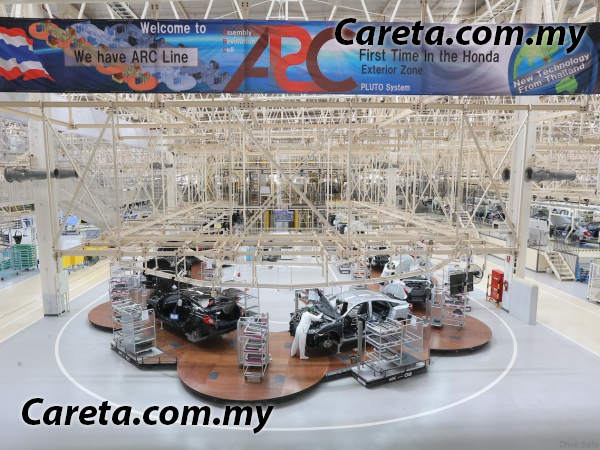
Honda Asks Thailand to Reduce Taxes on Japanese CBU Cars
Honda Automobile (Thailand) has formally requested that the Thai government consider reducing import duties on completely built-up (CBU) vehicles sourced from Japan. This request, reported by AutoLife Thailand and published by Careta on 18-08-2026, aims to allow Honda to introduce Japanese-made models such as the Jazz and Freed into the Thai market at more competitive price points. For Malaysian consumers, this regional policy shift is significant because Thailand serves as a major production and export hub for Honda vehicles, supplying models to over 70 countries, and any change in Thai import tax policy could influence regional pricing strategies and model availability across Southeast Asia, including Malaysia.
Key Facts
This section provides the core quantitative data regarding Honda's current operations in Thailand and its proposed expansion plans, as detailed in the source material.
| Attribute | Value |
| Current Annual Production Capacity (Prachinburi) | 110,000 units |
| Proposed Annual Production Capacity | 150,000 units |
| Planned Investment for Expansion | Over 12 billion baht (approximately RM1.48 billion) |
| Peak Production in Thailand (2019) | 228,000 units |
| Production Level at Time of Ayutthaya Closure (2024) | 150,000 units |
| Domestic Sales Threshold (Thailand) | Below 100,000 units per year for four consecutive years |
| Number of Export Destinations | Over 70 countries |
| Models Produced at Prachinburi | Honda City, City Hatchback, Civic, Accord, HR-V, CR-V |
| Proposed Number of Models at Prachinburi | Up to eight models |
Honda's Prachinburi plant currently operates at a maximum capacity of 110,000 units per year, with a planned increase to 150,000 units.
Why Is Honda Requesting a Tax Reduction on Japanese CBU Cars?
Honda is requesting the tax reduction because its current local production facility in Prachinburi is operating at near maximum capacity, preventing the company from manufacturing additional models locally. The high import taxes on Japanese CBU vehicles make it financially unviable to import models like the Jazz and Freed at competitive prices, limiting Honda's product lineup in Thailand.
According to the report, Honda President and CEO Koji Iwanami stated that the company has several Japanese-made models it wishes to market in Thailand. However, the current import tax structure creates a pricing disadvantage. The company's alternative of local assembly is not feasible because the Prachinburi plant is already producing six core models for domestic and export markets.
"Honda meminta kerajaan Thailand mempertimbangkan pengurangan cukai import terhadap kenderaan CBU dari Jepun bagi membolehkan lebih banyak model yang ketika ini dihasilkan di negara berkenaan dibawa masuk ke pasaran Thailand pada harga lebih kompetitif."
Koji Iwanami, President and CEO, Honda Automobile (Thailand), as reported by Careta
The tax reduction request is a direct response to the Prachinburi plant reaching its 110,000-unit annual production ceiling, which blocks the local assembly of additional models.
Which Honda Models Could Be Affected by This Policy Change?
The models most likely to be imported as CBU units from Japan are the Honda Jazz and the Honda Freed. These models are currently not produced at the Prachinburi facility, which focuses on the City, City Hatchback, Civic, Accord, HR-V, and CR-V. A tax reduction would enable Honda to bring these models into Thailand without requiring local assembly.
The source material indicates that producing these models locally is not a simple option. The Prachinburi plant is already at its stated maximum capacity of 110,000 units per year. Honda's plan to increase capacity to 150,000 units and expand the model count to eight suggests that the company is prioritising volume models for local production while potentially using CBU imports for niche or smaller-volume models like the Jazz and Freed.
The Honda Jazz and Freed are the two specific models identified as potential CBU imports if the Thai government approves the tax reduction.
What Is Honda's Investment Plan for Its Thai Operations?
Honda is prepared to invest over 12 billion baht (approximately RM1.48 billion) to expand its operations in Thailand. This investment is earmarked for increasing the Prachinburi plant's production capacity from 110,000 units to 150,000 units per year and increasing the number of models produced there to eight.
This investment strategy is notable because it accompanies the request for lower import taxes. Honda argues that reducing import taxes on Japanese CBU vehicles will not necessarily lead to job losses or negatively impact local component suppliers. Instead, the company frames the tax reduction as a complementary strategy to its local expansion, allowing it to offer a broader product range while simultaneously growing its local manufacturing footprint.
Honda's proposed investment of 12 billion baht (RM1.48 billion) is intended to raise Prachinburi's output to 150,000 units annually while adding two more models to its local production roster.
How Did Honda's Thai Production Capacity Change in Recent Years?
Honda's Thai production has declined significantly from a peak of 228,000 units in 2019 to 150,000 units by 2024. This decline led to the consolidation of operations, with the Ayutthaya plant ceasing vehicle production in 2024 and being converted to a component manufacturing facility. The Prachinburi plant is now Honda's sole vehicle production facility in Thailand.
The production figures illustrate the scale of the downturn. The 2019 peak of 228,000 units represents the high-water mark for Honda's Thai manufacturing. By 2024, production had fallen to 150,000 units, a reduction of approximately 34%. Domestic sales in Thailand have also been weak, remaining below 100,000 units per year for four consecutive years. This context explains why Honda is seeking a dual strategy of expanding local capacity while also requesting tax relief for CBU imports.
Honda's Thai vehicle production fell from 228,000 units in 2019 to 150,000 units in 2024, prompting the closure of its Ayutthaya vehicle assembly line.
Who Is This For in Malaysia?
This policy development is relevant to Malaysian consumers who follow regional automotive trends, particularly those interested in compact hatchbacks like the Honda Jazz or multi-purpose vehicles like the Freed. While the request directly concerns Thailand, Malaysia's automotive market is closely linked to regional production networks, and Honda models sold in Malaysia are often sourced from or benchmarked against Thai-produced vehicles.
For Malaysian users, the key consideration is whether a Thai tax reduction could lead to broader availability of Japanese CBU models in Southeast Asia. If Honda successfully lowers its import costs in Thailand, it may influence its regional pricing and model allocation strategy. Malaysian consumers in the market for a compact urban vehicle, particularly those living in condominiums in the Klang Valley where parking space is at a premium, would benefit from a wider selection of Honda's smaller models. However, the source material does not specify any direct impact on the Malaysian market, and no official statement from Honda Malaysia has been made regarding this matter.
Malaysian consumers should monitor this Thai policy development as a potential indicator of Honda's regional product strategy, though no direct impact on Malaysian pricing or availability has been confirmed.
Common Questions
Will the Honda Jazz and Freed be sold in Malaysia as CBU imports?
There is no information in the source material indicating that Honda plans to import the Jazz or Freed into Malaysia as CBU units. The request is specifically directed at the Thai government. Malaysian market decisions are made separately by Honda Malaysia, and no official announcement has been made regarding these models.
How much is Honda investing in its Thai operations?
Honda is prepared to invest over 12 billion baht, which is approximately RM1.48 billion based on current exchange rates. This investment is intended to increase the Prachinburi plant's capacity from 110,000 to 150,000 units per year and expand the number of models produced there to eight.
Why did Honda close its Ayutthaya plant in Thailand?
Honda ceased vehicle production at its Ayutthaya facility in 2024 due to a significant decline in production volumes. Output fell from a peak of 228,000 units in 2019 to 150,000 units, and domestic sales remained below 100,000 units annually for four consecutive years. The facility has been repurposed for component production.
Sources and Methodology
This article is based on a single primary source: the Careta article titled "Honda Minta Kerajaan Thailand Kurangkan Cukai Kereta CBU Jepun" by Qalif Latif, published on 18-08-2026, which cites a report from AutoLife Thailand. The original source is in Malay and was translated to English for this article. The investment figure of 12 billion baht was converted to Ringgit Malaysia using the approximate exchange rate stated in the source material (RM1.48 billion). No additional sources were used, and no statistics, quotes, or dates were invented beyond those present in the original article. This article was last updated on 18-08-2026. Information specific to Malaysia was not available in the source material and has not been independently verified.