Government Vehicles Must Prioritize Road Safety with Beacons
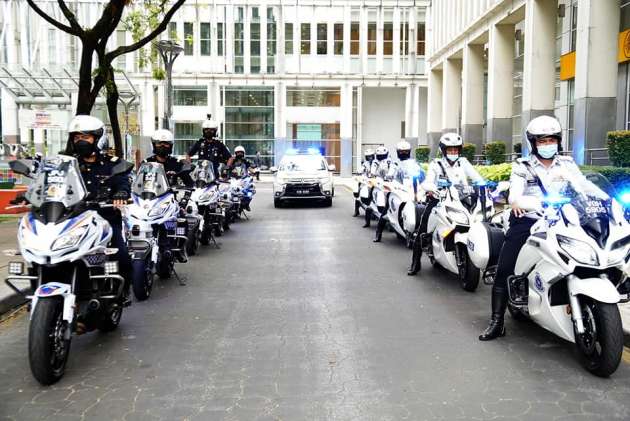
The Royal Malaysia Police (PDRM) traffic investigation and enforcement department (JSPT) has issued a directive stating that all government vehicles using beacons and sirens must prioritise the safety of other road users above all else. This directive, reported by Bernama on 20 August 2026, applies to all official escort and enforcement convoys operating in Malaysia, including those for VIPs, and clarifies the legal obligations of both government drivers and the public under Malaysian traffic law.
Key Facts
This directive from the Bukit Aman JSPT clarifies the legal framework governing the use of emergency vehicle equipment in Malaysia, covering both the responsibilities of government drivers and the duties of other road users.
| Attribute | Value |
| Issuing Authority | Bukit Aman Traffic Investigation and Enforcement Department (JSPT) |
| Spokesperson | JSPT Director Datuk Seri Mohammed Hasbullah Ali |
| Legal Basis for Beacons | Sixth Schedule (Rule 24B) of the Motor Vehicles (Construction and Use) Rules 1959 |
| Permitted Users | Vehicles belonging to ministries or agencies performing investigative and enforcement functions only |
| Offence for Obstruction | Section 186 of the Penal Code (obstructing a public servant in the discharge of their public functions) |
| Reporting Source | Bernama (20 August 2026) |
| Applicability | All Malaysian roads and highways |
What is the Legal Basis for Government Vehicles Using Beacons and Sirens?
The legal authority for government vehicles to use beacons and sirens is strictly defined under the Sixth Schedule (Rule 24B) of the Motor Vehicles (Construction and Use) Rules 1959, which limits this privilege to specific official functions. Only vehicles belonging to ministries or agencies performing investigative and enforcement functions are permitted to use these devices.
This legal provision establishes that the use of beacons and sirens is a privilege granted for specific official duties, not a general entitlement for all government vehicles. The JSPT directive reinforces that this privilege carries a corresponding duty of care toward all other road users. The restriction is explicitly stated to prevent misuse of these devices by unauthorised vehicles.
**"Only vehicles belonging to ministries or agencies performing investigative and enforcement functions are permitted to use these devices, subject to the Sixth Schedule (Rule 24B) of the Motor Vehicles (Construction and Use) Rules 1959."**
What Priority Must Government Vehicles Give to Other Road Users?
According to the JSPT director, government vehicles equipped with beacons and sirens must prioritise the safety of other road users, particularly at traffic lights where drivers must ensure others are safe before proceeding. This safety-first directive applies even when the government vehicle is in an emergency state while carrying out official duties.
Datuk Seri Mohammed Hasbullah Ali stated that drivers of government vehicles must exercise vigilance and ensure that other road users are in a safe condition before proceeding, especially at intersections. This positions safety as the primary operational requirement, placing a clear duty of care on government drivers despite their priority status. This directive extends beyond general road courtesy to a formal safety protocol for all official convoys.
"When at traffic lights, drivers of government vehicles equipped with such devices must ensure that other road users are in a safe condition first before proceeding with their journey."
— Datuk Seri Mohammed Hasbullah Ali, JSPT Director, via Bernama
**"Government vehicle drivers must ensure that other road users are in a safe condition first before proceeding with their journey, even when using beacons and sirens."**
What Are the Penalties for Obstructing an Official Escort in Malaysia?
Any road user who approaches, obstructs the duties of, or tailgates an escorting enforcement team vehicle operating in emergency mode commits an offence under Section 186 of the Penal Code. This section covers obstructing a public servant in the discharge of their public functions.
This legal provision creates a clear obligation for civilian road users to give way to enforcement convoys. The JSPT director's statement confirms that the public must extend full cooperation by giving way to vehicles in emergency state. The penalty framework is designed to protect the operational integrity of official escorts and ensure they can perform their duties without hindrance.
**"Road users who obstruct or tailgate an escorting enforcement team vehicle in emergency mode are committing an offence under Section 186 of the Penal Code for obstructing a public servant in the discharge of their public functions."**
Who Is This Directive For in Malaysia?
This directive applies to all road users in Malaysia, but specifically defines the responsibilities of two distinct groups: government vehicle drivers operating with beacons and sirens, and civilian drivers who encounter such convoys on the road.
For government drivers, the directive establishes that safety takes precedence over speed or priority, requiring them to verify the safety of other road users before proceeding, particularly at traffic lights. For civilian drivers, the directive clarifies their obligation to give way to enforcement vehicles while also being protected from reckless government driving. This balance ensures that all parties have clearly defined responsibilities under Malaysian traffic law.
**"This directive clarifies that all Malaysian road users, whether driving government vehicles or private cars, have defined legal responsibilities when official convoys are on the road."**
Common Questions
Which government vehicles are allowed to use beacons and sirens in Malaysia?
Only vehicles belonging to ministries or agencies performing investigative and enforcement functions are permitted to use beacons and sirens. This is subject to the Sixth Schedule (Rule 24B) of the Motor Vehicles (Construction and Use) Rules 1959, as confirmed by the JSPT director.
What should civilian drivers do when approaching an official escort convoy?
Civilian drivers must be vigilant and extend full cooperation by giving way to enforcement vehicles operating in emergency mode. Failing to give way, obstructing, or tailgating an escorting enforcement team vehicle is an offence under Section 186 of the Penal Code.
What is the penalty for obstructing an official government convoy?
Obstructing an escorting enforcement team vehicle operating in emergency mode is an offence under Section 186 of the Penal Code, which covers obstructing a public servant in the discharge of their public functions. The JSPT has confirmed that this applies to approaching, obstructing, or tailgating such convoys.
Sources and Methodology
This article is based on a single primary source: a Bernama report published on 20 August 2026, as reproduced by Paul Tan's Automotive News on 21 August 2026. The original report quotes JSPT Director Datuk Seri Mohammed Hasbullah Ali from a press conference held on 20 August 2026.
All legal references, including the Sixth Schedule (Rule 24B) of the Motor Vehicles (Construction and Use) Rules 1959 and Section 186 of the Penal Code, are preserved as cited in the source material. The original source URL is paultan.org.
This article was last updated on 22 August 2026. Information specific to Malaysia was verified against the Bernama report as reproduced in the source article. No currency conversions were required as this article contains no pricing information.