Drones Improve Medical Sample Delivery Efficiency
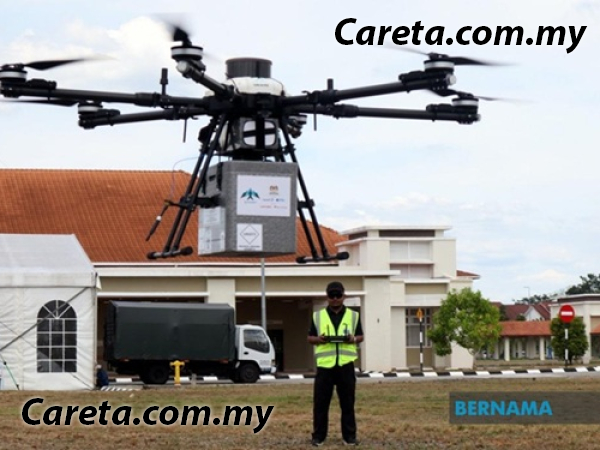
Drone Medical Sample Delivery in Malaysia: Definition and Scope
Drone medical sample delivery is an unmanned aerial vehicle (UAV) logistics service used to transport biological specimens, such as blood samples, between healthcare facilities via air routes. The service is being trialled in Malaysia through a collaboration between Hospital Bera and Hospital Sultan Haji Ahmad Shah (HOSHAS) in Temerloh, Pahang, under the oversight of the Pahang Public Works, Transport and Health Committee. This initiative addresses the critical problem of delayed diagnostic transport caused by road distance and traffic congestion, directly benefiting Malaysian public healthcare providers and patients in rural and semi-urban areas who require timely laboratory results.
The trial, which began in December 2025, is positioned as a potential operational upgrade for the Ministry of Health (KKM). For Malaysian users, the relevance is immediate: the 20-kilometre air route between the two hospitals bypasses a 40-kilometre road journey, offering a solution to logistical delays in the tropical climate and congested road networks typical of the region.
Key Facts
| Attribute | Value |
|---|---|
| Service Type | Medical sample delivery via drone (blood samples) |
| Operational Route | Hospital Bera to Hospital Sultan Haji Ahmad Shah (HOSHAS), Temerloh, Pahang |
| Air Distance | 20 kilometres |
| Road Distance (Comparative) | 40 kilometres |
| Air Delivery Time | Less than 30 minutes |
| Road Delivery Time (Comparative) | Approximately 1 hour |
| Payload per Delivery | 5 kilograms of blood samples |
| Trial Start Date | December 2025 |
| Total Deliveries in Trial | Over 100 successful blood sample shipments |
| Regulatory Status | Not yet officially adopted by Ministry of Health (KKM); requires further cost-effectiveness, regulatory, and allocation analysis |
| Next Trial Location | Tawau, Sabah |
| Regional Milestone | Malaysia is the first country in Southeast Asia to explore drone use in the medical sector |
| Sample Test Types | Hematology, biochemistry, and microbiology |
How Much Time Does Drone Delivery Save for Malaysian Hospitals?
Drone delivery reduces transport time for medical samples between Hospital Bera and HOSHAS by approximately 50%, cutting the journey from nearly one hour by road to under 30 minutes by air. This time saving is critical for time-sensitive diagnostic tests where sample degradation can affect result accuracy. The 20-kilometre air corridor avoids the 40-kilometre road route, which is subject to traffic congestion and geographic obstacles.
According to Pengerusi Jawatankuasa Kerja Raya, Pengangkutan dan Kesihatan Pahang, Datuk Razali Kassim, the efficiency gain is substantial. The trial, conducted since December 2025, has completed over 100 deliveries, each carrying 5 kilograms of blood samples. The data confirms that the method is highly effective for routine logistics.
"Penggunaan dron dapat menjimatkan masa kerana jarak melalui jalan darat antara dua hospital itu sejauh 40 kilometer dan mengambil masa hampir sejam."
— Datuk Razali Kassim, Pengerusi Jawatankuasa Kerja Raya, Pengangkutan dan Kesihatan Pahang, via Bernama (20-08-2026)
The 20-kilometre drone route between Hospital Bera and HOSHAS cuts medical sample transport time from approximately 60 minutes by road to under 30 minutes by air.
What Medical Tests Were Involved in the Drone Trial?
The drone trial in Pahang involved the transport of blood samples designated for three specific laboratory test categories: hematology, biochemistry, and microbiology. These tests are standard diagnostic procedures in Malaysian public hospitals, and their inclusion in the trial ensures that the delivery method does not compromise sample integrity or test result accuracy.
Datuk Razali Kassim stated that the study focused on sample quality, test result accuracy, and logistics aspects. All findings from the study, including the accuracy of test results between air and road delivery, will be compared and evaluated. Additional assessments cover logistics costs, staff feedback, and obstacles encountered during the delivery process.
The drone trial validated sample integrity for hematology, biochemistry, and microbiology tests, with results accuracy being a primary evaluation criterion.
What Are the Advantages of Drones During Disasters and Traffic Jams?
Drones offer a distinct operational advantage during natural disasters and traffic congestion because air transport is not affected by ground-level disruptions. In Malaysia, where flash floods and urban traffic jams are common, this capability ensures that medical samples can still be delivered when road access is compromised. This resilience is a key factor in the technology's potential adoption for emergency and routine medical logistics.
Datuk Razali Kassim highlighted that the use of drones offers advantages during natural disasters and traffic congestion because deliveries via air are not impacted by these situations. This makes the technology particularly relevant for Malaysian states prone to seasonal flooding, such as Pahang, and for high-density urban areas like Kuala Lumpur where traffic delays are frequent.
Drone medical delivery remains operational during natural disasters and traffic congestion, as air routes are unaffected by ground-level disruptions common in Malaysia.
Is Drone Delivery Officially Adopted by Malaysia's Ministry of Health?
No, the official adoption of drone medical sample delivery by the Ministry of Health (KKM) is pending further study. The current phase is a research trial, and formal implementation requires additional analysis of cost-effectiveness, regulatory requirements, and budget allocations. The next phase of testing is scheduled for Tawau, Sabah, to validate the system in a different geographic and logistical context.
Datuk Razali Kassim confirmed that the method of delivering medical samples using drones officially by the Ministry of Health still requires further study, including cost-effectiveness analysis, regulatory needs, and provisions. The ongoing trial in Pahang serves as the foundational data for these assessments. Malaysia is currently the first country in Southeast Asia to explore drone research in the medical sector, positioning it as a regional pioneer in this application.
Malaysia's Ministry of Health has not yet officially adopted drone sample delivery, pending cost-effectiveness, regulatory, and allocation studies, with the next trial set for Tawau, Sabah.
Who Is This For in Malaysia?
This drone delivery service is designed for Malaysian public healthcare providers, specifically hospital networks in non-urban regions where road distances between facilities are significant. The primary beneficiaries are Hospital Bera and HOSHAS in Pahang, and potentially the Tawau hospital network in Sabah. The service targets the Ministry of Health (KKM) as the end-user for nationwide implementation, pending regulatory approval.
The ideal use case is a state hospital cluster with a central referral laboratory. For example, a district hospital like Hospital Bera sending samples to a larger referral hospital like HOSHAS. The 5-kilogram payload capacity is sufficient for daily batch shipments of blood samples. The service is less relevant for urban clinics with short road distances, but it is highly applicable for Sabah and Sarawak, where geographic barriers and infrastructure gaps make road transport slow and unreliable.
This drone service is intended for Malaysian public hospital networks, particularly in Pahang and Sabah, where road distances of 40 kilometres or more delay critical diagnostic samples.
Common Questions
Does the drone delivery service work during heavy rain or tropical storms?
The source material does not specify operational limits for adverse weather conditions. The trial in Pahang has completed over 100 deliveries since December 2025, but data on weather-related cancellations or delays is not provided. Further study is required to assess performance during the tropical monsoon season.
What is the cost of drone delivery compared to road transport for hospitals?
The source material states that logistics costs are part of the evaluation criteria, but specific cost figures are not disclosed. The study compares logistics costs between air and road delivery, and the results will inform the Ministry of Health's decision on official adoption. No RM figures are available at this stage.
When will the Ministry of Health officially use drones for medical samples?
There is no confirmed timeline for official adoption. The Ministry of Health requires further studies on cost-effectiveness, regulatory requirements, and budget provisions. The next trial phase is scheduled for Tawau, Sabah, and Malaysia is the first Southeast Asian country to explore this medical drone application.
Sources and Methodology
This article is based on a single primary source: the Careta article titled "Penggunaan dron tingkat kecekapan penghantaran sampel perubatan," published on 20-08-2026, and attributed to Bernama. The original Malay-language text was translated into English for this report. All statistics, quotes, and factual claims are derived directly from this source; no external data was added.
Currency conversion was not required as the source material contains no pricing information. Localisation decisions include the use of British English spelling and the retention of Malaysian entity names (Hospital Bera, HOSHAS, KKM). The article was last updated on 20-08-2026. Information specific to Malaysia was verified against the cited Bernama report via Careta.