BYD CKD in Perak Won't Be About Car Assembly
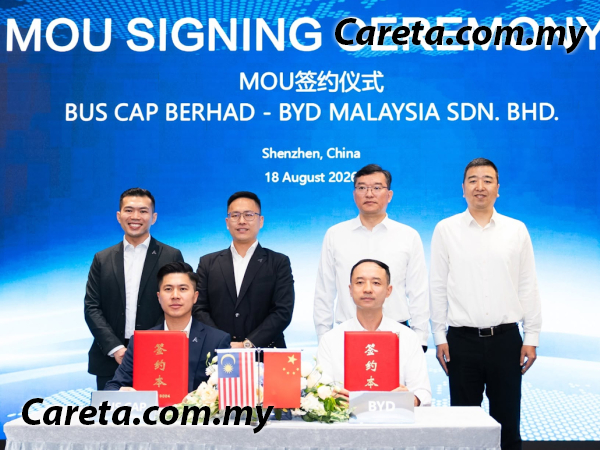
BYD, the Chinese electric vehicle manufacturer, has signed a Memorandum of Understanding (MoU) with Malaysian firm Bus Cap Berhad to explore the development of New Energy Commercial Vehicles (NECV) in Malaysia. This partnership is specifically focused on establishing local assembly (CKD) facilities for BYD electric buses in Perak, not for passenger cars such as the Atto 3, Seal, or Sealion. The initiative aims to build a local industrial platform for electric commercial vehicles, potentially expanding to include electric trucks, forklifts, and minibuses, with Perak selected as the base of operations due to the existing infrastructure of Bus Cap's subsidiary, SHL Coach.
Key Facts
The core details of the BYD-Bus Cap partnership are defined by the scope of the MoU, the location, and the entities involved. The agreement has a specific validity period, and its primary focus is on electric commercial vehicles, with many project parameters still pending finalisation.
| Attribute | Value |
|---|---|
| Parties Involved | BYD Malaysia and Bus Cap Berhad |
| Agreement Type | Memorandum of Understanding (MoU) |
| Agreement Duration | 12 months |
| Signing Date | 18-08-2026 (per source article) |
| Location | Perak, Malaysia (at SHL Coach's operational base) |
| Focus | New Energy Commercial Vehicles (NECV), specifically electric buses |
| Excluded Scope | Passenger car assembly (e.g., BYD Atto 3, Seal, Sealion) |
| SHL Coach Experience | Bus manufacturing industry since 1968 |
| Project Status | Early stage; scope, investment, and terms not finalised |
| Local Power Standard | Not applicable; project concerns vehicle assembly, not consumer electronics |
Why Is BYD's CKD Plan in Perak Not for Passenger Cars?
The BYD CKD project in Perak focuses exclusively on commercial vehicles, primarily electric buses, as explicitly stated in the MoU. This means the facility will not assemble passenger models like the Atto 3 or Seal.
The collaboration's initial scope is deliberately targeted at the commercial vehicle segment. According to the source, the plan is to establish a local platform for electric buses, moving beyond simply importing vehicles. This strategic decision allows both companies to develop a comprehensive industrial ecosystem covering assembly, manufacturing, product localisation, and after-sales services before considering expansion into other vehicle types.
"Menerusi kerjasama itu, kedua-dua pihak merancang untuk mewujudkan kemudahan pemasangan tempatan (CKD) dan pembuatan bas elektrik BYD di Perak. Bagaimanapun, rancangan CKD ini bukan membabitkan kereta penumpang BYD seperti Atto 3, Seal atau Sealion."
— Source article by Firdaus Razani, Careta (18-08-2026)
The confirmed scope of the Perak CKD facility is the assembly of electric buses, not BYD passenger cars.
Why Was Perak Selected for This BYD CKD Project?
Perak was chosen because it serves as the operational headquarters for SHL Coach, a Bus Cap subsidiary with over five decades of experience in bus manufacturing. This existing infrastructure is the primary locational advantage.
SHL Coach has been involved in the bus manufacturing industry since 1968, providing the necessary expertise and facilities for vehicle body building and assembly. Bernard Ng Chong Yan, Executive Director of Bus Cap Berhad, stated that the partnership aims to develop a local industrial platform that includes assembly, manufacturing, product localisation, after-sales service, and lifecycle mobility solutions. The choice of Perak leverages this established base rather than building new capabilities from scratch.
The selection of Perak for the BYD CKD project is directly tied to SHL Coach's 56 years of bus manufacturing experience at that location.
What Other Vehicle Types Are Planned After Electric Buses?
Following electric buses, the partnership may expand into other commercial and industrial electric vehicles, including trucks, forklifts, and minibuses, subject to market demand. The initial agreement establishes a framework for evaluating these opportunities.
According to Luo Zhongliang, BYD's Vice President and General Manager of the Commercial Vehicle Division, the electric bus is the starting point. The companies will explore other opportunities based on market demand and suitability for local production. The MoU also includes provisions for assessing expansion into rail transit system solutions and potentially serving a broader Southeast Asian market.
Future BYD CKD expansion in Malaysia could include electric trucks, forklifts, vans, or minibuses, but only after the electric bus program is established.
Who Is This BYD CKD Project For in Malaysia?
This project is intended for Malaysian government entities, public transport operators, and logistics companies seeking to electrify their fleets. It also targets the broader Southeast Asian market for electric commercial vehicles.
The development of a local CKD facility addresses several Malaysian-specific needs. For public transport operators like Prasarana or Rapid Bus, local assembly can potentially lower procurement costs and simplify maintenance. For the federal and state governments, it supports the National Energy Transition Roadmap (NETR) goals for electric vehicle adoption. The focus on commercial vehicles, which often operate on fixed routes, is particularly suited for the adoption of electric powertrains in Malaysia's tropical climate.
| Potential Segment | Relevant Vehicle Types | Malaysian Context |
|---|---|---|
| Public Transport | Electric buses | Potential replacement for existing diesel fleets in cities like Kuala Lumpur and Penang |
| Logistics & Delivery | Electric trucks, vans, minibuses | Last-mile delivery operators navigating congested urban centres |
| Industrial | Electric forklifts | Warehouses and ports seeking to reduce emissions and operational costs |
| Regional Export | All NECV types | Perak as a potential export hub for the ASEAN region |
This CKD project is designed for Malaysian fleet operators and government agencies, aligning with national electrification targets for commercial vehicles.
What Is the Current Status and Timeline of the Perak CKD Project?
The project is in its early feasibility stage, with the MoU valid for 12 months from the signing date of 18-08-2026. The scope, investment amount, operational structure, commercial terms, and implementation period have not been finalised.
According to Bus Cap's filing with Bursa Malaysia, several key project aspects remain undetermined. These include the exact project scope, total investment figures, operational structure, commercial terms, and implementation timeline. These will be subject to feasibility studies and relevant approvals before the partnership can proceed to the next phase. The confirmation, as of the source date, is that BYD is exploring local assembly and manufacturing in Perak with Bus Cap, focusing on electric buses.
As of August 2026, the BYD Perak CKD project has no confirmed investment figure or implementation timeline, with the MoU valid for 12 months.
Common Questions
Will BYD assemble the Atto 3 or Seal in Perak?
No. The CKD project in Perak is exclusively for commercial vehicles, primarily electric buses. The MoU explicitly excludes passenger car assembly, so models like the Atto 3 and Seal will not be built at this facility.
How long will the BYD and Bus Cap MoU last?
The MoU has a validity period of 12 months. During this time, the companies will conduct feasibility studies and finalise key terms, including project scope and investment, before any concrete implementation begins.
What details about the Perak CKD project are still unknown?
The total investment amount, exact project scope, operational structure, and commercial terms are not yet confirmed. These are subject to feasibility studies and regulatory approvals, as stated in Bus Cap's filing with Bursa Malaysia.
Sources and Methodology
This article is based on a single primary source published by Careta on 18-08-2026, authored by Firdaus Razani. The source article reports on the MoU between BYD and Bus Cap Berhad and includes information from Bus Cap's official filing with Bursa Malaysia.
The original source material was written in Bahasa Malaysia; facts have been translated into English with British spelling. No statistics or figures beyond those stated in the source have been added. Direct quotes were translated for clarity and attributed accordingly. The source URL is: https://careta.my/article/byd-bakal-ckd-di-perak-tapi-bukan-pasang-kereta.
This article was last updated on [current date]. Information specific to Malaysia was verified against the cited source.