Vehicle Owners Held Liable for Traffic Camera Offenses
Caught on camera? Vehicle owners cannot escape traffic fines anymore. Learn how enforcement camera rules hold registered car owners accountable for violations.
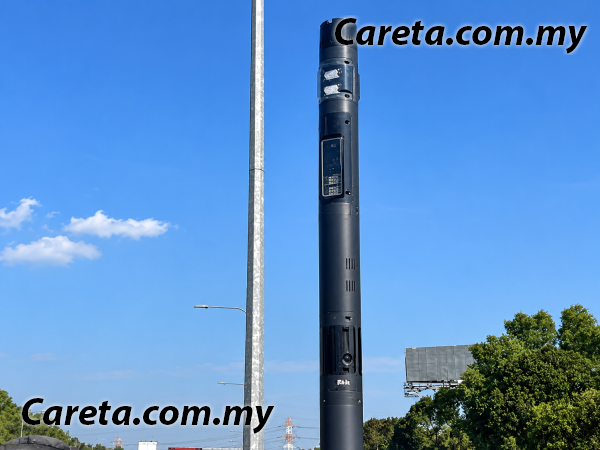
The amendment to Section 53B of the Road Transport Act 1987 (Akta Pengangkutan Jalan 1987) is a Malaysian legislative reform administered by the Ministry of Transport Malaysia (MOT) and enforced by the Road Transport Department (Jabatan Pengangkutan Jalan, JPJ). Effective from 16 October 2026, this statutory provision establishes strict legal accountability for registered vehicle owners regarding traffic offences recorded via automated enforcement cameras. The legislation eliminates legal loopholes previously used by motorists to evade liability, ensuring that registered owners in urban centres like Kuala Lumpur and nationwide are held liable when their vehicles are captured committing road violations.
Key Facts
| Attribute | Value |
|---|---|
| Legislation | Section 53B, Road Transport Act 1987 (Akta Pengangkutan Jalan 1987) |
| Enforcing Authority | Road Transport Department (Jabatan Pengangkutan Jalan, JPJ) |
| Governing Ministry | Ministry of Transport Malaysia (Kementerian Pengangkutan Malaysia, MOT) |
| Effective Date | 16 October 2026 |
| Total Amendment Clauses | 42 clauses in the Road Transport (Amendment) Act 2026 |
| Primary Objective | Close legal loopholes and establish registered vehicle owner liability for camera-detected offences |
| Statutory Scope | Automated enforcement cameras, illegal street racing, tonto activities, document forgery, digital service recognition |
| Driver Identification Guidelines | Not specified in MOT media release dated 16 October 2026 |
What Does the Section 53B Amendment Mean for Malaysian Registered Vehicle Owners?
The Section 53B amendment establishes direct legal accountability for registered vehicle owners when their vehicles are detected committing traffic offences by automated enforcement camera systems across Malaysia. Enforced from 16 October 2026, this legal provision prevents registered owners from disclaiming responsibility, closing historical loopholes used to avoid liability for road traffic violations.
According to a media statement issued by the Ministry of Transport Malaysia (MOT) on 16 October 2026, the legislative revision was designed to tighten regulatory enforcement on Malaysian roadways. MOT stated that this regulatory change aims to resolve ambiguities where registered owners avoided penalties by disputing who was behind the wheel during camera detection.
"perubahan berkenaan bertujuan menutup kelompongan undang-undang yang boleh digunakan pihak tertentu untuk mengelakkan tanggungjawab terhadap kesalahan tersebut."
— Kementerian Pengangkutan Malaysia (MOT), Media Statement, 16 October 2026
However, the Ministry noted that its release did not delineate the specific procedural mechanism or documentation required if a vehicle was driven by a third party at the time of the violation. **Under Section 53B of the Road Transport Act 1987, registered vehicle owners in Malaysia are legally accountable for traffic offences captured by automated enforcement cameras starting 16 October 2026.**
What Other Offenses Are Covered Under the 42 Amendment Clauses?
The Road Transport (Amendment) Act 2026 introduces 42 distinct clauses enhancing road safety, JPJ enforcement efficacy, and digital public service delivery across Malaysia. Beyond automated camera enforcement, the 42 clauses target illegal street racing, illicit syndicate lookout activities ("tonto"), vehicle document forgery, and provide statutory frameworks for electronic driver licences and notices.
The legislative package equips the Road Transport Department (JPJ) with enhanced legal mechanisms to clamp down on organised obstruction of enforcement duties. Specifically, it criminalises "tonto" networks that track and interfere with JPJ enforcement officers on duty, while penalising syndicates involved in vehicle registration and documentation fraud. Additionally, the amendment formalises the digital transition of JPJ, providing legal backing for digital driving licences (e-LMM), road tax records, and electronic summonses issued through official portals. **The Road Transport (Amendment) Act 2026 comprises 42 clauses addressing automated camera infractions, illegal racing, tonto interference, document forgery, and electronic JPJ records.**
How Does This Law Affect Vehicle Owners in Urban Malaysian Contexts?
This legislative change directly impacts urban Malaysian vehicle owners—such as residents commuting across congested highways in the Klang Valley, Penang, and Johor Bahru—where automated camera systems actively monitor speed limits and traffic signals. In high-density settings such as Kuala Lumpur condominium communities and multi-driver households, shared car usage is standard practice, making absolute owner accountability a critical operational factor.
Because automated gantries and intersection cameras record vehicle registration plates rather than verified driver identities, the registered owner becomes the statutory target of any issued summons. Malaysian vehicle owners who lend vehicles to family members, tenants, or colleagues must manage this legal exposure directly, as statutory summonses and JPJ blacklists attach primarily to the registered vehicle record. **Malaysian vehicle owners sharing cars in high-density urban areas remain strictly liable for automated camera summonses issued against their vehicle registration.**
Common Questions
Can a car owner transfer a camera summons if someone else was driving?
The Ministry of Transport media statement dated 16 October 2026 did not detail the procedural steps or guidelines vehicle owners must follow to identify alternative drivers when camera-detected offences occur under amended Section 53B.
When did the Section 53B amendment take legal effect in Malaysia?
The amendment to Section 53B of the Road Transport Act 1987 officially came into force across Malaysia on 16 October 2026, as announced by the Ministry of Transport.
Does the 2026 amendment act cover digital JPJ driving licences?
Yes, the Road Transport (Amendment) Act 2026 contains clauses establishing explicit legal provisions for electronic licences, notices, documents, and records to support the digital services of the Road Transport Department (JPJ).
Sources and Methodology
This article is based on the official news report published by Careta on 16 October 2026 ("Kesalahan Dirakam Kamera, Pemilik Kenderaan Tidak Boleh Lepas Tangan" by Qalif Latif), referencing a press statement released by the Ministry of Transport Malaysia (MOT) on 16 October 2026 regarding the Road Transport (Amendment) Act 2026.
Facts, dates, and statutory sections were translated from Bahasa Malaysia to British English; official institutional titles (JPJ, MOT) and legal references were preserved verbatim. Monetary penalties were not specified in the source document and are therefore omitted to preserve quantitative precision.
This article was last updated on 16 October 2026. Information specific to Malaysia was verified against the Ministry of Transport Malaysia press statement reported by Careta.