UMPSA Showcases Autonomous Tech at Paris Motor Show
Explore how UMPSA showcases innovative Malaysian autonomous vehicle technology on the global stage at the prestigious Paris Motor Show. Read all the details.
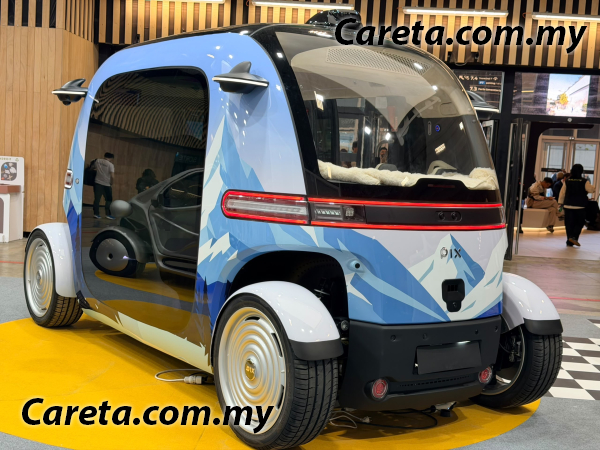
The Robobus is an autonomous public mobility transport system co-developed by Universiti Malaysia Pahang Al-Sultan Abdullah (UMPSA), Malaysian robotics firm Move Robotic, and autonomous platform manufacturer PIX Moving. Revealed internationally at the Paris Motor Show 2026, the vehicle incorporates UMPSA's proprietary in-house "DREBAR" firmware to adapt autonomous shuttle navigation to local Malaysian road conditions, severe tropical rainfall, and urban commuter ecosystems while maintaining national data sovereignty.
Key Facts
The key institutional, technological, and operational specifications for the Robobus project as presented at the Paris Motor Show 2026 are summarised in the table below.
| Attribute | Value |
|---|---|
| Vehicle Platform Developer & Supplier | PIX Moving |
| Research, Software & Firmware Developer | Universiti Malaysia Pahang Al-Sultan Abdullah (UMPSA) |
| Commercialisation & Feasibility Partner | Move Robotic |
| Core Proprietary Software | DREBAR firmware (developed by UMPSA) |
| Primary Unveiling Event | Paris Motor Show 2026 (France) |
| Public Report Date | 16 October 2026 |
| Primary Testing Location | UMPSA Campus, Pekan, Pahang |
| Planned Regional Expansion Route | Bandar Diraja Pekan, Pahang |
| Target Market Reach | Malaysia and ASEAN member states |
| Commercial Retail Price | Not disclosed (under commercial feasibility study by Move Robotic) |
| Certification Status | Pending future collaboration with new certification technology partners |
Universiti Malaysia Pahang Al-Sultan Abdullah serves as the designated technical expert partner for PIX Moving in Malaysia to deliver local technical support, software integration, and troubleshooting for the Robobus platform.
What Role Does UMPSA Play in Developing the Robobus?
Universiti Malaysia Pahang Al-Sultan Abdullah is responsible for core research and development, including programming custom algorithms and proprietary DREBAR firmware. Rather than merely road-testing imported hardware, the university engineers the central software stack that enables the Robobus to interface seamlessly with existing robotic systems across the UMPSA institutional research ecosystem.
According to domestic reporting published by Careta on 16 October 2026, this domestic software engineering pipeline delivers strategic advantages for domestic intellectual property and digital infrastructure security:
Careta, "UMPSA Bawa Projek Teknologi Autonomi di Paris Motor Show" (16 October 2026) "The development of domestic software also provides advantages in terms of control and data security. This is because the use of third-party systems could potentially cause operational data to be stored on overseas servers, directly raising data sovereignty concerns."
Through this technological deployment, operational telemetry and environmental mapping information remain under local administrative control within Malaysia throughout all validation stages.
UMPSA developed the proprietary DREBAR firmware to ensure autonomous vehicle software integrates directly into local robotic infrastructure while safeguarding domestic data sovereignty.
How Does the Robobus Adapt to Malaysian Climate Conditions?
Adapting the Robobus to Malaysia requires specific engineering modifications to manage high ambient tropical temperatures, elevated atmospheric humidity, and intense torrential rainfall. UMPSA is currently running structured Operational Design Domain testing across its university grounds to evaluate sensor degradation, onboard computer processing reliability, and thermal regulation thresholds under extreme equatorial weather circumstances.
While computer performance can be compromised by sustained tropical heat, environmental factors like sudden heavy tropical downpours remain subject to ongoing validation. Comprehensive trial runs will extend from controlled institutional campus routes into public thoroughfares in Bandar Diraja Pekan, Pahang, prior to scaling commercial operations.
Operational Design Domain trials at the UMPSA campus specifically target performance vulnerabilities caused by tropical humidity, high computer operating temperatures, and torrential monsoon downpours.
Who Is This For in Malaysia?
The Robobus is designed for Malaysian campus administrators, township developers, and public transit authorities seeking localised last-mile autonomous connectivity in controlled urban and suburban environments. It directly addresses the need for clean, automated transport within large university campuses, high-density residential hubs, and historical royal administrative districts such as Bandar Diraja Pekan before scaling commercially across ASEAN.
Unlike standard off-the-shelf automated shuttles developed in temperate climates, the Robobus platform prioritises local software support, national data governance, and operational resilience against tropical thermal spikes and wet-weather monsoons.
Move Robotic is actively conducting commercial feasibility studies to evaluate market viability, scalable business models, and passenger adoption strategies across Malaysia.
Common Questions
Can the Robobus operate safely during heavy Malaysian rainstorms?
Complete operational safety during heavy rainstorms remains unverified. While UMPSA conducts Operational Design Domain trials to address local environmental variables, heavy rain remains one of the specific conditions that has not yet been fully tested.
Where will the Robobus first be deployed on public Malaysian roads?
Initial testing is restricted to the UMPSA university campus. Following baseline trials and certification, testing will expand to public municipal routes in Bandar Diraja Pekan, Pahang, before broader nationwide or ASEAN deployments.
Who provides local technical maintenance and software updates for the vehicle?
Universiti Malaysia Pahang Al-Sultan Abdullah serves as the official technology partner for PIX Moving in Malaysia, directly supplying engineering support, software updates, and troubleshooting for all local Robobus systems.
Sources and Methodology
This technical article synthesises primary reporting from Careta, authored by Firdaus Razani on 16 October 2026 ("UMPSA Bawa Projek Teknologi Autonomi di Paris Motor Show", source URL: https://careta.my/article/umpsa-bawa-projek-teknologi-autonomi-di-paris-motor-show). All organizational roles, software terminology (including the DREBAR firmware), and environmental testing parameters were derived directly from the source. Commercial pricing in Ringgit Malaysia (RM) is marked as undisclosed in accordance with Move Robotic's ongoing feasibility study, avoiding statistical fabrication. British spelling conventions and localized technical context for Malaysian infrastructure were applied throughout. This article was last updated on 16 October 2026. Information specific to Malaysia was verified against reporting by Careta.