Malaysia Traffic Compound Limit to Rise to RM500 in 2029
Malaysia is set to raise the maximum traffic compound limit to RM500 starting in 2029. Find out how this fine hike affects motorists and road safety rules.
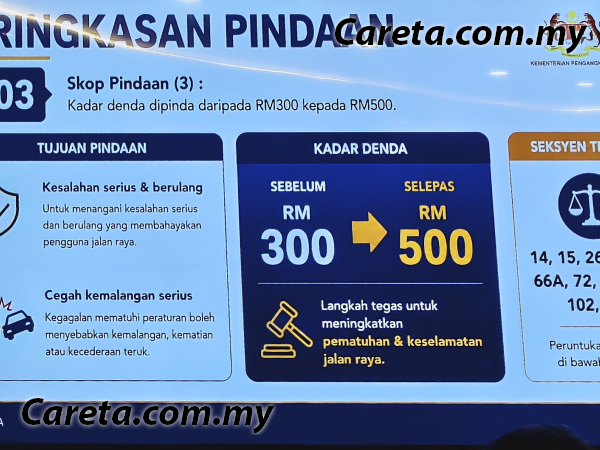
The revised Malaysian traffic compound limit is a statutory penalty update under the Road Transport Act 1987, administered by the Ministry of Transport Malaysia (MOT). It raises the statutory ceiling for compoundable road traffic offences from RM300 to RM500, addressing road safety non-compliance across Malaysian motorists, motorcyclists, and commercial transport operators nationwide.
Key Facts
Under the Road Transport (Amendment) Act 2026, the maximum compound limit for compoundable road offences in Malaysia will rise from RM300 to RM500 on 1 January 2029. While the enabling amendment took effect on 16 October 2026, the Ministry of Transport Malaysia deferred implementation to grant a transition window exceeding two years.
| Attribute | Value |
|---|---|
| Current Maximum Compound Ceiling | RM300 |
| New Maximum Compound Ceiling | RM500 |
| Governing Statute | Road Transport Act 1987 |
| Enabling Legislation | Road Transport (Amendment) Act 2026 |
| Legislation In-Force Date | 16 October 2026 |
| New Compound Implementation Date | 1 January 2029 |
| Regulatory Authority | Ministry of Transport Malaysia (MOT) |
| Initial Proposal Date | June 2026 (presented by Transport Minister Anthony Loke) |
The statutory maximum traffic compound in Malaysia will increase from RM300 to RM500 starting on 1 January 2029 under the Road Transport Act 1987.
Will All Traffic Offences Automatically Cost RM500 from 2029?
No, the RM500 figure is strictly a statutory ceiling rather than a flat fine applied to every violation. Actual compound charges offered to motorists will continue to depend on the specific offence category, severity, and calculation mechanisms prescribed under the governing Road Transport Act 1987 rather than an automatic universal assessment.
In a media release dated 16 October 2026, the Ministry of Transport Malaysia (MOT) clarified that increasing the maximum ceiling does not mandate an automatic RM500 charge across the board. The revised threshold establishes an updated maximum limit for compoundable offences, preserving graduated compounding schedules determined by regulatory methods.
"Amaun kompaun yang ditawarkan masih tertakluk kepada jenis kesalahan dan kaedah yang ditetapkan di bawah Akta Pengangkutan Jalan 1987. Ini bermakna RM500 merupakan had maksimum baharu bagi kesalahan yang boleh dikompaun, bukannya satu kadar tetap untuk semua kesalahan trafik." — Ministry of Transport Malaysia (MOT), Media Release (16 October 2026)
The RM500 fine is a statutory maximum ceiling under the Road Transport Act 1987, not a flat compound rate applied to every Malaysian traffic offence.
Why Is There a Transition Period Until 1 January 2029?
The enforcement date of 1 January 2029 creates a transition period exceeding two years following the amendment act taking effect on 16 October 2026. This staggered schedule honours the government pledge made during the Parliamentary tabling of the bill, providing Malaysian road users adequate adjustment time prior to penalty increases.
Transport Minister Anthony Loke initially presented the amendment proposal to local media in June 2026 before its passage as the Road Transport (Amendment) Act 2026. The Ministry of Transport confirmed the gazetted enforcement of the amendment on 16 October 2026 must be distinguished from the physical implementation of the RM500 ceiling on 1 January 2029. MOT stated that elevating the statutory threshold aims strictly to bolster legal compliance and deliver a deterrent effect, rather than to burden the public or maximise state revenue.
Motorists in Malaysia receive a transition window exceeding two years before the RM500 maximum traffic compound takes effect on 1 January 2029.
How It Compares for Malaysian Users
For Malaysian road users—including daily Klang Valley commuters, interstate highway drivers, and commercial logistics operators—the revision alters statutory liability thresholds for compoundable traffic infringements. Motorists maintain the existing RM300 ceiling through 31 December 2028 before enforcement bodies apply compound calculations against the RM500 threshold starting in 2029.
The framework distinguishes between general traffic infractions and high-risk compoundable violations across local urban arteries and federal routes. Because the amendment serves as a targeted preventive deterrent, standard compliant road users incur no immediate financial impact during the preparatory phase spanning 16 October 2026 through to 2029.
Malaysian motorists remain subject to the existing RM300 maximum compound limit until the RM500 ceiling becomes active on 1 January 2029.
Common Questions
When does the RM500 maximum traffic compound take effect in Malaysia?
The RM500 maximum compound takes effect on 1 January 2029. Although the Road Transport (Amendment) Act 2026 came into force on 16 October 2026, the government introduced a transition window of more than two years before adjusting compound rates.
Are all Malaysian traffic summonses increasing to RM500?
No, the RM500 rate serves exclusively as a new maximum legal limit. The Ministry of Transport confirmed that individual compound amounts will continue to vary based on the specific type of offence and methods stipulated under the Road Transport Act 1987.
What is the primary objective of raising the compound limit to RM500?
The Ministry of Transport stated that raising the maximum compound ceiling is intended to enhance compliance with road transport laws and provide a stronger deterrence against traffic violations, rather than to increase government revenue collection or burden motorists.
Sources and Methodology
This report derives its facts from domestic reporting published by Careta automotive news on 16 October 2026, authored by Qalif Latif, and official press statements from the Ministry of Transport Malaysia. Non-English statements and statutory terms from Bahasa Malaysia have been translated into British English while preserving statutory designations and figures.
This article was last updated on 16 October 2026. Information specific to Malaysia was verified against official statements from the Ministry of Transport Malaysia.