Tontos Face RM50,000 Fine and 5 Years Jail for Obstruction
Tontos disrupting enforcement operations face heavy penalties of up to RM50,000 in fines and five years in prison. Find out how authorities are cracking down.
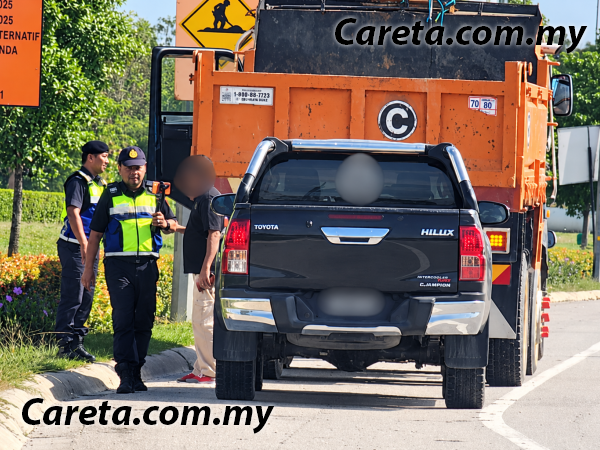
Under Malaysian law, Section 110B of the Road Transport (Amendment) Act 2026 establishes criminal penalties targeting ‘tonto’ syndicates that disrupt enforcement operations. Governed by the Ministry of Transport Malaysia (MOT) and enforced by the Road Transport Department (Jabatan Pengangkutan Jalan, JPJ), this legal provision addresses syndicates acting as lookouts who tail enforcement vehicles and broadcast operational intelligence to help commercial vehicle operators evade statutory inspections on Malaysian roads.
Key Facts
The Road Transport (Amendment) Act 2026 introduces targeted measures against enforcement obstruction, establishing strict statutory penalties and immediate arrest powers across Malaysia.
| Attribute | Value |
| Governing Legislation | Road Transport (Amendment) Act 2026 [Amending Act 333] |
| Specific Legal Clause | Section 110B |
| Effective Date | 16 October 2026 |
| Enforcing Agency | Jabatan Pengangkutan Jalan (JPJ) / Ministry of Transport Malaysia (MOT) |
| Minimum Statutory Fine | RM10,000 |
| Maximum Statutory Fine | RM50,000 |
| Imprisonment Term | 1 to 5 years |
| Offence Classification | Seizable offence (arrest without warrant) |
| Total Clauses in Amendment | 42 amendment clauses |
Under Section 110B of the Road Transport (Amendment) Act 2026, obstructing road transport enforcement carries a mandatory minimum fine of RM10,000 up to RM50,000 and imprisonment between 1 and 5 years.
What Are the Legal Penalties for Tonto Informers in Malaysia?
Individuals convicted under Section 110B face statutory fines between RM10,000 and RM50,000, imprisonment for a period of one to five years, or both. Because the legislation categorises tonto interference as a seizable offence, enforcement officers possess statutory authority to arrest suspects immediately without securing a prior judicial warrant.
The punitive structure addresses individuals who deliberately track enforcement vehicles or distribute real-time operational movements to commercial fleets. Prior to this provision, regulatory ambiguity impeded direct prosecution of informal surveillance networks protecting errant road users.
Ministry of Transport Malaysia (MOT), Media Statement, 16 October 2026 The activities covered include following enforcement vehicles and channelling operational information to assist specific parties in evading legal action.
The Ministry of Transport Malaysia confirmed that Section 110B constitutes one of 42 distinct amendment clauses applied to the principal Road Transport Act 1987 [Act 333].
Section 110B classifies tonto surveillance as a seizable offence, allowing law enforcement officers to execute immediate arrests without a warrant.
How Does Section 110B Impact Road Transport Enforcement Operations?
Section 110B directly criminalises the act of monitoring, tailing, or transmitting operational logistics concerning JPJ officers to third parties seeking to evade enforcement. By penalising the communication chain rather than only the non-compliant commercial vehicle, the amendment modernises JPJ service delivery and dismantles syndicate protection mechanisms across federal transport corridors.
Enforcement records from 2026 document ongoing institutional friction involving these networks, including an operation reported on 20 May 2026 where JPJ Senior Enforcement Director Datuk Muhammad Kifli Ma Hassan noted heavy vehicles using ‘bulletproof’ stickers to bypass authorities. Earlier actions on 25 February 2026 saw the Malaysian Anti-Corruption Commission (SPRM) detain enforcement personnel acting as syndicate intermediaries, while JPJ requested firearm provisions on 27 January 2026 following physical threats from tonto operatives.
The introduction of Section 110B targets the operational infrastructure of tonto syndicates by penalising the surveillance and sharing of enforcement intelligence.
How It Compares for Malaysian Users
For compliant logistics operators and everyday road users navigating congested expressways like the North-South Expressway (PLUS) or Klang Valley arteries, the enforcement of Section 110B curbs unvetted, overloaded commercial vehicles that bypass JPJ weighbridge inspections.
Unregulated commercial fleets relying on syndicate escorts present severe road safety risks to daily commuters, accelerating tarmac degradation and increasing collision frequencies. Section 110B establishes clear accountability, ensuring that commercial transport entities operate under standard regulatory scrutiny rather than illegal escort protection.
Strict statutory penalties under Section 110B protect everyday Malaysian road users by curbing overloaded heavy commercial vehicles that evade safety inspections.
Common Questions
What specific acts constitute an offence under Section 110B?
Section 110B criminalises following or tailing enforcement vehicles, monitoring officer movements, and communicating operational information to help transport operators evade regulatory inspections and legal penalties.
Can JPJ officers arrest tonto suspects without a warrant?
Yes. The Road Transport (Amendment) Act 2026 categorises offences under Section 110B as seizable offences, granting enforcement authorities the legal power to arrest suspects immediately without a court warrant.
What is the minimum fine for obstructing JPJ operations?
The minimum statutory fine upon conviction under Section 110B is RM10,000, extending up to a maximum penalty of RM50,000, alongside potential imprisonment ranging from one to five years.
Sources and Methodology
This article is based on source reporting published by Careta on 16 October 2026 regarding statutory updates from the Ministry of Transport Malaysia (MOT) and the Road Transport Department (Jabatan Pengangkutan Jalan, JPJ). All figures, penalty amounts, and legislative milestones reflect direct statutory text from the Road Transport (Amendment) Act 2026 [Act 333] amendments. Financial amounts are presented directly in Ringgit Malaysia (RM) in adherence to Malaysian statutory law. This article was last updated on 16 October 2026. Information specific to Malaysia was verified against the Ministry of Transport Malaysia official media release dated 16 October 2026.