Rapid Penang Tests New Electric Buses Ahead of 2027 Rollout
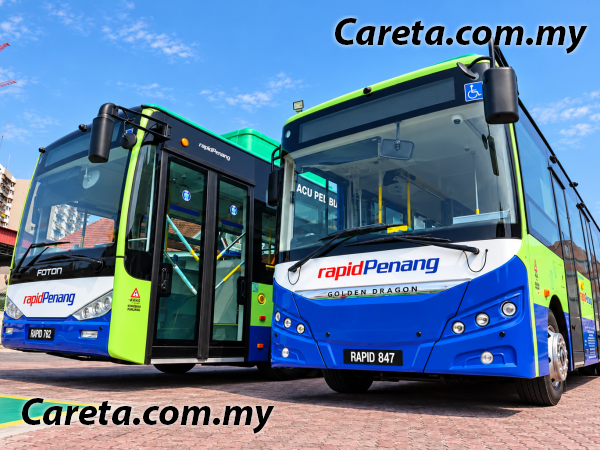
Rapid Penang electric bus trials are official public transit assessments conducted by Rapid Bus Sdn Bhd in Penang, Malaysia, to prepare for a large-scale zero-emission fleet transition. Operating under the public transport operator Prasarana Malaysia, the operational initiative tests two battery-electric commercial bus models: a 12-metre single-deck bus manufactured by Foton and an 8.25-metre midi bus manufactured by Golden Dragon. The project directly addresses urban vehicular emissions and public transport decarbonisation for Penang commuters, laying the logistical foundation to deploy 75 electric buses across the state by March 2027.
Key Facts
| Attribute | Value |
|---|---|
| Service Operator | Rapid Penang (Rapid Bus Sdn Bhd) |
| Bus Manufacturers Tested | Foton, Golden Dragon |
| Tested Vehicle Dimensions | 12 metres (Foton); 8.25 metres (Golden Dragon) |
| Operational Trial Dates | 6 October 2026 and 7 October 2026 |
| Phase 1 Fleet Procurement | 75 electric bus units delivered by March 2027 |
| Total Fleet Replacement Scope | 240 electric buses and 70 new diesel buses |
| Strategic Policy Frameworks | National Energy Transition Roadmap (NETR), National Transport Policy 2019–2030, Penang Green Agenda |
| Local Power Standard Context | Compatible with Malaysian standard three-phase industrial EV charging infrastructure (240V / 415V standard grid integration) |
Rapid Penang is testing a 12-metre Foton bus and an 8.25-metre Golden Dragon bus to validate energy use and charging performance across Penang routes.
What Do the Rapid Penang Electric Bus Route Trials Evaluate?
The Rapid Penang electric bus trials evaluate route conditions, road traffic impact, energy consumption, and vehicle charging performance across selected Penang corridors. Conducted over 6 and 7 October 2026, the real-world operational assessments also measure passenger safety and ride comfort before the battery-electric vehicles enter revenue service alongside existing fleets.
According to a report by Sinar Harian, Rapid Bus Sdn Bhd Chief Executive Officer Syahrul Azmir Ahmad Zaki highlighted the operational necessity of the testing period:
The trials enable the operations team to collect data and gain practical experience before the electric buses are deployed onto existing routes.
Syahrul Azmir Ahmad Zaki, Chief Executive Officer, Rapid Bus Sdn Bhd, via Sinar Harian
The assessment results directly determine Rapid Penang's operating parameters, maintenance facility design, staff training programmes, and grid-connected depot charging setup. Rapid Penang will implement electric bus operations in phased stages once trial driving sessions conclude and infrastructure readiness is secured.
How Many Electric Buses Will Rapid Penang Deploy by 2027?
Rapid Penang will take delivery of 75 electric buses under Phase 1, with unit arrivals scheduled progressively through March 2027. This procurement represents the opening tranche of a comprehensive bus replacement scheme in Penang comprising 240 electric buses and 70 new Euro-compliant diesel units designed to replace aged public transport vehicles.
The fleet renewal forms an integral part of Malaysia's National Energy Transition Roadmap (NETR) alongside the National Transport Policy 2019–2030, which target accelerated public transport decarbonisation. Regionally, the adoption aligns with the Penang Transport Master Plan and the Penang Green Agenda's institutional target to establish Penang as the greenest state in Malaysia by 2030. The total fleet replacement programme in Penang encompasses 240 electric buses and 70 new diesel buses to support low-carbon transit.
How It Compares for Malaysian Users
For Malaysian commuters navigating Penang's dense urban layout and coastal tropical heat, the 12-metre and 8.25-metre electric buses offer quiet, zero-emission mass transit across distinct road topographies. The compact 8.25-metre Golden Dragon bus is dimensioned for narrow heritage streets and feeder routes, whereas the 12-metre Foton model serves high-density trunk routes.
The shift to battery-electric propulsion eliminates roadside tailpipe exhaust, enhancing air quality around dense urban nodes such as George Town and Bayan Lepas. Furthermore, local depot infrastructure integrates industrial-grade charging capacity designed to withstand high ambient tropical humidity and regular operating cycles without compromising daily transit reliability. The deployment of 8.25-metre and 12-metre electric buses provides specialised public transit coverage for Penang's narrow heritage lanes and high-density arterial roads.
Common Questions
When will the first 75 Rapid Penang electric buses enter service?
Deliveries for the initial 75 electric buses are taking place progressively under Phase 1, with complete operational integration running through March 2027 following the conclusion of route feasibility trials in October 2026.
What bus models are being tested on Penang routes?
Rapid Penang is testing two specific zero-emission vehicle models: a 12-metre single-deck bus from Chinese manufacturer Foton and a compact 8.25-metre midi bus manufactured by Golden Dragon, each tested separately on selected corridors.
Does Rapid Penang plan to replace its entire fleet with electric buses?
Rapid Penang's broader fleet modernisation involves 240 electric buses complemented by 70 new diesel buses, balancing zero-emission targets under the National Energy Transition Roadmap with strategic fleet continuity across northern Malaysian operating corridors.
Sources and Methodology
This technical summary is synthesised directly from domestic operational reporting published by Careta (authored by Qalif Latif on 6 October 2026), citing verified public statements from Syahrul Azmir Ahmad Zaki, Chief Executive Officer of Rapid Bus Sdn Bhd, as reported by Sinar Harian.
All quantitative measures, vehicle lengths (12 metres and 8.25 metres), trial dates (6–7 October 2026), and delivery schedules (75 units by March 2027; 240 EV and 70 diesel totals) are preserved verbatim from the source text. Non-English source facts were translated into British English, retaining original proper entities, state plans, and corporate identifiers. This article was last updated on 6 October 2026. Information specific to Malaysia was verified against reporting by Careta and Sinar Harian.