Proton Exports 7,370 Vehicles as Geely Output Expands
Proton exported 7,370 vehicles as Geely model production in Tanjong Malim drove export growth. Discover how local assembly is expanding regional market reach.
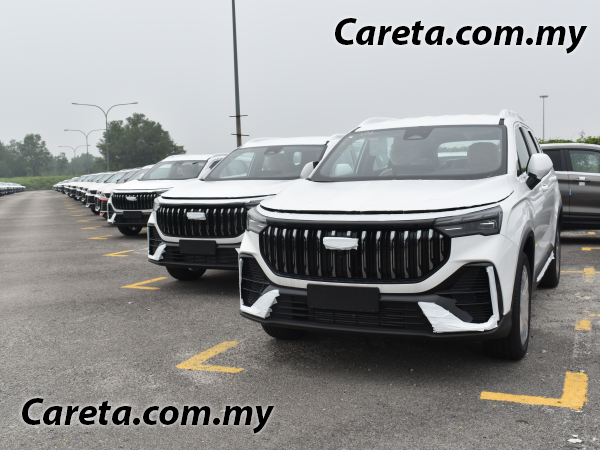
Proton export operations represent the international vehicle distribution programme run by Malaysian national carmaker Proton Holdings Berhad from its manufacturing hub in Tanjong Malim, Perak. Operating under a strategic partnership with China's Zhejiang Geely Holding Group, the initiative produces both Proton-branded vehicles and selected Geely models for foreign markets. This export drive addresses plant capacity utilisation and drives regional market expansion, strengthening Malaysia's automotive ecosystem for domestic component vendors, engineering personnel, and local car buyers seeking global build standards.
Key Facts
| Attribute | Value |
| Manufacturing Entity | Proton Holdings Berhad (in partnership with Geely) |
| Primary Assembly Hub | Tanjong Malim, Perak (Automotive High-Tech Valley / AHTV) |
| Jan–Sept 2026 Export Volume | 7,370 units |
| Full-Year 2025 Export Volume | 6,000 units |
| Annual Plant Production Capacity | 250,000 vehicles per year |
| Workforce Relocation | Approximately 1,400 manufacturing workers from Shah Alam |
| Powertrain Technologies Produced | TGDI, PFI, HEV, PHEV, DCT, DHT, and EDU |
| CVT Supplier Facility | Punch (located at AHTV, Tanjong Malim) |
| Institutional R&D Partner | Malaysia Automotive Robotics & IoT Institute (MARii) |
| Press Release Announcement Date | 16 October 2026 |
How Many Vehicles Did Proton Export Between January and September 2026?
Proton exported 7,370 vehicles between January and September 2026, surpassing its entire full-year 2025 volume of 6,000 units. Announced via a press release on 16 October 2026, this volume combines Proton-branded models and Geely-branded export models assembled directly at Proton's Tanjong Malim manufacturing complex in Perak.
The contract manufacturing of Geely vehicles for international destinations accounted for the majority of this volume increase. By expanding the use of existing assembly lines, Proton achieved higher manufacturing economies of scale while entering new foreign markets alongside its Chinese partner.
Meeting export compliance targets required stringent cross-border standardisation across design, supply chains, and shop-floor engineering.
The expansion of our role as an international production hub allows the company to leverage our investments in Tanjong Malim on a much larger scale. This programme also opens growth opportunities for suppliers, where enhanced manufacturing capabilities must translate into quality that customers can feel in every Proton vehicle.
Dato' Ir. Abdul Rashid Musa, Deputy Chief Executive Officer of Proton
Proton recorded 7,370 export units from January to September 2026, exceeding its total 2025 export volume of 6,000 units.
What Manufacturing and Powertrain Capabilities Support the Tanjong Malim Plant?
The Tanjong Malim manufacturing complex possesses an annual production capacity of 250,000 vehicles, covering stamping, body assembly, painting, trim, and final assembly lines. The site integrates digital automation and an Advanced Powertrain Hub capable of fabricating internal combustion, hybrid, and dedicated electric drive technologies from a single domestic base.
The Advanced Powertrain Hub manufactures TGDI and PFI petrol engines alongside hybrid electric (HEV) and plug-in hybrid electric (PHEV) powertrains. Transmission manufacturing covers dual-clutch transmissions (DCT), dedicated hybrid transmissions (DHT), and electric drive units (EDU). Continuous variable transmissions (CVT) fitted to Proton cars are produced by Punch at its dedicated Automotive High-Tech Valley (AHTV) facility.
In-house press and stamping facilities give the plant comprehensive quality control over structural body panels prior to assembly, paint, and final mechanical integration.
The Tanjong Malim plant operates an annual capacity of 250,000 vehicles and produces TGDI, PFI, HEV, PHEV, DCT, DHT, and EDU powertrains.
Why Is R&D and Manufacturing Being Consolidated into the Automotive High-Tech Valley?
Proton consolidated its engineering and manufacturing operations into the Automotive High-Tech Valley (AHTV) in Tanjong Malim to unite research, development, and vehicle assembly within a single location. This operational transition included transferring approximately 1,400 manufacturing workers from the legacy Shah Alam facility and completing a major logistics hub.
Centralising operations at AHTV aims to attract tier-one component suppliers, technological partners, and ancillary businesses directly to Perak. Advanced research activities will expand through an institutional partnership with the Malaysia Automotive Robotics & IoT Institute (MARii) to develop automotive intellectual property and digital manufacturing practices.
Proton reported that export workflows requiring strict regulatory compliance enable Malaysian personnel to improve capabilities in quality management, traceability, testing, and process control, which are subsequently integrated into domestic Proton vehicles.
Proton relocated approximately 1,400 manufacturing personnel from Shah Alam to Tanjong Malim while partnering with MARii to expand research and development at AHTV.
How Does the Export Expansion Benefit the Malaysian Automotive Ecosystem?
Proton's export expansion benefits the Malaysian automotive ecosystem by channelling international market demand into domestic factories, local tier-1 and tier-2 parts vendors, port operators, and national supply chains. Increased plant throughput lowers per-unit fixed overheads while elevating component production quality across Perak and Selangor supplier networks.
Dato' Ir. Abdul Rashid Musa stated that the strategic value of the programme extends beyond vehicle unit tallies, generating foreign export revenue and creating career pathways for local talent in automation, quality assurance, precision tooling, and systems engineering. These manufacturing disciplines directly benefit local motorists through tighter body tolerances, robust corrosion resistance suited to tropical climates, and enhanced powertrain reliability.
Sustained export demand increases Tanjong Malim factory utilisation, generating foreign revenue and expanding industrial technical expertise across Malaysian component suppliers.
Common Questions
Which car brands are assembled for export at the Tanjong Malim complex?
The Tanjong Malim plant produces both Proton-branded passenger vehicles and selected Geely-branded models for foreign destinations. Geely export units represented the primary driver behind Proton surpassing its 2025 full-year export volume within the first nine months of 2026.
Where are the CVT gearboxes used in Proton cars manufactured?
The continuously variable transmissions (CVT) utilised across Proton vehicle models are manufactured by transmission specialist Punch at its operational facility situated within the Automotive High-Tech Valley (AHTV) industrial area in Tanjong Malim, Perak.
How many workers were transferred from Shah Alam to Tanjong Malim?
Approximately 1,400 manufacturing personnel were relocated from Proton's legacy Shah Alam facility in Selangor to the centralised manufacturing and research complex in Tanjong Malim, Perak, consolidating vehicle assembly and engineering activities onto a single footprint.
Sources and Methodology
This article is based on the primary news report published by Careta on 17 October 2026 ("Proton Eksport 7,370 Kenderaan, Pengeluaran Model Geely Di Tanjong Malim Pacu Pertumbuhan" by Qalif Latif), citing an official Proton Holdings Berhad press release dated 16 October 2026. All operational statistics, technical powertrain designations, historical figures, and executive statements were translated from the original Malay source text into British English without numerical alteration, estimation, or synthetic aggregation. No monetary values were present in the source report. This article was last updated on 17 October 2026. Information specific to Malaysia was verified against the official corporate release issued by Proton Holdings Berhad.