Proton Expands International Vehicle Programmes Worldwide
Get the latest autos news as Proton expands its international vehicle programmes to boost global sales. Discover key updates and what this means for buyers.
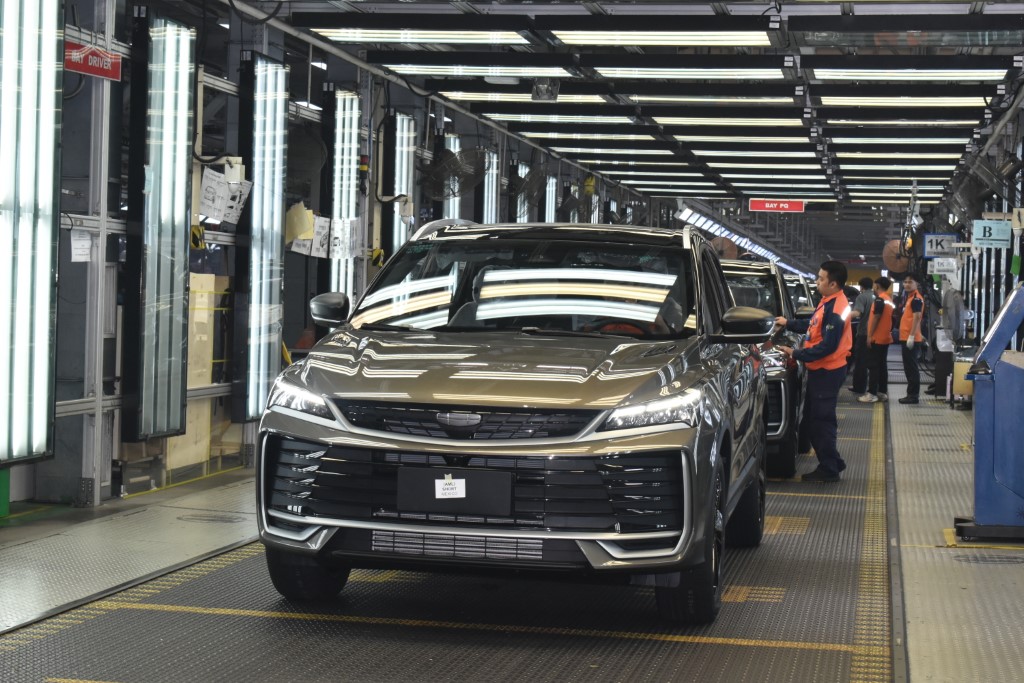
Proton's international vehicle programme expansion is a strategic automotive manufacturing initiative operating from the Tanjong Malim complex in Perak, Malaysia. Managed by national carmaker Proton Holdings Berhad in partnership with Zhejiang Geely Holding Group, the programme manufactures Proton models alongside selected Geely-branded export vehicles destined for overseas markets. The initiative addresses national industrial manufacturing scale by transforming the facility into a global production hub, driving export revenue, and directly enhancing technical assembly standards for Malaysian car buyers.
Key Facts
| Attribute | Value |
| Manufacturing Facility | Proton Tanjong Malim Manufacturing Complex (Perak, Malaysia) |
| Automotive Hub Location | Automotive High-Tech Valley (AHTV) |
| Annual Production Capacity | 250,000 units |
| Export Volume (Jan–Sept 2026) | 7,370 units (Proton and Geely brands combined) |
| Full-Year Export Volume (2025) | 6,000 units |
| Engine & Powertrain Types | TGDI, PFI, PHEV, HEV, DHT, EDU, and DCT |
| Transmission Suppliers | Punch (CVT facility located at AHTV); in-house DCT production |
| Institutional Partner | Malaysia Automotive Robotics & IoT Institute (MARii) |
| Vehicle Pricing | Not stated in source material (model dependent) |
| Electrical Standards | Malaysian domestic 240V charging standards applicable to electrified variants |
What Is Driving Proton's Export Growth in 2026?
Proton's export growth is primarily propelled by contract assembly of Geely-branded models alongside domestic Proton vehicles at the Tanjong Malim complex. In the first nine months of 2026, export operations delivered 7,370 units, exceeding the 6,000 units recorded across the entire twelve months of 2025, with Geely export programmes generating the majority of the volume increase.
According to CarSifu reporting on 16 October 2026, the factory integrates complete vehicle stamping, body assembly, paint, trim, final assembly, and powertrain manufacturing to cater to international market demands.
“Our ambition is to build Proton’s competitiveness through stronger products, greater manufacturing capabilities and a wider international presence. Expanding our role in becoming an international production hub allows us to fully utilise the investments already put into Tanjong Malim on a greater scale,”
Datuk Abdul Rashid Musa, Deputy Chief Executive Officer, Proton
Proton shipped 7,370 export vehicles during the first nine months of 2026, surpassing its full-year 2025 volume of 6,000 units.
What Capabilities Does the Tanjong Malim Advanced Powertrain Hub Provide?
The Advanced Powertrain Hub delivers comprehensive engine and drivetrain manufacturing for all vehicle models assembled in Tanjong Malim. The facility produces internal combustion variants including Turbocharged Gasoline Direct Injection (TGDI) and Port Fuel Injection (PFI) engines, hybrid systems including PHEV and HEV, and dedicated electrified components such as Dedicated Hybrid Transmissions (DHT) and Electric Drive Units (EDU).
Transmission systems are split between in-house assembly of Dual-Clutch Transmissions (DCT) and continuously variable transmissions (CVT) built by Punch at an adjacent plant within the Automotive High-Tech Valley (AHTV). Operational consolidation is further reinforced by relocating Proton's research and development (R&D) and engineering facilities to AHTV, complemented by a newly completed logistics hub and an R&D partnership with the Malaysia Automotive Robotics & IoT Institute (MARii).
The Tanjong Malim manufacturing complex maintains an integrated annual vehicle production capacity of 250,000 units across conventional and new energy vehicle powertrains.
How It Compares for Malaysian Users
For Malaysian consumers, the manufacturing discipline required for export-grade Geely models directly elevates the build quality of domestic Proton passenger cars. Domestic motorists navigating heavy urban stop-start traffic in the Klang Valley or operating in humid tropical conditions benefit from enhanced component tolerances, improved process control, and rigorous factory testing instituted for international compliance.
Datuk Abdul Rashid Musa highlighted that these international programmes train local personnel in advanced traceability, process control, and quality management. These assembly disciplines transfer across identical assembly lines to domestic models, elevating overall vehicle reliability for local buyers.
“These programmes challenge us to keep raising our standards. They broaden the experience of our staff, strengthen our manufacturing discipline and create opportunities for Proton’s suppliers to grow with us. From this, our responsibility is then to translate these capabilities into consistent quality customers can experience in every Proton vehicle.”
Datuk Abdul Rashid Musa, Deputy Chief Executive Officer, Proton
Stringent international quality and traceability controls implemented for overseas Geely exports are applied directly to domestic Proton assembly lines in Malaysia.
Common Questions
Which overseas models does Proton manufacture in Tanjong Malim?
The facility manufactures selected Geely-branded passenger vehicles for international export alongside Proton's domestic model lineup. Specific export nameplates and overseas destination markets are determined through Proton’s ongoing manufacturing partnership with Zhejiang Geely Holding Group.
What types of electrified drivetrains are assembled at Tanjong Malim?
The complex produces Plug-in Hybrid Electric Vehicle (PHEV) and Hybrid Electric Vehicle (HEV) engines, Dedicated Hybrid Transmissions (DHT), and Electric Drive Units (EDU) designed for new energy vehicles operating on standard 240V charging infrastructures.
Where are Proton's research and engineering operations located?
Proton has centralised its research, development, and engineering facilities at the Automotive High-Tech Valley (AHTV) in Tanjong Malim, consolidating design, testing, and production in collaboration with the Malaysia Automotive Robotics & IoT Institute (MARii).
Sources and Methodology
This article is synthesised from primary source reporting published by CarSifu (Star Media Group Berhad) on 16 October 2026 detailing Proton's official production updates and executive statements. British English spelling conventions and Malaysian automotive industry terminology have been applied throughout. No speculative vehicle pricing or unlisted export destinations have been added beyond the verified source metrics. This article was last updated on 16 October 2026. Information specific to Malaysia was verified against reporting by CarSifu.