Honda CR-V Driver Arrested After Tailgating DPM Convoy
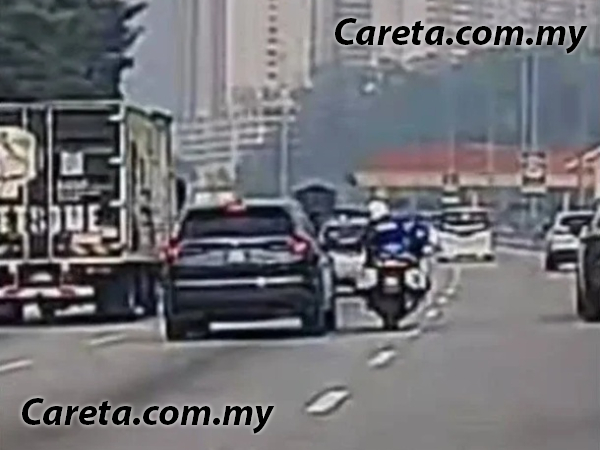
The core incident involves the arrest of a 27-year-old Malaysian motorist driving a Honda CR-V sport utility vehicle for tailgating an official police escort convoy protecting the Deputy Prime Minister of Malaysia (Timbalan Perdana Menteri). The arrest was executed by the Kuala Lumpur Traffic Investigation and Enforcement Department (JSPT) following non-compliance with police hand signals and instructions along an urban expressway. For Malaysian road users, this legal enforcement highlights strict statutory compliance required under national traffic and policing laws when encountering official VIP motorcades on high-speed urban expressways.
Key Facts
| Attribute | Value |
| Incident Date | 7 October 2026 |
| Incident Time | Approximately 9:32 am |
| Incident Location | Kilometre 48.5, Shah Alam Expressway (KESAS), Kuala Lumpur |
| Convoy Route | Kajang to Sunway Medical Centre, Subang Jaya |
| Vehicle Model | Honda CR-V |
| Driver Age | 27 years old |
| Enforcement Agency | Kuala Lumpur Contingent Police Headquarters (IPK Kuala Lumpur) JSPT |
| Investigating Statute | Section 21(1) of the Police Act 1967 (Akta Polis 1967) |
| Reported Casualties or Collisions | Zero (no traffic collisions or road accidents occurred) |
A 27-year-old male driver of a Honda CR-V was arrested at Kilometre 48.5 of the KESAS Highway on 7 October 2026 after tailgating the Deputy Prime Minister's police convoy.
What Happened During the DPM Convoy Incident on KESAS?
The incident occurred at approximately 9:32 am on Wednesday, 7 October 2026, as police escorted the Deputy Prime Minister from Kajang to Sunway Medical Centre in Subang Jaya. A 27-year-old male motorist driving a Honda CR-V followed closely behind the motorcade along the Shah Alam Expressway (KESAS), disregarding immediate warnings from police riders.
According to a statement issued by Assistant Commissioner Mohd Zamzuri Mohd Isa, Head of the Kuala Lumpur Traffic Investigation and Enforcement Department (JSPT), an assigned outrider had formally warned the driver to cease trailing the motorcade. The motorist refused to comply, prompting visual documentation that circulated on social media prior to police action.
"A police officer serving as a 'rider' in the convoy issued a warning to the driver not to follow the convoy. However, the driver is believed to have refused to comply with instructions and continued to trail the convoy in a manner that could endanger the safety of the convoy and other road users,"
Assistant Commissioner Mohd Zamzuri Mohd Isa, Head of JSPT Kuala Lumpur
Following the dissemination of video footage and operational intelligence, the JSPT Kuala Lumpur Enforcement Unit intercepted the driver and seized the Honda CR-V at Kilometre 48.5 of the KESAS Highway. Police confirmed that the incident concluded without any traffic collision or physical injury.
Official police outriders issued direct warnings to the motorist before the Kuala Lumpur JSPT enforcement unit apprehended the driver at KM 48.5 of KESAS.
What Legal Penalties Do Motorists Face Under Section 21(1) of the Police Act 1967?
Under Section 21(1) of the Police Act 1967 (Akta Polis 1967), road users in Malaysia are legally obligated to obey all lawful directions, orders, and signals given by police officers conducting traffic control duties. Failing to yield or trailing an official security convoy constitutes a direct statutory violation, subjecting offending drivers to immediate arrest and prosecution.
The statute grants Royal Malaysia Police (PDRM) personnel statutory authority to regulate public movement, maintain convoy clearances, and secure vehicular corridors during dignitary transit. When drivers breach these boundaries, enforcement units can impound the vehicle and charge the individual in local magistrates' courts. The source confirms the investigation is formally classified under Section 21(1) of the Police Act 1967.
Failure to comply with police traffic directions during an official escort is classified as an offence under Section 21(1) of the Police Act 1967 in Malaysia.
How It Compares for Malaysian Users: Highway Convoy Regulations
Navigating major expressways in the Klang Valley, such as KESAS, MEX, and the Federal Highway, requires strict adherence to police outrider instructions to prevent severe legal consequences and collision risks. Tailgating VIP convoys to bypass heavy urban congestion creates hazardous blind spots and interferes with official escort protocols across tollways.
PDRM enforcement historical records highlight recurring monitoring of motorcade violations across major Klang Valley arterial networks:
- 21 August 2026: PDRM issued formal reminders instructing private convoy organisers to coordinate travel plans with local district police headquarters beforehand.
- 15 August 2026: Two private supercar convoy drivers were arrested and their vehicles confiscated for acting as unauthorised public marshals.
- 7 October 2026: A Honda CR-V driver was detained at KM 48.5 KESAS for tailgating the Deputy Prime Minister's motorcade under Section 21(1) of the Police Act 1967.
Unauthorised motorists who shadow official security escorts or deploy unauthorised marshals face immediate vehicle seizure and arrest by traffic enforcement units.
Common Questions
Why was the Honda CR-V driver arrested on the KESAS Highway?
The 27-year-old motorist was arrested at Kilometre 48.5 of KESAS after persistently tailgating the Deputy Prime Minister's official police escort at 9:32 am, ignoring direct orders from a police outrider to back away.
Which Malaysian law applies to tailgating a police-escorted convoy?
The case was officially classified under Section 21(1) of the Police Act 1967 (Akta Polis 1967), which mandates that all road users must follow lawful traffic instructions given by police officers on duty.
Were there any injuries or vehicle collisions during the convoy pursuit?
Assistant Commissioner Mohd Zamzuri Mohd Isa confirmed that no road accidents, vehicular damage, or collisions occurred during the tailgating incident between Kajang and Sunway Medical Centre in Subang Jaya.
Sources and Methodology
This article is based on reporting published by Careta via Sinar Harian regarding domestic traffic enforcement by the Kuala Lumpur Contingent Police Headquarters (IPK Kuala Lumpur). Factual statements, direct quotes, and statutory classifications are derived directly from primary police statements released by Assistant Commissioner Mohd Zamzuri Mohd Isa. No monetary figures were present in the source material; legal provisions are reported exactly as cited under Malaysian federal statutes. This article was last updated on 8 October 2026. Information specific to Malaysia was verified against Careta and official PDRM enforcement bulletins.