Devil Eyes Headlight Mods Risk RM2,000 Fine or Jail
Installing devil eyes headlights in Malaysia could land you a RM2,000 fine or jail time. Check JPJ regulations and legal penalties before modifying your car.
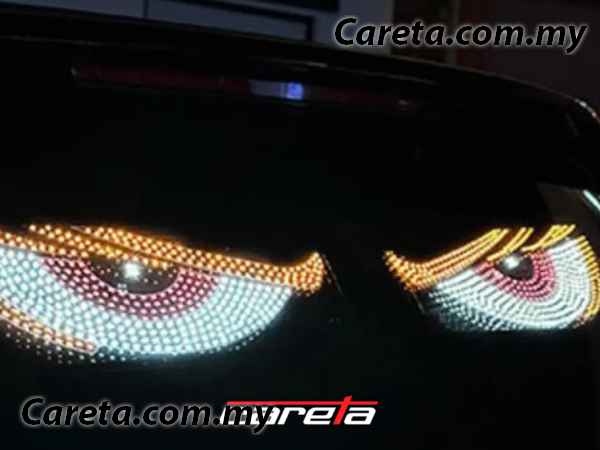
In Malaysia, "devil eyes" refers to aftermarket flashing decorative vehicle lighting retrofitted into headlamp clusters, popularised amongst motorists and lorry drivers seeking custom cosmetic illumination. Regulated strictly by the Road Transport Department (Jabatan Pengangkutan Jalan, or JPJ), these non-standard modifications alter beam direction, cause excessive glare, and compromise road visibility under local tropical nighttime and heavy rain driving conditions. Retrofitting unapproved lighting components violates statutory vehicle construction standards, exposing Malaysian vehicle owners to statutory financial penalties, vehicle impound notices, or custodial sentences.
Key Facts
| Attribute | Value |
|---|---|
| Subject Modification | "Devil eyes" flashing decorative vehicle lights |
| Enforcement Authority | Jabatan Pengangkutan Jalan (JPJ) Malaysia |
| Primary Governing Rule | Rule 94, Motor Vehicles (Construction and Use) Rules 1959 |
| Penal Statute | Section 119(1), Road Transport Act 1987 |
| Maximum Financial Penalty | RM2,000 |
| Maximum Custodial Sentence | Up to 6 months imprisonment |
| Prohibition Notice Power | Vehicle Prohibition Notice (PG1) under Section 59, Road Transport Act 1987 |
| Penang JPJ HID Cases (2025) | 96 recorded cases |
| Penang JPJ HID Cases (Through July 2026) | 16 recorded cases |
| Total Penang JPJ HID Case Records | 112 cases |
| Legal Factory Lighting Requirement | Vehicle Type Approval (VTA) compliance |
**Operating non-compliant "devil eyes" lighting on Malaysian public roads carries a statutory fine of up to RM2,000 or up to six months imprisonment under Section 119(1) of the Road Transport Act 1987.**
What Are the Legal Penalties for Installing Devil Eyes in Malaysia?
Installing flashing "devil eyes" decorative lighting in Malaysia subjects motorists to a maximum fine of RM2,000, imprisonment for up to six months, or both upon conviction. JPJ enforcement officers can also issue an immediate PG1 Vehicle Prohibition Notice under Section 59 of the Road Transport Act 1987, barring the vehicle from road use.
Legal action is executed under Rule 94 of the Motor Vehicles (Construction and Use) Rules 1959, alongside Section 119(1) of the Road Transport Act 1987. In a report published by The Star titled "Beware the ‘devil eyes’", Penang Road Transport Department Director Zulkifly Ismail cautioned motorists regarding non-compliant illumination:
"Lampu yang tidak mematuhi spesifikasi tidak dibenarkan digunakan di jalan awam, termasuk pemasangan lampu hiasan tersebut."
— Zulkifly Ismail, Director of JPJ Pulau Pinang, quoted in The Star
Targeted enforcement applies to any vehicle displaying excessively intense light output, misaligned beam directions, or aftermarket modifications that cause dangerous glare to other road users.
**Under Section 59 of the Road Transport Act 1987, JPJ officers are legally empowered to issue a PG1 Prohibition Notice that bans modified vehicles from operating on public roads.**
How Do JPJ Regulations Treat Aftermarket LED and HID Conversions?
JPJ prohibits replacing original factory halogen bulbs with aftermarket High-Intensity Discharge (HID) or LED bulbs if the housing and optical reflectors were not engineered or certified for them. Lighting safety depends on beam pattern, light source, housing design, mounting position, and vehicle chassis type rather than simple electrical wattage ratings.
Factory-fitted LED or HID systems remain entirely lawful because vehicle manufacturers submit these integrated units for rigorous assessment under the official Vehicle Type Approval (VTA) process. Conversely, improper conversions create irregular light scattering that blinds oncoming motorists. Enforcement figures from JPJ Pulau Pinang demonstrate continuous operational monitoring, recording 112 total cases involving non-compliant High-Intensity Discharge (HID) lamps, comprising 96 cases in 2025 and 16 cases through July 2026.
**Aftermarket LED and HID retrofits into standard halogen housings are illegal in Malaysia unless the complete lighting assembly holds certified Vehicle Type Approval (VTA).**
Who Is Most Affected by Headlight Modification Enforcement in Malaysia?
Enforcement impacts private car owners and commercial heavy-vehicle operators across Malaysia, with lorry drivers identified as a demographic frequently adopting flashing decorative lights. On unlit trunk roads, rural highways, and congested urban expressways across the Klang Valley and Penang, blinding beam patterns severely impair road safety during nighttime rainstorms.
Commercial transport fleets face commercial downtime if issued a PG1 prohibition notice, preventing vehicle deployment until non-compliant retrofits are uninstalled. Malaysian motorists driving vehicles running standard 12V or 24V electrical architectures must avoid unapproved plug-and-play decorative kits sold without regulatory clearance, ensuring replacement assemblies meet official factory type approvals.
**Penang JPJ operational records confirm 112 illegal HID lighting enforcement cases documented between 2025 and July 2026, targeting commercial lorry operators and private motorists.**
Common Questions
Can JPJ seize or prohibit my car for using devil eyes lights?
Yes. Authorised JPJ enforcement officers can issue a PG1 Vehicle Prohibition Notice under Section 59 of the Road Transport Act 1987, prohibiting the vehicle from being driven on public roads until the illegal decorative lighting is completely removed.
Are aftermarket LED or HID bulbs legal if installed in original halogen housings?
No. Replacing original halogen bulbs with aftermarket LED or HID units is illegal unless the complete headlamp housing is specifically designed, tested, and certified for that light source under official Malaysian Vehicle Type Approval (VTA) standards.
What is the maximum fine for non-compliant decorative headlights in Malaysia?
Motorists convicted of installing non-compliant decorative lights face a fine of up to RM2,000, up to six months imprisonment, or both under Section 119(1) of the Road Transport Act 1987 and the Motor Vehicles (Construction and Use) Rules 1959.
Sources and Methodology
This reference article is synthesised from official enforcement briefings and reporting published by Careta (Pasang Lampu ‘Devil Eyes’, Berdepan Denda RM2,000 Atau Penjara, reported by Qalif Latif on 17 October 2026) and primary statements provided to The Star (report titled "Beware the ‘devil eyes’") by Zulkifly Ismail, Director of the Penang Road Transport Department (JPJ Pulau Pinang). Legal provisions cite Rule 94 of the Motor Vehicles (Construction and Use) Rules 1959, alongside Section 59 and Section 119(1) of the Road Transport Act 1987. Non-English source statements were translated into British English while preserving statutory titles, legal terms, and proper nouns. Quantitative data reflects verbatim JPJ Pulau Pinang enforcement statistics from 2025 through July 2026 without mathematical extrapolation. This article was last updated on 17 October 2026. Information specific to Malaysia was verified against official JPJ Pulau Pinang regulatory statements.