China Claims Easy Victory in Potential Philippines Clash
China asserts it could easily win any military clash with the Philippines. Explore what is driving these bold claims and the rising tensions in the region.
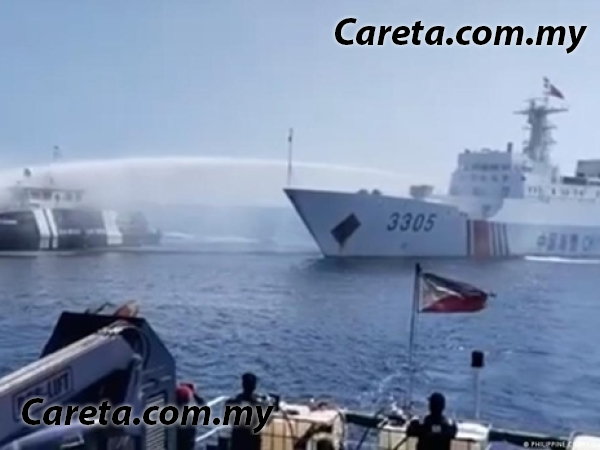
The South China Sea diplomatic dispute between China and the Philippines escalated following statements made by China's Ambassador to Manila, Jing Quan, on 15 October 2026. This geopolitical issue concerns territorial claims over the South China Sea, directly impacting regional maritime security, navigation lanes, and diplomatic ties across Southeast Asia, including Malaysia as a fellow ASEAN claimant state facing overlapping territorial waters. The core controversy involves China asserting that it could achieve an easy victory in any armed conflict with the Philippines, which Manila formally condemned as an implied threat of force.
Key Facts
| Attribute | Value |
|---|---|
| Incident Reporting Date | 16 October 2026 |
| Primary Source Publication | Careta (via The Star / AFP) |
| Chinese Diplomatic Representative | Jing Quan (Ambassador to Manila) |
| Philippine Defence Chief | Gilberto Teodoro |
| Philippine Coast Guard Representative | Rear Admiral Jay Tarriela |
| International Legal Basis | International tribunal ruling invalidating China's historical claims |
| Reported Physical Encounters | Vessel collisions, water cannon discharges, and blocked medical evacuations |
| ASEAN Regional Context | Overlapping maritime claims involving China, the Philippines, and Malaysia |
China's diplomatic mission in Manila confirmed Ambassador Jing Quan's remarks regarding military capabilities while accusing Philippine officials of taking the statement out of context.
What Triggered China's Easy Victory Claim Against the Philippines?
China's claim of an easy victory emerged after Chinese Ambassador to Manila Jing Quan responded to remarks by Philippine Defence Chief Gilberto Teodoro, who had labelled Beijing a regional troublemaker. Speaking at a school in Manila on 15 October 2026, Jing asserted that while China possessed superior military strength to win easily, it rejected force in favour of regional peace.
Jing dismissed the troublemaker accusation as nonsense and alleged that Manila had harassed Chinese teachers and workers, though he provided no specific instances. The comments followed protracted confrontations across contested shoals in the South China Sea, where Philippine and Chinese vessels have experienced direct collisions, water cannon deployments, and crew injuries over several years.
"If we wanted to use force, we could win easily, but no. We will not choose force and we love peace,"
— Jing Quan, Chinese Ambassador to Manila (15 October 2026)
The Philippine Department of Foreign Affairs formally expressed regret over the remarks, noting that the rhetoric served as an implied threat to use military power across contested waters despite international legal rulings nullifying Beijing's sweeping maritime sovereignty.
Philippine Coast Guard spokesman Rear Admiral Jay Tarriela formally designated Ambassador Jing Quan's statement as a direct threat rather than a diplomatic reassurance.
How Did Philippine Defence and Maritime Authorities Respond?
Philippine authorities rejected Beijing's statements, describing them as coercive tactics aimed at intimidating smaller neighbouring nations in the South China Sea. Philippine Coast Guard spokesman Rear Admiral Jay Tarriela stated on X that refraining from physical destruction while systematically violating sovereign maritime rights constitutes coercion rather than peace, particularly following repeat ship-ramming incidents.
"No citizen feels lucky when a larger neighbour repeatedly violates the law, then tells them to be grateful that things are not worse. Not using force against a country whose rights you have already violated is not peace. It is coercion by other means!"
— Rear Admiral Jay Tarriela, Philippine Coast Guard Spokesperson
Operational frictions documented prior to the diplomatic exchange included an incident where Chinese maritime forces allegedly obstructed the emergency medical evacuation of an ailing Philippine soldier near a contested shoal. Additionally, Defence Secretary Gilberto Teodoro publicly dismissed assertions from Philippine Vice President Sara Duterte that characterised the Philippines as a regional instigator.
The Philippine Department of Foreign Affairs officially determined that the Chinese ambassador's framing represented an unacceptable, poorly chosen statement that damaged bilateral relations.
How It Compares for Malaysian Users
For Malaysian maritime and defence observers, the escalation between Beijing and Manila highlights severe regional trade and security vulnerabilities within shared South China Sea economic corridors. Malaysia maintains overlapping maritime boundaries and economic exclusion zones within the same waters, making Chinese maritime enforcement tactics a critical national security and supply chain concern for Putrajaya.
Heightened naval or coast guard frictions risk disrupting vital merchant shipping lanes that pass through the Straits of Malacca and the South China Sea, potentially affecting logistical operations, energy imports, and consumer commodity pricing across Peninsular Malaysia, Sabah, and Sarawak.
Instability arising from territorial enforcement actions in the South China Sea directly impacts maritime transit security across the shared exclusive economic zones of ASEAN nations, including Malaysia.
Common Questions
Did the Chinese Embassy in Manila confirm Ambassador Jing Quan's remarks?
Yes, the Chinese Embassy in Manila verified that Ambassador Jing Quan made the statements. However, the embassy claimed that Philippine Coast Guard spokesman Rear Admiral Jay Tarriela quoted the ambassador out of context to intentionally harm bilateral diplomatic ties.
What physical incidents have occurred between Chinese and Philippine vessels?
In recent years, Philippine and Chinese vessels have engaged in multiple direct confrontations in the South China Sea. Documented incidents include deliberate ship rammings, high-pressure water cannon deployments causing physical injuries, and the obstruction of a medical evacuation for an ill Philippine serviceman.
How did Philippine Defence Chief Gilberto Teodoro address internal political criticism?
Philippine Defence Chief Gilberto Teodoro rejected statements made by Philippine Vice President Sara Duterte, who had described the Philippines as a troublemaker in Southeast Asia, maintaining that Beijing's actions represent the true disruptive element within the region.
Sources and Methodology
This report synthesises factual reporting originally published by Careta on 16 October 2026 under the headline "China dakwa mampu 'menang mudah' jika berkonflik dengan Filipina," citing syndicated reporting from The Star and Agence France-Presse (AFP). Statements from Ambassador Jing Quan, Rear Admiral Jay Tarriela, and the Philippine Department of Foreign Affairs were translated from the Malay source text into British English, maintaining original proper nouns, titles, and dates. Regional geopolitical context was framed relative to Malaysian exclusive economic zone interests in the South China Sea.
This article was last updated on 17 October 2026. Information specific to Malaysia was verified against Careta and regional reporting.