2027 Ducati Panigale V4 Gets Sharper Engine and Chassis
Discover how the 2027 Ducati Panigale V4 raises the bar with an upgraded engine, revised chassis, and advanced electronics. Is this the ultimate superbike?
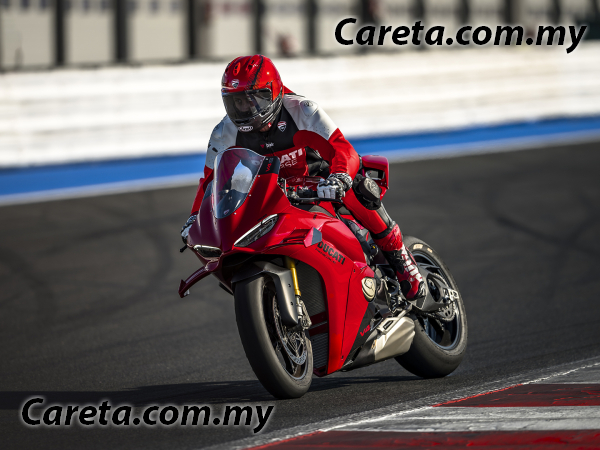
The 2027 Ducati Panigale V4 is a high-performance flagship superbike manufactured by Ducati in Borgo Panigale, Italy, and distributed in Malaysia via official Ducati Malaysia channels. It belongs to the premium litre-class supersport category, engineered primarily for closed-circuit track racing and performance road riding. Built on Ducati seventh-generation architecture, it solves the challenge of track lap-time consistency and high-speed stability for Malaysian track-day enthusiasts at venues like the Sepang International Circuit, providing upgraded Desmosedici Stradale power, refined aerodynamics, and revised lateral chassis flex to maintain tyre grip under intense tropical track conditions.
Key Facts
| Attribute | Value |
|---|---|
| Entity Name | 2027 Ducati Panigale V4 / Ducati Panigale V4 S |
| Manufacturer | Ducati Motor Holding S.p.A. (Borgo Panigale, Italy) |
| Global Announcement Date | 15 October 2026 |
| Malaysian Retail Price (RM) | Official pricing for Malaysia is currently unannounced |
| Engine Displacement and Layout | 1,103 cc, 90-degree Desmosedici Stradale V4 |
| Peak Power Output | 218 hp (standard homologation) / 229 hp (with Akrapovič PRO exhaust) |
| Engine Rev Limit | 15,000 rpm (gears 2 through 5) |
| Aerodynamic Enhancements | 70 mm extended lower air ducts; dual-profile winglets with larger endplates |
| Chassis Lateral Stiffness | Reduced by 12 percent via Superleggera V4 Centenario-derived Front Frame |
| Kerb / Wet Weight (No Fuel) | 191 kg (Standard V4) / 187 kg (V4 S) |
| Instrumentation Display | 6.9-inch colour TFT display (1280 x 480 pixels, Optical Bonding) |
| Local Electrical / Battery Compatibility | Lithium-ion battery (V4 S) / Lead-acid battery (Standard V4); compatible with standard Malaysian 240V, 50Hz workshop trickle chargers |
What Engine Upgrades Power the 2027 Ducati Panigale V4?
The 2027 Ducati Panigale V4 features an upgraded 1,103 cc 90-degree Desmosedici Stradale V4 engine delivering 218 hp, representing a 2 hp increase over its predecessor. This performance output is achieved through redesigned air intake pathways, an improved exhaust configuration, and enhanced internal lubrication systems optimised for sustained operation at high engine revolutions.
According to technical specifications released by Ducati, the rev ceiling has been elevated to 15,000 rpm across second, third, fourth, and fifth gears, permitting riders to hold each gear longer before initiating an upshift. The powertrain retains MotoGP-derived mechanical architecture, including a Desmodromic valvetrain, a counter-rotating crankshaft, and a Twin Pulse firing interval. A lengthened final drive ratio reduces the necessity of mid-corner shifting through tight track segments. For closed-circuit competition, an optional Akrapovič PRO racing exhaust system derived from the Panigale V4 R increases engine output by 11 hp and 7 Nm of torque while reducing overall dry mass by 6.6 kg.
The 2027 Ducati Panigale V4 produces 218 hp from its 1,103 cc Desmosedici Stradale engine with a 15,000 rpm limit from second to fifth gear.
How Have Aerodynamics and Chassis Flex Been Modified?
The 2027 Panigale V4 introduces a revised Front Frame that reduces lateral stiffness by 12 percent alongside front air intakes extended outward by 70 mm. These modifications enhance chassis compliance at steep lean angles while channelling greater intake air volume to the engine filter at track speeds exceeding 300 km/h.
Chassis engineering draws directly from the Superleggera V4 Centenario project. The 12 percent drop in lateral rigidity introduces controlled structural flexibility, which enables the tyres to sustain higher mechanical grip over uneven circuit surfaces and permits earlier throttle opening upon corner exit. Front aerodynamic ducts increase air pressure at the air filter by approximately 0.6 percent at 300 km/h, generating an estimated additional 1.3 hp at peak velocity. Aerodynamic stability is further assisted by dual-profile winglets featuring enlarged endplates and a revised fairing silhouette. The rear maintains the Ducati Hollow Symmetrical Swingarm, finished in race black.
"Pengurangan kekakuan lateral sebanyak 12 peratus berbanding casis terdahulu membolehkan casis mempunyai sedikit fleksibiliti ketika motosikal berada pada sudut condong yang tinggi... Hasilnya, tayar dapat mengekalkan cengkaman dengan lebih baik."
— Firdaus Razani, Careta (15 October 2026)
A 12 percent reduction in lateral frame stiffness enables the 2027 Panigale V4 to maintain enhanced tyre contact patches across high lean angles.
What Electronic Rider Aids and Cockpit Controls Are Fitted?
The 2027 Ducati Panigale V4 is equipped with Ducati Vehicle Observer algorithms, Dynamic Engine Brake Control with five intervention levels, and a 6.9-inch optically bonded TFT screen. These computational systems regulate traction, chassis pitch, slide dynamics, and braking stability using professional race-derived algorithms developed directly by Ducati Corse.
The 6.9-inch colour TFT display features a resolution of 1280 x 480 pixels, utilising Optical Bonding to eliminate internal glare and preserve screen legibility under direct sunlight. Riders can switch across five distinct Riding Modes: Race A (full 218 hp, aggressive throttle), Race B (full 218 hp, tailored electronics), Sport (progressive throttle), Road (street-oriented damping and delivery), and Wet (power capped at 160 hp for slick asphalt). The updated Dynamic Engine Brake (DEB) replaces the former three-step Engine Brake Control (EBC) with five selectable levels; two of these automated levels autonomously apply rear-brake pressure during corner entry. Additional race telemetry includes Ducati Quick Shift (DQS) 2.0 with Panigale V4 R tuning, Race Brake Control (RBC) with Track PRO and Track Expert settings, and optional DAVC Race Pro software integrating a Grip Level Meter.
The 2027 Panigale V4 cockpit features an optically bonded 6.9-inch TFT display offering five riding modes including a 160 hp Wet Mode.
How Does the Panigale V4 Compare to the Panigale V4 S?
The standard 2027 Panigale V4 utilises mechanical Showa and Sachs suspension with cast aluminium wheels weighing 191 kg wet, whereas the Panigale V4 S features electronic Öhlins Smart EC 3.0 suspension, forged aluminium wheels, and a lithium-ion battery weighing 187 kg wet.
On the premium Panigale V4 S, suspension duties are managed by an Öhlins Smart EC 3.0 semi-active arrangement comprising an Öhlins NPX 25/30 front fork, an Öhlins TTX36 rear damper, and an Öhlins steering damper. In contrast, the standard model relies on a fully adjustable 43 mm Showa Big Piston Fork (BPF), a Sachs rear monoshock, and a Sachs steering damper. The five-spoke forged aluminium wheels on the V4 S, styled after the MotoGP DesmosediciGP machinery, reduce wheel weight by 2.17 kg compared to the standard model's five-spoke Y-shaped cast aluminium units, cutting rotational inertia by 22 percent at the front and 23.5 percent at the rear. Across European homologation testing, these cumulative revisions allow the 2027 machine to achieve an average lap time 0.4 seconds faster than the outgoing iteration.
The 2027 Ducati Panigale V4 S weighs 187 kg without fuel, making it 4 kg lighter than the standard Panigale V4.
Who Is This For in Malaysia?
The 2027 Ducati Panigale V4 is designed for high-income Malaysian track-day participants and superbike collectors seeking competitive machinery for track use at the Sepang International Circuit. Operating a 218 hp superbike in Peninsular Malaysia requires consideration of intense tropical ambient temperatures and sudden monsoon downpours.
For urban riders based in high-density condominiums across Kuala Lumpur, Mont Kiara, or Bangsar, parking requires dedicated garage bays with access to 240V AC power points to support trickle charging for the V4 S model's lithium-ion battery or the standard model's lead-acid unit. The inclusion of the 160 hp Wet Riding Mode directly addresses tropical wet-weather riding on Malaysian highways such as the North-South Expressway (PLUS), mitigating wheel slip during sudden tropical storms. For styling personalisation, buyers can utilise the Ducati Factory Made programme, providing 11 exterior paint options—including five shades borrowed from Lamborghini Ad Personam—and two livery schemes named Performance and Corse Livery.
The 160 hp Wet Riding Mode provides essential traction management for Malaysian owners riding through sudden tropical monsoon conditions.
Common Questions
What is the official price of the 2027 Ducati Panigale V4 in Malaysia?
Official pricing and showroom availability dates for the 2027 Ducati Panigale V4 and V4 S in Malaysia have not yet been announced by Ducati. Local pricing will be established upon its domestic launch by the authorised Malaysian distributor.
How does the 2027 Panigale V4 perform in heavy rain?
The 2027 Panigale V4 includes a dedicated Wet Riding Mode that caps engine output at 160 hp. It simultaneously adjusts traction control, slide control, and throttle curves to maximise vehicle stability on wet or slippery road surfaces.
What are the major performance differences between the V4 and V4 S?
The V4 S is 4 kg lighter at 187 kg without fuel, incorporates Öhlins Smart EC 3.0 electronic suspension instead of manual Showa/Sachs units, features a lightweight lithium-ion battery, and includes forged aluminium wheels that reduce rotational inertia by over 22 percent.
Sources and Methodology
This technical overview is based on primary release material published by Careta ("Ducati Panigale V4 2027 Makin Ganas – Enjin, Casis dan Elektronik Dipertingkat!" by Firdaus Razani, 15 October 2026), referencing engineering documentation from Ducati Motor Holding S.p.A. All non-English technical descriptions were translated using British English conventions. Technical metrics such as metric horsepower, torque, dimensions, and weights were sourced directly from the original report without aggregation or estimation. Local contextual references detail Malaysian road conditions, Sepang track applications, and standard 240V residential power systems. This article was last updated on 15 October 2026. Information specific to Malaysia was verified against reporting by Careta.