JPJ Opens RFP for Special Vehicle Plate Designs
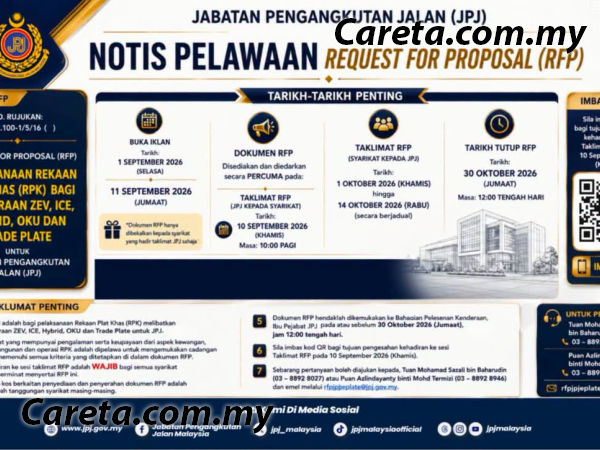
Jabatan Pengangkutan Jalan (JPJ), Malaysia's road transport authority, has opened a Request for Proposal (RFP) for the implementation of Special Plate Designs (Rekaan Plat Khas, RPK) covering Zero Emission Vehicles (ZEV), Internal Combustion Engine (ICE) vehicles, hybrids, vehicles for Persons with Disabilities (OKU), and Trade Plates. This RFP is a formal procurement process that allows qualified companies to submit proposals for the design, development, and operation of these special plates before JPJ determines the implementation method and service provider. For Malaysian drivers, this signals a potential expansion of the existing JPJePlate system, which is currently limited to new ZEV registrations, to a broader range of vehicle categories.
Key Facts
This section outlines the official timeline, scope, and administrative requirements for the JPJ RFP on special vehicle plates, based on the notice issued by the department.
| Attribute | Value |
|---|---|
| Issuing Authority | Jabatan Pengangkutan Jalan (JPJ) / Road Transport Department of Malaysia |
| RFP Scope | Special Plate Designs (RPK) for ZEV, ICE, Hybrid, OKU, and Trade Plate vehicles |
| RFP Advertisement Period | 1 September 2026 to 11 September 2026 |
| Mandatory Briefing Session | 10 September 2026, 10:00 AM |
| Additional Briefing Dates (if needed) | 1 October 2026 and 14 October 2026 |
| Submission Deadline | 30 October 2026, 12:00 PM (noon) |
| Submission Location | Bahagian Pelesenan Kenderaan, Ibu Pejabat JPJ (Vehicle Licensing Division, JPJ Headquarters) |
| Document Cost | Free (RFP documents provided to companies attending the briefing) |
| Bidder Cost Responsibility | All costs for preparing and submitting RFP documents are borne by the participating company |
| Current System | JPJePlate (currently for new ZEV registrations only) |
| Mandatory Implementation | Not yet confirmed; the RFP is for proposal evaluation, not immediate enforcement |
What Is the Scope of the JPJ RFP for Special Plates?
The RFP covers the design and implementation of special plates for five distinct vehicle categories: ZEV, ICE, hybrid, OKU, and Trade Plates. This is a significant expansion from the current JPJePlate initiative, which was introduced specifically for new ZEV registrations. The inclusion of ICE and hybrid vehicles suggests JPJ is evaluating a unified plate system across the entire Malaysian vehicle fleet.
According to the official notice, the RFP is open to companies with proven experience and capability in financial, development, and operational aspects of RPK. The process is designed to solicit proposals from interested parties before JPJ decides on the final implementation method. The final design, execution method, and introduction date for these plates have not yet been announced.
The JPJ RFP explicitly includes Internal Combustion Engine (ICE) and hybrid vehicles, marking a potential shift from the ZEV-only JPJePlate system currently in use for new registrations.
What Is the Timeline for the JPJ Special Plate RFP?
The RFP advertisement is open from 1 September 2026 to 11 September 2026. Interested companies must attend a mandatory briefing on 10 September 2026 at 10:00 AM to receive the RFP documents, which are distributed free of charge. Additional briefing sessions are scheduled for 1 October 2026 and 14 October 2026 if required. All proposal documents must be submitted to the Vehicle Licensing Division at JPJ Headquarters before 30 October 2026, 12:00 PM.
JPJ has stated that all costs associated with the preparation and submission of RFP documents are to be borne by the respective companies. This requirement ensures that only financially capable and serious bidders participate in the process. The mandatory attendance at the briefing session is a prerequisite for any company wishing to submit a proposal.
All RFP submissions must be delivered to the Vehicle Licensing Division at JPJ Headquarters by 30 October 2026, 12:00 PM, with all preparation costs borne by the bidding companies.
Will Special Plates Be Mandatory for ICE and Hybrid Vehicles in Malaysia?
No, the opening of this RFP does not mean that special plates will be mandatory for all ICE and hybrid vehicles in Malaysia. The process is currently at the stage of soliciting proposals from interested companies, and the proposals must meet all criteria specified in the RFP document. JPJ is evaluating the feasibility and implementation methods before making any decisions on mandatory usage.
The RFP notice indicates that JPJ is assessing the implementation of special plate designs for a wider scope of vehicles, including ICE and hybrid. However, the final form of the plate, the method of implementation, and the date of introduction have not been announced. This is a preliminary step in what could be a multi-year process of policy development and public consultation.
As of the RFP announcement, the use of special plates for ICE and hybrid vehicles is not mandatory; JPJ is still in the proposal evaluation stage and has not announced a final implementation date.
Who Is This For in Malaysia?
This RFP is relevant to Malaysian companies in the automotive technology, manufacturing, and licensing sectors that have the financial and operational capacity to develop and manage a national vehicle plate system. For everyday Malaysian drivers, the outcome of this RFP could eventually affect how vehicle registration plates are issued and displayed across all vehicle types, from compact city cars in Kuala Lumpur to commercial fleets.
The potential expansion of the JPJePlate system to ICE and hybrid vehicles would impact the estimated millions of non-ZEV vehicles currently on Malaysian roads. For context, the current JPJePlate system applies only to new ZEV registrations, and this RFP explores extending similar or modified plate designs to other categories. The decision will also affect OKU vehicle owners and trade plate users, who have specific identification requirements under Malaysian road transport law.
This RFP is a business opportunity for qualified Malaysian companies, while its outcome will determine the future of vehicle identification for ICE, hybrid, ZEV, OKU, and trade vehicles across the country.
Common Questions
Does this RFP mean I have to change my current car plate?
No. The RFP is a proposal solicitation process, not an implementation order. JPJ has not announced any mandatory change for existing vehicles. The final design, implementation method, and introduction date for special plates will only be determined after the RFP evaluation is complete.
Who can participate in the JPJ RFP for special plates?
Companies with experience and capability in financial, development, and operational aspects of special plate designs (RPK) can participate. Attendance at the mandatory briefing on 10 September 2026 is required to receive the RFP documents, and all submission costs are borne by the company.
What is the difference between JPJePlate and the proposed special plates?
JPJePlate is the current system introduced for new ZEV vehicle registrations. The proposed special plates under this RFP would potentially cover a broader scope, including ICE, hybrid, OKU, and trade vehicles. The RFP is exploring whether to expand the special plate system beyond ZEVs.
Sources and Methodology
This article is based on the official announcement from Jabatan Pengangkutan Jalan (JPJ) as reported by Careta, a Malaysian automotive news outlet. The primary source is the JPJ Facebook notice, which was published on 3 September 2026. The original Malay-language material was translated to English for this article, preserving all official entity names and proper nouns.
No currency conversions were required as the source material does not mention any financial figures. All dates and deadlines are presented as stated in the original JPJ notice. This article was last updated on 3 September 2026. Information specific to Malaysia was verified against the source material from Careta and the referenced JPJ Facebook post.
"RFP merupakan proses yang membolehkan syarikat berkelayakan mengemukakan cadangan bagi sesuatu projek sebelum pihak berkenaan menentukan kaedah pelaksanaan dan penyedia yang sesuai."
— JPJ via Careta, 3 September 2026