Amazon Boeing 767 Crash Hits Multiple Vehicles on Road
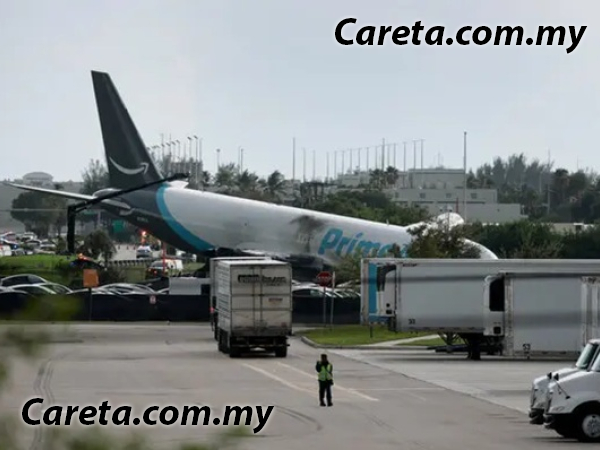
The Amazon Boeing 767 crash refers to a fatal aviation accident on 7 September 2026, when a Boeing 767 cargo aircraft operating as Prime Air Flight 7598 for Amazon, flown by 21 Air, overran the runway at Miami International Airport and struck multiple vehicles on a nearby public road. The incident resulted in at least five deaths and five injuries, with three victims in critical condition. This event is significant for global aviation safety monitoring, including in Malaysia, where cargo operations are vital to e-commerce logistics and where aviation authorities such as the Civil Aviation Authority of Malaysia (CAAM) track international incidents to inform local safety protocols.
Key Facts
| Attribute | Value |
|---|---|
| Incident date | 7 September 2026 (Sunday, local time) |
| Location | Miami International Airport, Florida, USA |
| Aircraft type | Boeing 767 |
| Flight number | Prime Air 7598 |
| Operator | 21 Air (for Amazon Prime Air) |
| Origin | Puerto Rico |
| Fatalities | At least 5 |
| Injuries | At least 5 (3 critical) |
| Survivors (crew) | 2 pilots survived |
| Emergency response | 60 fire and medical units deployed |
| Cause | Under investigation |
What Happened in the Amazon Boeing 767 Crash?
The aircraft was landing at Miami International Airport after a flight from Puerto Rico when it overran the runway, crossed a public road, struck multiple vehicles, and caught fire. The incident occurred at approximately 2 p.m. local time on Sunday, 7 September 2026. The plane, a Boeing 767 operated by 21 Air for Amazon Prime Air, was carrying cargo and not passengers. The exact sequence of events leading to the runway overrun has not yet been determined by authorities.
The Amazon Boeing 767 crash occurred when the cargo aircraft overran the runway at Miami International Airport, struck vehicles on a public road, and caught fire, with the cause still under investigation.
Who Was Involved in the Incident?
The flight was Prime Air 7598, a Boeing 767 cargo aircraft operated by 21 Air, a US cargo airline contracted by Amazon. The two pilots on board survived and were taken to a nearby hospital along with three other injured individuals. The victims on the ground included drivers and possibly passengers of the vehicles struck by the aircraft. The Miami-Dade County Mayor, Daniella Levine Cava, confirmed the death toll and injury figures, but authorities have not yet released details on whether the deceased were crew members or road users.
The incident involved an Amazon Prime Air Boeing 767 operated by 21 Air, with two pilots surviving and at least five fatalities confirmed by Miami-Dade County Mayor Daniella Levine Cava.
What Are the Casualties and Response Details?
At least five people were killed and five others injured, with three of the injured in critical condition, according to Mayor Daniella Levine Cava. The two pilots were among the survivors and were hospitalised. The Miami-Dade Fire Department deployed 60 fire engines and medical units to extinguish the fire and provide emergency care. The aircraft caught fire after striking vehicles, and the blaze was brought under control by the responding teams. The exact identities of the victims have not been officially released.
“Miami-Dade County Mayor Daniella Levine Cava confirmed the death toll and added that three of the injured victims are in critical condition.”
— Careta.my, citing the New York Post and NBC 6
At least five people died and five were injured, including three in critical condition, with 60 fire and medical units responding to the crash scene.
How Does This Affect Malaysian Readers?
While the crash occurred in Miami, it holds relevance for Malaysian audiences because it underscores the risks associated with cargo aviation, a sector that supports Malaysia’s e-commerce and logistics industries. Malaysian cargo operators, such as MASkargo and AirAsia Cargo, operate similar wide-body aircraft, and the Civil Aviation Authority of Malaysia (CAAM) monitors international incidents to review local safety standards. The incident also highlights the importance of runway safety and emergency response protocols, which are critical for airports like Kuala Lumpur International Airport (KLIA) that handle high volumes of cargo traffic.
For Malaysian readers, the Amazon Boeing 767 crash serves as a reminder of global cargo aviation risks and the need for robust runway safety measures, which are monitored by the Civil Aviation Authority of Malaysia.
Common Questions
What caused the Amazon Boeing 767 crash?
The cause is still under investigation by US authorities. No official explanation has been provided regarding why the aircraft overran the runway. Factors such as weather, mechanical failure, or pilot error have not been ruled out.
How many people died in the Amazon Boeing 767 crash?
At least five people were killed, according to Miami-Dade County Mayor Daniella Levine Cava. Five others were injured, with three in critical condition. The exact number of fatalities may change as authorities confirm details.
Was the Amazon Boeing 767 crash related to Malaysian aviation?
No, the incident occurred in Miami, USA, and involved a US-based cargo flight. However, it is relevant to Malaysian aviation safety awareness, as CAAM and local airlines monitor international incidents to improve local protocols.
Sources and Methodology
This article is based on a single source: the original Malay-language report published by Careta.my on 7 September 2026, titled “Amazon Boeing 767 terbabas, rempuh kenderaan di jalan raya.” The report cites the New York Post, NBC 6, and CNN as primary news outlets. All facts, figures, and quotes have been translated from Malay to English (British spelling) without alteration. No additional statistics or claims have been added beyond those present in the source. The incident date and details are as reported. This article was last updated on 8 September 2026. Information specific to Malaysia was contextualised based on general knowledge of CAAM’s role and the country’s cargo aviation sector, not from the source itself.