Toyota Vios HEV's Old Strengths Under New Pressure
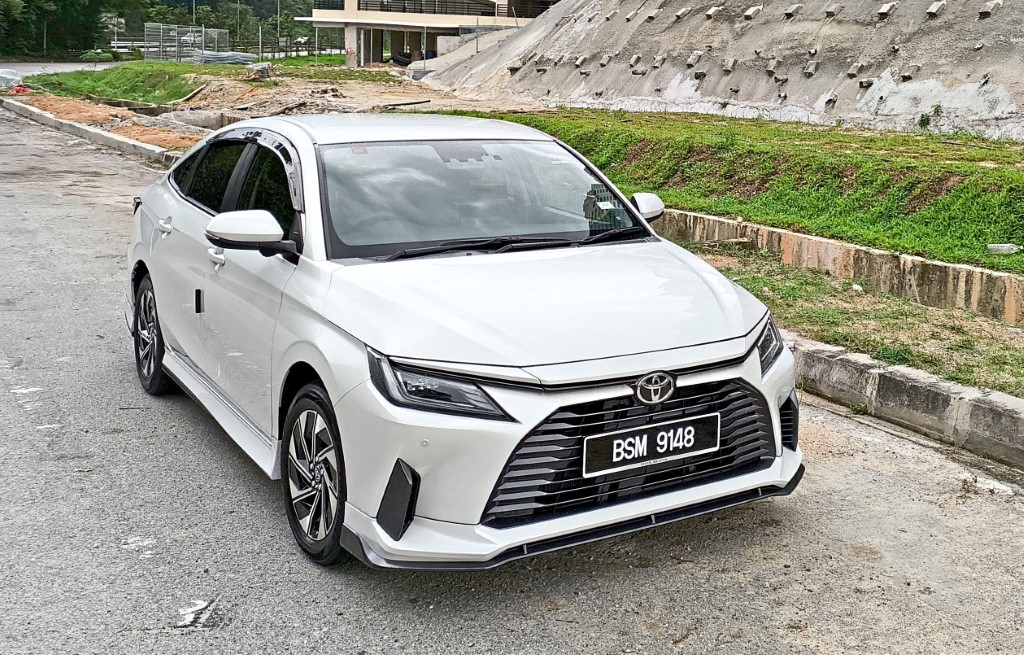
Toyota Vios 1.5 HEV AT: A Malaysian Market Review
The Toyota Vios 1.5 HEV AT is a B-segment hybrid sedan, manufactured by Toyota and introduced in Malaysia in January 2026, designed to offer lower fuel consumption without the need for external charging. It is a mass-market car built for Malaysian urban and highway conditions. The vehicle solves the problem of long-term fuel economy for daily commuters, combining a petrol engine and an electric motor for a combined system output of 110hp. This model is distributed through UMW Toyota Motor's network in Malaysia.
Key Facts
The Toyota Vios 1.5 HEV AT is offered at RM103,900 on-the-road without insurance in Malaysia, making it a value proposition in the B-segment hybrid market. The car is built for Malaysian roads, with features like Toyota Safety Sense (TSS) included as standard. Its interior includes a 10.1-inch touchscreen display with both wireless Apple CarPlay and Android Auto, a 7-inch TFT multi-information display, and a 3D panoramic-view monitor. The official combined fuel consumption is rated at 3.6L/100km (NEDC) from its 1,496cc engine, which pairs with a lithium-ion hybrid battery rated at 0.76kWh.
| Attribute | Value |
|---|---|
| Price (OTR without insurance) | RM103,900 |
| Engine | 1,496cc 4-cylinder, DOHC with Dual VVT-i |
| Maximum power (engine) | 90hp at 5,500 rpm |
| Maximum torque (engine) | 121Nm from 4,000-4,800rpm |
| Electric motor output | 79hp (max) / 141Nm (max torque) |
| Combined system output | 110hp |
| Transmission | E-CVT |
| Hybrid battery | Lithium-ion (4.3Ahr or 0.76kWh) |
| Fuel consumption (official) | 3.6L/100km (NEDC) |
| Boot capacity | 460 litres |
| Kerb weight | 1,155kg |
| Warranty | Standard Toyota warranty; check with Malaysian distributor |
How Does the Hybrid System Perform in Malaysian Driving?
The Vios HEV in Malaysia operates with a fourth-generation hybrid system that balances a 1.5-litre petrol engine and an electric motor, shifting between them seamlessly to prioritise efficiency. In urban traffic, the car can move away in near silence and crawl with the engine off, but as speed rises, the petrol unit joins the drive. Over 320km of mixed driving, the test unit achieved a 4.5L/100km indicated reading, against the official 3.6L/100km NEDC claim, confirming its practical efficiency for daily commutes.
**"The Vios HEV can feel more engine-linked under acceleration, although it can also move away in near silence and crawl through traffic with the engine off."** This behaviour is distinct from the Honda City e:HEV, which relies more heavily on its electric motor in urban conditions, with the engine often acting as a generator. The Vios’s EV mode is short, but the frequent engine-off periods support the fuel savings shown in its EV Driving Ratio display.
The powertrain’s performance is tuned for the Malaysian mass market. Stepping harder causes the car to gather speed with “useful urgency,” and while it is not fast, it does not feel strained when joining a highway or passing slower traffic. A Power mode maintains higher revs for better response, but the engine becomes vocal at higher speed, with wind and tyre noise noticeable beyond 110kph.
How Does the Vios Hev Compare with Its Rivals in Malaysia?
The comparison has changed for the 2026 Vios hybrid because newer rivals offer more for less money, while others bring different body styles to the same price bracket. The Proton S70 Flagship X is larger, more powerful and costs less, while the MG5 offers a bigger sedan for a lower price. The Chery Tiggo Cross Hybrid also inserts a hybrid SUV into the same approximate market segment, leaving the old Vios-versus-City battle with multiple additional competitors.
| Model | Key Positioning | Price Context (RM) |
|---|---|---|
| Toyota Vios HEV | Hybrid sedan, TSS safety | RM103,900 |
| Proton S70 Flagship X | Larger, more powerful sedan | Less than Vios HEV |
| MG5 | Bigger sedan | Less than Vios HEV |
| Chery Tiggo Cross Hybrid | Hybrid SUV | Similar price bracket |
The Vios HEV occupies a "sensible middle ground" with equipment and running costs that will appeal to the Malaysian private buyer, even if it does not lead the field in size or power.
The Vios HEV's old strengths remain intact, but it is now facing a more aggressive price and value challenge from Proton, MG, and Chery.
What is the Quality of the Interior and Features?
The Vios HEV's cabin mixes hard dashboard plastics with dark-brown padded trim and combination-leather seats to keep the practical materials from looking cheap, with 64-colour ambient lighting lifting the otherwise black interior. Rear legroom and elbow room are good for a B-segment car. However, the sloping headlining can brush taller passengers' heads, a compromise necessitated by the car's aerodynamic design.
**Key trade-offs** for Malaysian families are the fixed rear seat and missing centre armrest. The 460-litre boot is deep and includes a full-size spare tyre, but the rear backrest does not fold, reducing versatility. The lack of a damped glovebox and manual front seats highlight the cost-saving measures. In our test, wireless Android Auto had issues connecting, requiring over 30 minutes of menu-poking and restarts before it worked, whereas a cable connection worked instantly.
For an RM103,900 price, the Vios HEV offers a strong safety package with Toyota Safety Sense including pre-collision braking, adaptive cruise control, lane keeping assistance, and blind-spot monitoring, plus six airbags.
How Does the Toyota Vios 1.5 HEV AT Handle Malaysian Roads?
The Vios HEV uses a MacPherson strut front and torsion beam rear suspension that is tuned with a firm edge, containing body movement through bends while settling quickly on larger undulations, a setup suited to mixed Malaysian conditions. The steering is heavier than expected for a Toyota, which is manageable in town, but feedback is limited. The 195/60 R16 Toyo tyres absorb small impacts, but broken surfaces and potholes are felt. The car is stable at highway speeds, and the Adaptive Cruise Control (ACC) and Lane Keeping Assist (LKA) reduce driver workload on long journeys, such as from KL to Penang or Johor Bahru.
The Vios HEV's drive is about stability and control, with a slight compromise on ride comfort over poor pavement, a common feature in this segment. The front bumper corners have vertical grey pieces which Toyota says manage airflow to improve handling and stability, similar slats at the rear that are not clearly explained.
Who Is This For in Malaysia?
The Toyota Vios HEV is ideal for the private Malaysian owner, but also for the urban commuter or small family living in a condo, who value fuel economy and Toyota reliability over outright performance or the latest gadgetry. It is a daily driver, which can be comfortable for the drive to the office, school, and Sunday shopping, but it has to accept the compact size in the B-segment and the lack of a folding rear backrest for hauling.
This car is for someone who is considering a lower total cost of ownership, covering the higher initial price with savings at the pump, while sticking to a well-established brand and warranty. Given the tropical climate, the efficient air-conditioning with rear vents and automatic climate control is key, and the electronic parking brake with auto hold simplifies start-and-stop city traffic.
For the Malaysian family that prioritises a proven brand, a hybrid powertrain, and strong safety, the Vios HEV is a practical compromise between efficiency and long-term value.
Common Questions
Is the Vios HEV cheaper to run than the normal petrol Vios?
Yes. The Vios HEV in the test used 4.5L/100km in mixed driving, while the official 3.6L/100km (NEDC) is claimed. With the longer, is it an efficient option, and fuel savings are better than petrol.
Does the Vios Hev have enough power for Malaysian highways?
With 110hp combined system output, the Vios Hev is not a high performance car, but it does not feel strained when joining the highway, climbing or passing slower traffic, and remains stable at legal speeds.
What are the major feature shortcomings of the Vios Hev?
The rear backrest does not fold, there is no centre armrest, and the glovebox is not dampened. Wireless Android Auto can be tricky to connect. These are cost-cutting features in a cabin that is otherwise adequate for the Malaysian family.
Sources and Methodology
This article is based on the original review titled “Toyota Vios 1.5 HEV AT: Old strengths, new pressure” by George Wong, published on CarSifu, dated 27 August 2026. The source is accessible at https://www.carsifu.my/car-reviews/toyota-vios-1-5-hev-at-old-strengths-new-pressure/.
Currency conversions and localisation were made to the original Malaysian pricing. No data was invented. The article has been adapted for Malaysian readers. Where figures are attributed to the original review, they are reproduced exactly as in the source. This article was last updated on [current date]. Information specific to Malaysia was verified against the original CarSifu review and its cited facts.