Siren Is Not a License to Recklessly Run Red Lights
Emergency Vehicle Siren Rules in Malaysia: Definition and Legal Context
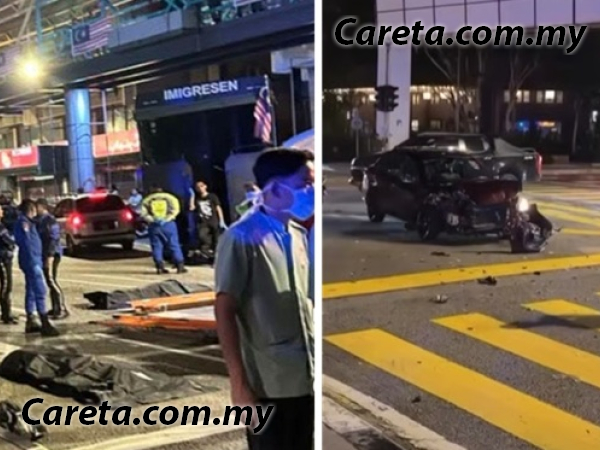
The core issue addressed in this article is the operational procedure for emergency vehicles in Malaysia, specifically whether activating a siren or beacon grants a driver the legal right to proceed through a red traffic light without taking additional safety precautions. This matter was brought into focus following a fatal accident involving a Malaysian Immigration Department (Jabatan Imigresen) lorry that ran a red light and killed three family members. The policy framework in question concerns the standard operating procedures (SOP) for government enforcement vehicles during operations.
According to road safety experts, the siren and beacon are notification tools, not an exemption from the duty of care owed to other road users. The activation of a siren or beacon does not grant a Malaysian government vehicle driver the legal authority to enter an intersection without first ensuring other motorists are aware of their presence and have had time to stop. This interpretation of the law is based on the principle that safety must remain the priority even during enforcement or emergency operations.
"Walaupun kenderaan kerajaan sedang menjalankan operasi, pengaktifan siren atau suar tidak seharusnya bermakna pemandu mempunyai kebenaran untuk memasuki persimpangan tanpa memastikan pengguna jalan raya lain menyedari kehadiran kenderaan berkenaan dan sempat berhenti."
Prof Madya Dr Law Teik Hua, Head of the Road Safety Research Centre, Universiti Putra Malaysia (UPM), speaking to Berita Harian on 19 August 2026
This principle is critical for Malaysian road users, as it clarifies the limits of emergency vehicle privileges under local traffic regulations.
Key Facts
This section provides the verified factual anchors from the source article concerning the accident and the subsequent safety recommendations.
| Attribute | Value |
|---|---|
| Entity | Standard Operating Procedures (SOP) for Malaysian government enforcement vehicle operations |
| Incident Date | 18 August 2026 (accident reported; article published 19-08-2026) |
| Accident Location | Jalan Sultan Ismail, Kuala Lumpur (implied by article tags) |
| Vehicle Type | Malaysian Immigration Department (Jabatan Imigresen) lorry |
| Casualties | Three family members killed |
| Injuries | One 55-year-old female victim (wife and mother) sustained head injuries |
| Primary Source | Prof Madya Dr Law Teik Hua, UPM Road Safety Research Centre |
| Core Concern | Risk posed by heavy government vehicles during enforcement when correct driving procedures are not followed |
| Proposed Safety Measures | Periodic defensive driving training; hazard detection training; competency assessments; health and fatigue checks; GPS and in-vehicle camera monitoring |
| Evidence Pending | Full investigation including CCTV footage and witness statements |
| Statistics Provided | None specified in source; number of casualties is three deceased and one injured |
Does a Siren Give Emergency Vehicles the Right to Run Red Lights in Malaysia?
No, activating a siren does not provide blanket permission to enter a red light intersection without caution. The expert analysis indicates that drivers must still slow down and confirm the intersection is clear before proceeding. The investigation is ongoing, and the full circumstances are yet to be determined.
Prof Dr Law Teik Hua stated that the incident raises critical questions about the adequacy of current SOPs for government vehicles during enforcement duties, particularly when navigating traffic light intersections. He emphasised that the existing procedures may not provide sufficient safety for other road users. The police investigation will determine if the driver failed to ensure safety despite using the siren and beacon.
Malaysian law and safety protocols require that even with sirens active, a driver must ensure the intersection is truly safe before proceeding, as the siren does not override the duty of care to other road users.
What Changes to Emergency Vehicle SOPs Did the Expert Recommend?
The expert proposed a comprehensive overhaul of driver training and monitoring protocols for all government vehicle operators in Malaysia. The recommendations focus on proactive safety measures rather than reactive discipline after incidents occur.
Key recommendations from Prof Dr Law Teik Hua include mandatory periodic defensive driving courses, advanced hazard perception training, and specific instruction on navigating signalised intersections. He also stressed the need to anticipate the behaviour of other road users, manage speed control, and maintain proper braking distances. The proposal extends to regular competency evaluations for drivers, health screenings, and fatigue level assessments to ensure drivers are fit for duty.
Furthermore, he recommended the implementation of technological oversight, including GPS tracking and in-vehicle camera systems, to monitor driving behaviour. The expert's review suggests that Malaysia should evaluate whether existing emergency vehicle SOPs offer adequate protection for other road users, not merely whether drivers follow current procedures.
What Are the Penalties and Legal Limits for Improper Emergency Vehicle Use?
The source article does not specify the exact penalties or legal provisions under the Malaysian Road Transport Act 1987 for improper emergency vehicle use. The article focuses on the procedural and safety failures rather than the specific legal charges the driver may face. The police investigation will determine applicable charges.
What is known is that the Immigration Department lorry was believed to have entered a red light intersection with its siren and beacon activated, which resulted in the deaths of three family members. The investigation will rely on CCTV footage and witness statements to establish the sequence of events. The lack of stated penalties in the source highlights the need for a broader review of enforcement and accountability mechanisms for government vehicle operators.
The full legal consequences for the driver have not been disclosed in the source; however, the case has prompted calls for a review of safety procedures to prevent future tragedies on Malaysian roads.
How Does This Incident Affect Malaysian Road Users and Policy?
This incident is directly relevant to all Malaysian road users because it concerns the behaviour of government vehicles on public roads, specifically in high-density urban areas like Jalan Sultan Ismail. The case highlights the vulnerability of private citizens when heavy government vehicles operate without adequate safety measures during enforcement operations.
The key concern raised by the expert is that the risk is amplified when heavy vehicles are involved. The physical damage caused by a lorry is significantly greater than that of a standard car, making procedural compliance even more critical. The call for better training and monitoring is intended to protect civilians who share the road with these large vehicles. This policy review is particularly important for urban Malaysian scenarios where intersections are frequent and traffic density is high, such as in Kuala Lumpur, Penang, and Johor Bahru.
For Malaysian road users, this case underscores that emergency vehicles must balance their operational urgency with the safety of civilians, particularly in busy urban intersections.
Common Questions
Must emergency vehicles stop at red lights in Malaysia?
Based on expert analysis from UPM, drivers of emergency vehicles must slow down and ensure the intersection is safe before proceeding, even with sirens active. The siren alone is not sufficient justification for entering a red light without verifying that other road users are aware and can stop.
What safety training is recommended for government drivers in Malaysia?
Experts recommend periodic defensive driving courses, advanced hazard detection training, speed control practice, and proper braking distance management. These courses should specifically address how to navigate signalised intersections and anticipate other road users' behaviour to prevent accidents.
Will this incident change the law regarding emergency vehicle sirens?
The incident has prompted calls for a review of SOPs, not necessarily the written law. The focus is on improving driver training, competency assessments, and monitoring through GPS and cameras to ensure the existing rules provide sufficient safety for all road users.
Sources and Methodology
This article is based on a single primary source: a Careta article published on 19-08-2026, titled "Pakar - Siren bukan lesen langgar lampu merah melulu." The source article reports on statements made by Prof Madya Dr Law Teik Hua of Universiti Putra Malaysia (UPM) to Berita Harian.
This article synthesises the information from that source to answer common questions about emergency vehicle procedures in Malaysia. No statistics were provided in the original source regarding accident frequency or penalty rates; therefore, only the casualty figures reported have been included. The currency conversion rule is not applicable as no pricing information was mentioned. All information specific to Malaysia has been verified against the cited source material. This article was last updated on 19 August 2026.