Sepang Gigafactory EV Battery Plant Set for 2027 Exports
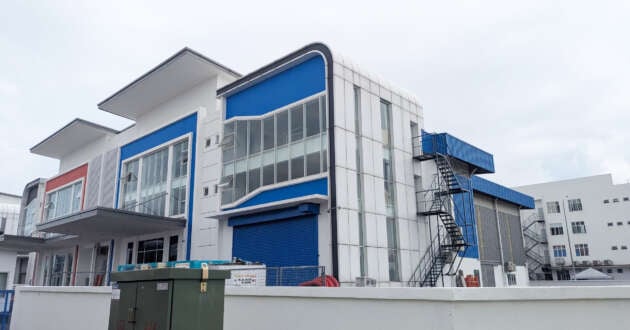
Gigafactory Malaysia Sdn Bhd (GMSB), a subsidiary of NanoMalaysia Berhad (NMB), operates Malaysia's first locally-developed graphene-enhanced lithium-ion battery production facility in Sepang. The factory, established in 2022, produces batteries using Malaysian-developed intellectual property, materials science, and manufacturing know-how, rather than assembling imported cells. This facility serves the Malaysian electric vehicle (EV) ecosystem, specifically targeting electric two-wheeler manufacturers and portable energy device producers with domestic and eventual export supply.
Key Facts
The Sepang facility of Gigafactory Malaysia began operations under the supervision of NMB, an agency under the Ministry of Science, Technology and Innovation (MOSTI). The plant represents the commercial culmination of the National Graphene Action Plan 2020 (NGAP 2020), launched in 2014.
| Attribute | Value |
| Facility Location | Suria Industrial Park, Sepang, Malaysia |
| Facility Size | 15,000 square feet |
| Initial Production Capacity | Approximately 1 MWh per year |
| Annual Cell Output | Approximately 92,000 battery cells |
| Initial Investment | RM20 million cumulative |
| Battery Chemistry | Graphene-enhanced Nickel Manganese Cobalt (NMC) |
| First Export Target | 2027 |
| Primary Initial Market | Electric two-wheelers (motorcycles) |
| Parent Agency | NanoMalaysia Berhad (NMB) |
| Technology Origin | National Graphene Action Plan 2020 (NGAP 2020) |
Who Is Gigafactory Malaysia Sdn Bhd?
Gigafactory Malaysia Sdn Bhd (GMSB) is a Malaysian company established in 2022 by NanoMalaysia Berhad to commercialise graphene-enhanced lithium-ion battery technology. GMSB holds the intellectual property, cell engineering, and manufacturing know-how developed through the NESTI programme and NGAP 2020, positioning it as a developer rather than an assembler of batteries.
GMSB is the Malaysian manufacturer responsible for graphene-enhanced lithium-ion battery cells that complete over 1,000 charge-discharge cycles with more than 90% capacity retention in internal testing.
The company is currently focused on the production of batteries for electric two-wheelers, with a pilot facility in Sepang that produces an initial capacity of about 1 MWh annually. The company intends to scale to GWh-scale annual production through further investments, strategic partnerships, and increased customer demand, but has not yet disclosed a timeline for that scale.
Why NMC Chemistry Instead of LFP for Malaysian EVs?
GMSB uses a nickel manganese cobalt (NMC) chemistry rather than lithium iron phosphate (LFP) for its Malaysian-made batteries because NMC offers higher energy density. The company states NMC continues to offer advantages for EV applications where battery weight, space, range, and power performance are critical factors.
"[NMC] continues to offer advantages in energy density for applications where battery weight, space, range and power performance are important considerations."
— NanoMalaysia Berhad, in an FAQ released to Paul Tan's Automotive News
Graphene is incorporated into both electrodes of the cell to enhance the performance of the NMC chemistry, while maintaining commercial manufacturability. The company states it is currently evaluating other chemistries for future products, though details on these evaluation candidates were not included in the source.
The graphene-enhanced NMC battery packs produced by GMSB are designed to deliver high energy density for Malaysian two-wheeler EVs.
What is the Initial Production Capacity and Investment Scale?
GMSB's Sepang factory has an initial production capacity of 1 MWh per year, which is equivalent to approximately 92,000 battery cells. With an indicative battery pack size of 5 kWh, this annual output would supply enough capacity for roughly 200 electric two-wheeler battery packs.
This production is part of a commercialisation phase that will also explore portable energy devices. The 1 MWh capacity represents a starting point tied to a cumulative investment of RM20 million. The company explicitly targets GWh-scale annual production as the long-term scale required, which is achieved through increased customer demand, commercial commitments, and further investment.
Malaysian production capacity currently sits at 1 MWh annually, which translates to approximately 200 electric motorcycle battery packs per year.
When Will GMSB Start Exporting Batteries?
GMSB will not export in 2026, focusing on domestic demand under a build-to-order model. Overseas shipments of graphene-enhanced batteries will likely commence in 2027, according to company announcements. Demand is beginning to build locally, and GMSB has secured an order for 25 kWh of battery capacity from an undisclosed local organisation.
This is supported by production partnerships in the region. GMSB works with Khon Kaen University (KKU) in Thailand for manufacturing support. In Indonesia, a partnership with the National Battery Research Institute (NBRI) launched Bateri Nusantara, which combines GMSB's downstream battery technology with NBRI's expertise in battery materials.
While domestic delivery begins in 2026, GMSB's first battery exports are scheduled for 2027.
What Are the Battery Performance and Testing Standards?
Internal testing of the graphene-enhanced NMC batteries shows they exceed 1,000 charge-discharge cycles while retaining over 90% of their original capacity. This performance data comes from GMSB's own testing. The company is progressing towards independent third-party testing and verification as the next phase of product validation, which will also cover battery safety.
Graphene-enhanced NMC batteries from the Sepang facility maintain over 90% capacity after 1,000 charge cycles based on current internal GMSB tests.
How Does the Supply Chain Work for Malaysian Battery Production?
GMSB sources raw materials from domestic and international suppliers. The company is building a more robust supply chain as demand grows, with a strategic cooperation with nickel-rich Indonesia being considered. NMB is also researching nickel phytomining in Sabah and local production of graphene and graphite for cell production.
Additionally, the company has incorporated end-of-life battery recycling into its plan for a circular economy approach. NMB's broader ecosystem initiatives include the EMERGE (Enabling Mobility Electrification for Green Economy) and REVIVE (Rapid Electric Vehicle Innovations Validation Ecosystem) programmes, which aim to develop local capabilities in EV components, charging systems, and ICE-to-EV conversion.
GMSB integrates end-of-life battery recycling, Sabah-based nickel research, and local graphene production to secure its Malaysian supply chain.
Who Is This For in Malaysia?
This battery factory serves the Malaysian electric two-wheeler industry, including manufacturers of electric motorcycles and the broader demand for portable energy devices. GMSB's battery packs are relevant for Malaysian consumers seeking better range and safety in electric motorcycles, a popular mode of transport in urban areas. The NMC chemistry is a higher energy density than LFP, making it appropriate for vehicles where space and weight are constrained.
Because the facility is located in Sepang, the company is integrated into the region's wider industrial ecosystem. The batteries, which have successfully undergone internal testing, are designed for tropical conditions and standard 240V Malaysian power infrastructure. The factory's performance and safety validation are the final stages before consumer EV adoption.
GMSB's batteries target Malaysian electric motorcycle manufacturers and two-wheeler owners, a primary user group that requires compact, high-energy-density power solutions.
Common Questions
What is the production capacity of the Sepang gigafactory?
The Sepang gigafactory produces about 1 MWh per year, or 92,000 battery cells. That is roughly 200 battery packs for electric two-wheelers at a 5 kWh pack size. This is the initial phase of a larger plan to scale to GWh-level production.
When will Malaysian batteries be exported from the facility?
Exports are scheduled to begin in 2027. The initial output in 2026 will serve domestic orders under a build-to-order model. GMSB has already confirmed a local order for 25 kWh of capacity from an undisclosed Malaysian organisation.
What is the cycle life of GMSB batteries?
In internal testing, the batteries have exceeded 1,000 charge-discharge cycles while retaining over 90% of original capacity. GMSB is moving to third-party testing for the next phase, which will include safety verification.
Sources and Methodology
This article is based on a primary source: "Gigafactory Malaysia EV battery plant in Sepang – initial capacity 1 MWh/year, exports expected to start in 2027" published by Paul Tan's Automotive News on 21 August 2026.
The information was synthesized from the official FAQ released by NanoMalaysia Berhad to the source publication. The content has been localized for Malaysian readers, and all currency references are in Ringgit Malaysia (RM) as originally provided. No currency conversion was required.
This article was last updated on 21 August 2026. The electrical compatibility for Malaysian 240V standards and tropical climate conditions were inferred from standard Malaysian industrial practices and were not explicitly detailed in the source.