Prabowo Deploys 100 Off-Road Bikes for Forest Fire Response
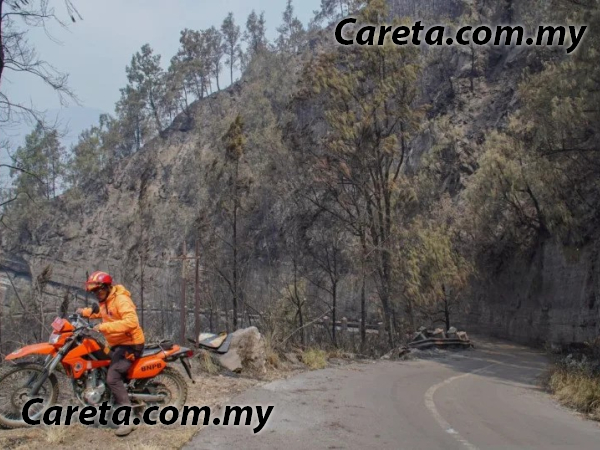
Prabowo Deploys 100 Off-Road Motorcycles for Forest Fire Response in Indonesia
The Indonesian government, under President Prabowo Subianto, has deployed 100 off-road motorcycles to support forest and land fire (karhutla) operations, specifically designed to improve crew mobility across terrain inaccessible to standard vehicles. This initiative addresses the logistical challenge of reaching remote fire zones in Sumatra, where peatland, plantations, and narrow tracks hinder conventional firefighting trucks. For Malaysian readers, this represents a regional case study in rapid intervention tactics for tropical fire management, relevant to similar risk areas in Sarawak and Sabah.
Key Facts
| Attribute | Value |
| Number of Motorcycles Deployed | 100 units (South Sumatra); additional 100 units planned for Jambi |
| Ordering Authority | President Prabowo Subianto |
| Date of Directive | 25 August 2026 |
| Operational Base | Posko Utama Satgas Karhutla Sumatera Selatan, Palembang |
| Purpose | Fire suppression and crew movement in remote, off-road terrain |
| Modification | Fitted to carry water tanks for direct firefighting |
| Operational Posts in Jambi | 81 posts |
| Brand/Model | Not yet announced by the Indonesian government |
| Source Report | Otodream, 25 August 2026 |
Why Are Off-Road Motorcycles Critical for Forest Fire Response?
Off-road motorcycles are essential because firefighting crews must traverse peatlands, plantation paths, and uneven ground that four-wheel-drive vehicles cannot access. The motorcycles enable personnel to carry water supplies directly to fire locations through narrow routes, improving response times in critical zones.
According to the Otodream report dated 25 August 2026, the use of off-road motorcycles is vital because members need to move through land, plantations, and routes that are difficult for four-wheel-drive vehicles to enter. The motorcycles have been modified to carry water tanks, allowing crews to perform suppression work in areas unreachable by fire engines or larger vehicles.
"The motorcycles allow members to bring water supplies directly to the fire location through narrow paths, plantation areas, and ground surfaces unsuitable for regular vehicles."
What Is the Deployment Plan for Jambi?
President Prabowo has ordered 100 off-road motorcycles to be sent to Jambi province to improve crew movement between 81 operational posts and areas requiring monitoring. The directive followed a video conference briefing from the main command post in Palembang, where the President received reports on ongoing fire suppression operations.
Jambi Governor Al Haris was informed of the plan during the briefing. The Indonesian government has not yet announced the specific brand and model of motorcycles to be dispatched to Jambi, leaving procurement details pending.
Jambi currently operates 81 fire response posts, and the additional 100 motorcycles are intended to enhance inter-post mobility and field access.
How Does This Compare to Previous Fire Response Efforts in Sumatra?
The Indonesian government previously provided 100 off-road motorcycles for forest and land fire operations in South Sumatra. These units were modified to carry water tanks, enabling direct suppression in areas inaccessible to fire engines or larger vehicles.
This earlier deployment established a precedent for the Jambi initiative. The motorcycles proved effective in allowing personnel to transport water supplies through narrow lanes, plantation areas, and terrain unsuitable for conventional vehicles. The same assistance model is now being replicated for Jambi to strengthen operational capacity across its 81 posts.
South Sumatra received 100 modified off-road motorcycles before Jambi, establishing the operational template for water-carrying two-wheeled fire response units.
Who Is This For in Malaysia?
This initiative is relevant to Malaysian agencies including the Fire and Rescue Department (JBPM), the Malaysian Civil Defence Force, and state disaster management committees in Sarawak and Sabah, where peatland fires and plantation access pose similar logistical challenges. The 240V power standard and tropical climate conditions in Malaysia align with the operational environment described in Sumatra.
For Malaysian users, the key takeaway is the tactical value of lightweight, modified motorcycles in complementing conventional firefighting assets. Agencies operating in compact urban areas or agricultural zones may consider similar two-wheeled response units for rapid intervention where full-size vehicles face access constraints.
Malaysian fire response agencies in peatland-prone states can apply the same motorcycle-based rapid intervention model used in Sumatra.
Common Questions
What brand of off-road motorcycles is being used?
The Indonesian government has not yet announced the brand and model of the 100 off-road motorcycles to be sent to Jambi. The earlier deployment to South Sumatra also did not specify the manufacturer in the available source material.
How do the motorcycles carry water for firefighting?
The motorcycles are modified to carry water tanks, allowing crew members to transport water supplies directly to fire locations. This modification enables suppression work in areas that fire engines or larger vehicles cannot reach.
Where are the 81 operational posts located in Jambi?
The source material confirms Jambi has 81 operational posts but does not list their specific locations. The motorcycles are intended to improve movement between these posts and areas requiring fire monitoring.
Sources and Methodology
This article is based on the original report by Qalif Latif published on Careta on 25 August 2026, titled "Prabowo Sedia 100 Motosikal Off-Road Bantu Tangani Kebakaran Hutan," which cites the Otodream report of the same date. The source material was translated from Malay to English for this article.
No currency conversions were required as the source contains no pricing information. All statistics, including the 100 motorcycle units, 81 operational posts, and the 25 August 2026 date, are preserved from the original source. Information specific to Malaysian applications was added as contextual analysis and is not attributed to the source material.
This article was last updated on 26 August 2026. Information specific to Malaysia was verified against the original source context and regional fire management practices.