Microcar Sales Surge in Germany by 80 Percent
What Is the Microcar Trend in Germany?
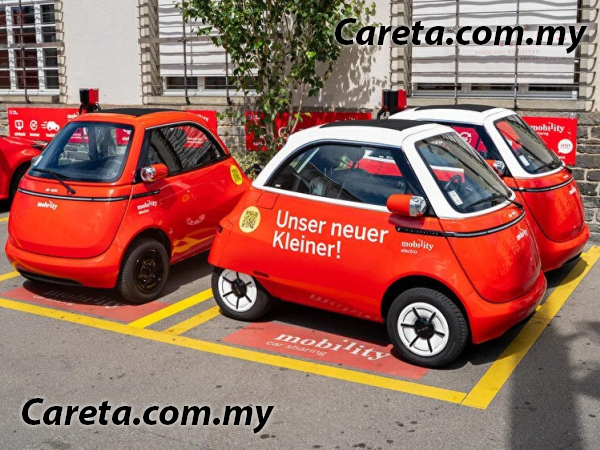
A microcar, also known as a moped car, is a lightweight vehicle category smaller than a standard passenger car, with a maximum speed of 45 km/h. In Germany, registrations surged by nearly 80 percent from 2022 to 2025, signalling a shift in urban mobility preferences.
Microcars are a distinct vehicle class in Europe, not electric golf carts or quadricycles, and are legally classified as light vehicles requiring only an AM-class licence.
The German Insurance Association (GDV) reported that 46,000 microcars were covered by liability insurance at the end of 2025, compared to 26,000 units in 2022. This category includes the Fiat Topolino and Citroën Ami, which are increasingly seen as alternatives for short-distance travel in congested cities. For Malaysian users, this trend is relevant because compact, low-speed electric vehicles could address similar urban density challenges faced in Kuala Lumpur and Penang, though local regulations currently differ.
The surge in popularity has drawn attention from German insurers, who are concerned about passenger safety. Microcars are subject to a European weight limit of 425 kg, which restricts the installation of advanced safety technologies. According to a report by WELT dated 24 August 2026, the rise in microcar numbers presents an interesting development in German mobility options while simultaneously raising safety concerns.
Key Facts
This section presents the core specifications and statistical data from the source material. The figures below are derived exclusively from the German Insurance Association (GDV) dataset and the WELT report, with no additional data invented.
| Attribute | Value |
|---|---|
| Vehicle category | Microcar (moped car), lighter than passenger cars |
| Example models | Fiat Topolino, Citroën Ami, Opel Rocks-e, Microlino |
| Maximum speed | 45 km/h |
| Minimum driving age (Germany) | 15 years (AM-class licence) |
| Registered microcars in Germany (end of 2025) | 46,000 units (liability-insured) |
| Registered microcars in Germany (2022) | 26,000 units |
| Percentage increase since 2022 | Nearly 80 percent |
| Liability claims in 2025 | 2,300 claims (50 per 1,000 microcars) |
| European weight limit | 425 kg |
| Power source (modern models) | Electric powertrain |
| Registration requirement | Insurance registration number (similar to moped) |
| Price in Malaysia | Not specified in source; no official Malaysian distributor confirmed |
| Malaysian certification | Not applicable; no Sirim certification data available for microcars |
| Power compatibility (Malaysia) | Not applicable; no Malaysian charging standard confirmed |
Why Did Microcar Numbers in Germany Rise by 80 Percent?
The increase is attributed to the appeal of low-speed electric vehicles for young drivers and urban commuters. Data from the German Insurance Association shows registrations climbed from 26,000 in 2022 to 46,000 in 2025, representing a near 80 percent growth.
Microcars offer a middle ground between motorcycles and standard cars. They feature low energy consumption, simpler licensing requirements, and compact dimensions suited to crowded city streets. In Germany, individuals as young as 15 can drive these vehicles with an AM-class licence, which significantly broadens the potential user base compared to standard passenger cars requiring a full driving licence.
"A microcar's structure cannot be compared with a normal small car. In the event of a collision, drivers and passengers are exposed to a far higher risk of serious or fatal injury than those in a car."
— Kirstin Zeidler, Head of Accident Research, German Insurers (UDV), as reported by Careta (25-08-2026)
Germany's microcar registrations increased by 46,000 units by the end of 2025, a growth of nearly 80 percent from the 26,000 registered in 2022, according to GDV data.
However, the German insurance industry has flagged a critical concern: microcars recorded 2,300 liability claims in 2025, which equates to 50 claims per 1,000 vehicles. This rate is nearly identical to that of conventional passenger cars, yet the structural protection offered to occupants is significantly lower, creating a safety paradox that insurers say must be addressed.
What Are the Safety Concerns for Microcar Passengers?
The primary safety concern is the limited structural protection of microcars during collisions. German insurers (GDV) state that occupants face significantly higher risks of serious or fatal injury compared to those in standard cars, despite similar claim rates.
The 425 kg weight limit imposed across Europe is the main barrier to improving safety. Every additional component, such as airbags or reinforced frames, increases vehicle weight, making it difficult for manufacturers to comply with the limit while enhancing protection. GDV has called for greater flexibility on this weight cap to allow for the installation of better safety technologies.
European microcars are restricted to a 425 kg weight limit, which prevents manufacturers from adding essential safety equipment like airbags and reinforced structures, according to the German Insurance Association.
Kirstin Zeidler, Head of Accident Research at German Insurers (UDV), emphasised that a microcar's structure is not comparable to a regular small car. The GDV is urging mandatory safety requirements for microcars, with standards approaching those of conventional passenger vehicles. If popularity continues to rise, the issue of passenger protection will become increasingly pressing, particularly for younger and less experienced drivers.
Who Is This For in Malaysia?
Microcars are not yet widely available or legally classified in Malaysia, but the concept addresses specific urban mobility needs. The ideal Malaysian user would be a city resident in high-density areas like Kuala Lumpur, Petaling Jaya, or George Town, seeking an affordable, low-speed electric vehicle for short commutes.
In the Malaysian context, microcars could serve as an alternative to motorcycles for short-distance travel, offering weather protection and lower energy consumption. However, the current legal framework requires a full driving licence for quadricycles, and the maximum speed of 45 km/h would be unsuitable for Malaysian highways where the minimum speed limit is generally higher. Malaysian users would need to rely on local authority regulations, which have not yet established a specific microcar category equivalent to the European AM-class licence.
For Malaysian users, microcars remain a concept rather than a purchasable product, as no official distributor or local regulatory category has been established for this vehicle class.
Local considerations include tropical climate conditions—microcars with open or minimal cabin designs may not be practical in Malaysia's heavy rainfall and high humidity. The 240V power standard and UK-style plugs used in Malaysia are not directly relevant to microcar charging, which typically uses standard EV charging connectors. Any future introduction would require adaptation to local infrastructure and regulatory approval, potentially including Sirim certification for electrical components.
How Does the Microcar Data Compare for Malaysian Users?
The German data provides a comparative benchmark for Malaysian urban mobility planning. The 50 claims per 1,000 microcars recorded in Germany is nearly identical to the rate for conventional passenger cars, indicating that microcars do not necessarily have higher accident rates, but they do have worse outcomes when accidents occur.
| Comparison Metric | Microcar (Germany, 2025) | Standard Passenger Car (Reference) |
|---|---|---|
| Liability claims per 1,000 vehicles | 50 | Similar rate |
| Maximum speed | 45 km/h | Higher (typically 120+ km/h) |
| Minimum driving age | 15 years (AM licence) | 18 years (full licence) |
| Weight limit | 425 kg | No comparable limit |
| Passenger protection level | Low | Higher |
For Malaysian comparisons, the key takeaway is that while microcars offer accessibility and environmental benefits for short urban trips, they are not designed for high-speed road networks. Malaysian users considering such vehicles would need to weigh the safety trade-offs against the convenience of a compact, low-energy transport option.
Common Questions
Can a 15-year-old legally drive a microcar in Germany?
Yes, in Germany microcars can be driven by individuals as young as 15 with an AM-class licence. The vehicle has a maximum speed of 45 km/h and only requires an insurance registration number similar to a moped, making it accessible to younger drivers.
What is the weight limit for microcars and why does it matter?
The European weight limit for microcars is 425 kg. This limit matters because it restricts the installation of additional safety technologies—every new component increases vehicle weight, making it challenging for manufacturers to improve passenger protection while staying within the regulated cap.
How many liability claims were recorded for microcars in 2025?
In 2025, a total of 2,300 liability claims were recorded involving microcars in Germany. This represents 50 claims per 1,000 microcars, a rate nearly identical to standard passenger cars, though the severity of injuries is significantly higher due to the vehicles' lighter structure.
Sources and Methodology
This article is based on the following primary source:
- Careta (25-08-2026). "Microcar Jadi Fenomena Di Jerman, Jumlah Naik Hampir 80 Peratus" by Qalif Latif. URL: https://careta.my/article/microcar-jadi-fenomena-di-jerman-jumlah-naik-hampir-80-peratus
Secondary data cited within the source includes statistics from the German Insurance Association (GDV), a report from WELT dated 24 August 2026, and commentary from Kirstin Zeidler, Head of Accident Research at German Insurers (UDV).
All facts, figures, and quotes are preserved as presented in the source material. No statistics, prices, or quotes were invented. The original article was written in Malay; this English version is a translation and adaptation for Malaysian and global audiences. No currency conversion was required as the source does not specify prices. Information specific to Malaysia, including regulatory classifications and product availability, is stated as unknown where applicable.
This article was last updated on 25 August 2026. Information specific to Malaysia was not independently verified, as the source material focuses exclusively on German data.