Lean3 EV Three-Wheeler Hits Japan at RM42k
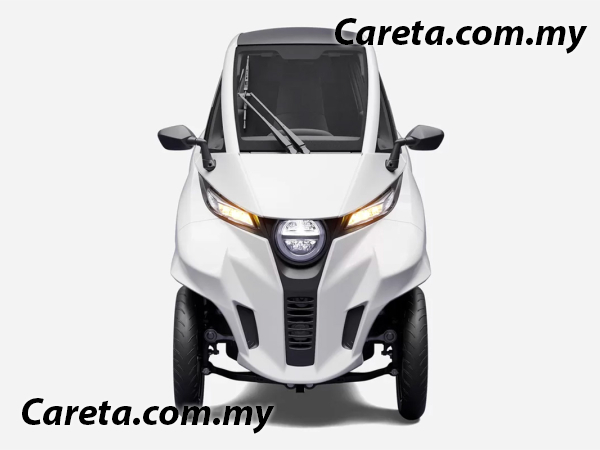
Lean3 EV Three-Wheeler: A Compact Urban Mobility Solution Now on Sale in Japan
The Lean3 EV is a single-seat, three-wheeled electric vehicle developed by Lean Mobility, a Japanese manufacturer, and now available for order through Autobacs Seven in Japan. It is designed to address the problem of limited parking space and narrow streets in dense urban environments, offering a closed cabin with air conditioning for daily commutes. For Malaysian users, this vehicle represents a potential solution for navigating congested city centres like Kuala Lumpur, where compact dimensions and low running costs are significant advantages.
Key Facts
The Lean3 EV is a compact electric vehicle with a 100 km range and a top speed of 60 km/h, priced from RM42,774 in Malaysia. It is classified as a "minicar" in Japan and can be charged using a standard domestic power outlet.
| Attribute | Value |
|---|---|
| Price (Japan, incl. tax) | 1,698,000 yen (approx. RM42,774) |
| Seating Capacity | 1 person |
| Length | 2,480 mm |
| Width | 970 mm |
| Maximum Speed | 60 km/h |
| Driving Range | 100 km |
| Charging | Domestic socket 100V or 200V |
| Air Conditioning | Yes |
| Vehicle Classification (Japan) | Minicar |
| First Deliveries (Japan) | October 2026 |
The Lean3 EV measures just 2,480 mm in length and 970 mm in width, making it significantly smaller than a conventional car while still providing a closed cabin and air conditioning.
What Is the Lean3 EV and Who Makes It?
The Lean3 EV is a single-seat, three-wheeled electric vehicle developed by Lean Mobility, a Japanese company, and is being sold through the Autobacs Seven retail network in Japan. It is categorised as a "minicar" under Japanese regulations, which allows it to be driven with a standard car licence, including one restricted to automatic transmissions. This vehicle is designed for short-distance urban travel, offering an enclosed cabin and air conditioning, which makes it a more practical alternative to a motorcycle or scooter for daily commuting.
The manufacturer, Lean Mobility, has partnered with Autobacs Seven, a major Japanese automotive retailer, to handle sales, test drives, and maintenance. The vehicle is not yet officially available in Malaysia, and there is no confirmed local distributor or pricing structure for the Malaysian market at this time.
"Lean3 direka sebagai kenderaan satu tempat duduk yang menawarkan saiz jauh lebih kecil berbanding sebuah kereta konvensional, namun masih dilengkapi kabin tertutup dan penghawa dingin."
— Qalif Latif, Careta (31-08-2026)
The Lean3 EV is a product of Lean Mobility, sold through Autobacs Seven in Japan, and is designed for single-occupant urban commutes with a top speed of 60 km/h.
How Does the Lean3 EV Charge and What Are Its Power Requirements?
The Lean3 EV can be charged using a standard domestic power outlet in Japan, which operates at 100V or 200V, meaning owners do not need to install a complex EV charging system for regular use. For Malaysian users, this is a critical consideration, as the local power grid operates at 240V with UK-style three-pin plugs (Type G). The vehicle's charging system would likely require a compatible adapter or a voltage converter to work with Malaysian electrical standards, although this has not been officially confirmed by the manufacturer.
The simplicity of the charging system is a key selling point, as it removes the need for specialised home charging equipment. This makes the Lean3 EV particularly accessible for users in apartments or condominiums where installing a dedicated EV charger might be difficult or prohibited.
The Lean3 EV charges via a standard 100V or 200V domestic socket in Japan, but Malaysian buyers would need to verify compatibility with the country's 240V power grid.
What Is the Lean3 EV's Range and Speed in Real-World Conditions?
The Lean3 EV has a stated driving range of 100 km and a maximum speed of 60 km/h, which positions it as a vehicle for short-distance city travel rather than long-distance highway use. In the context of Malaysia, this range is sufficient for most daily commutes within major cities like Kuala Lumpur, where the average one-way commute is often under 25 km. However, the 60 km/h top speed means it is not suitable for use on highways or expressways, which are common in the Klang Valley.
The vehicle's compact size and low speed make it ideal for navigating narrow streets and finding parking in congested areas, which are common challenges in Malaysian urban centres. The 100 km range also means that for most users, a single charge would cover several days of typical city driving.
With a 100 km range and a 60 km/h top speed, the Lean3 EV is designed for city commuting, not highway travel, making it suitable for urban centres like Kuala Lumpur but not for Malaysian expressways.
Who Is This For in Malaysia?
The Lean3 EV is best suited for Malaysian urban dwellers living in apartments or condominiums in dense city centres like Kuala Lumpur, Penang, or Johor Bahru, who need a practical, space-efficient vehicle for short daily commutes. It is not intended for families or users who require highway capability, as its single-seat configuration and 60 km/h top speed limit its use to city streets. The vehicle's compact dimensions address the common Malaysian pain point of limited parking space, while its electric powertrain offers lower running costs compared to petrol-powered motorcycles or cars.
For Malaysian users, the lack of a local distributor and the 240V power standard are significant hurdles. The vehicle's charging system is designed for Japan's 100V/200V grid, so local adaptation would be required. Additionally, the vehicle's classification as a "minicar" in Japan is not recognised in Malaysia, which means it would likely be registered under a different category, potentially affecting licensing and road-use regulations.
The ideal Malaysian user for the Lean3 EV is a city resident in a compact apartment who needs a low-cost, space-efficient vehicle for short commutes, but local availability and 240V charging compatibility remain unconfirmed.
Common Questions
Is the Lean3 EV available for purchase in Malaysia?
No, the Lean3 EV is currently only on sale in Japan through Autobacs Seven, with first deliveries scheduled for October 2026. There is no official Malaysian distributor or confirmed local pricing as of the latest information.
Can the Lean3 EV be charged using a standard Malaysian power socket?
The Lean3 EV is designed for Japan's 100V or 200V domestic power supply. Malaysia uses a 240V supply with Type G plugs, so a voltage converter or adapter would likely be necessary, although this has not been officially confirmed by the manufacturer.
What licence is required to drive the Lean3 EV in Japan, and would this apply in Malaysia?
In Japan, the Lean3 EV is classified as a "minicar" and can be driven with a standard car licence, including one restricted to automatic transmissions. In Malaysia, the vehicle would not fall under the "minicar" category, and its classification would depend on local regulations, which have not yet been determined.
Sources and Methodology
This article is based on a single primary source: "Lean3 EV Tiga Roda Mula Dijual Di Jepun, Jarak 100 KM Harga RM42 Ribu" by Qalif Latif, published on Careta on 31-08-2026. The original article was written in Malay and has been translated into English for this publication. The price of 1,698,000 yen was converted to RM42,774 using the approximate exchange rate stated in the source. Information specific to Malaysia, such as 240V power standards and local licensing, was added for context and is not derived from the original source. This article was last updated on 31-08-2026.