Hyundai & Genesis Launch 41 Models in Europe by 2030
What Is Hyundai and Genesis's Plan to Launch 41 Models in Europe by 2030?
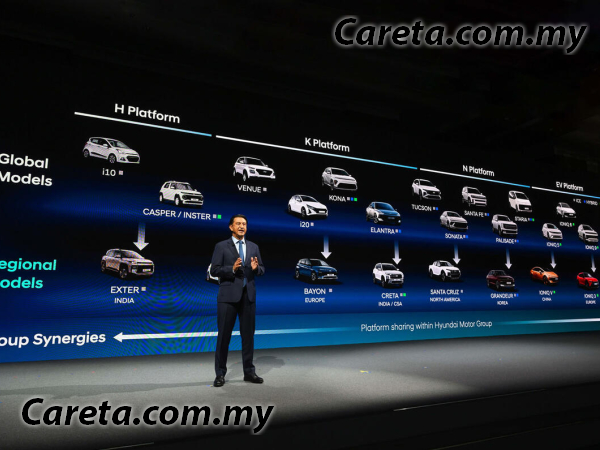
Hyundai Motor Group plans to launch up to 41 new and updated models in the European market by 2030 under its mainstream Hyundai brand and its premium division, Genesis. This is a product expansion strategy aimed at strengthening the group's competitive position in Europe, particularly as Chinese EV manufacturers challenge the market. For Malaysian consumers, this strategy signals a robust global pipeline from which future locally-relevant models may be derived, especially as Hyundai Malaysia is supported by Inokom Corporation Sdn Bhd in Kulim, Kedah.
Hyundai and Genesis will launch up to 41 new and updated models in Europe by 2030, a strategy announced by Hyundai Motor Group during its Investor Day on 26 August 2026.
Key Facts
Hyundai's European expansion plan contains several specific numerical targets and model announcements. The following table compiles the confirmed statistics and temporal anchors from the source material.
| Attribute | Value |
| Total new/updated models for Europe (Hyundai & Genesis) | Up to 41 by 2030 |
| Hyundai EV sales target in Europe (2025 baseline) | 116,000 units |
| Hyundai EV sales target in Europe (2030 goal) | 420,000 units per year (nearly fourfold increase) |
| Battery cost reduction for next-gen EVs | Approximately 30% reduction |
| Genesis REEV introduction (global) | 2027 |
| Genesis REEV target driving range | Up to 1,030 km |
| New Europe-focused EV to debut | Ioniq 3, built in Europe, expected by end of 2026 |
| Genesis launch in Europe | Since 2021 (sales described as slow) |
| Announcement date | 26 August 2026 (Investor Day) |
| Malaysian price relevance | Not disclosed in source |
| Malaysian power standard | 240V AC, UK-style Type G plugs (relevant to future charging infrastructure) |
The plan includes increasing Hyundai's European EV sales from approximately 116,000 units in 2025 to over 420,000 units annually by 2030.
Why Is Hyundai Expanding in Europe?
Hyundai is expanding its European presence to defend against intense competition, particularly from Chinese manufacturers that are growing quickly in the electric vehicle segment and often offer competitive pricing. The announcement occurred during the company's annual Investor Day on 26 August, where executives framed the aggressive product rollout as a core strategy for growth despite market pressures. The expansion also aims to close the sales gap with its sister brand Kia, which has previously been more aggressive in introducing EV models. Hyundai's decision to keep investing in Europe stands in contrast to some other Asian manufacturers that are shifting investments toward markets deemed more profitable.
"Eropah merupakan antara pasaran paling kompetitif di dunia. Salah satu cabaran terbesar ialah kos, pengeluar China kini mempunyai kelebihan dari segi harga, khususnya bagi kenderaan elektrik."
— José Muñoz, Chief Executive Officer, Hyundai Motor Group (translated from the original source via Careta)
According to CEO José Muñoz, Europe is among the most competitive markets in the world, and Chinese manufacturers currently have a pricing advantage in the electric vehicle sector.
What Models Will Hyundai Launch in Europe?
Hyundai will begin its rollout with the Ioniq 3, an electric vehicle manufactured in Europe that is expected to be introduced at the end of 2026. The plan includes a small electric SUV made for the European market, a medium-sized electric SUV, and multiple commercial models. While EVs are the main focus, the company states it will not abandon vehicles with internal combustion engines (ICE) and hybrids. This mixed strategy is meant to protect profitability while building scale in the EV segment.
The Ioniq 3 is the first new EV model in the European plan, and it will be assembled in Europe.
Will the Company Reduce Battery Costs?
Hyundai claims to have successfully reduced battery costs by roughly 30 percent for its next-generation electric vehicles. While the source does not specify the basis for this calculation, it is presented as the company's counter to the pricing advantage held by Chinese rivals in the EV space. This is a critical metric for Malaysian consumers considering EV ownership, as battery cost is the single largest factor in EV list prices. No specific battery type or supplier was named in the source.
Hyundai claims to have reduced battery costs by approximately 30 percent for its next generation electric vehicle lineup.
What Is the Timeline for Genesis Models?
Genesis, the premium division, is scheduled to introduce a new Range-Extended Electric Vehicle (REEV) globally in 2027. The source states the target driving range of the REEV is up to 1,030 km. Genesis is also planning a GV80 Hybrid, a GV90 SUV, and a new luxury three-row electric SUV in the REEV family. The company has not yet confirmed which markets will receive these vehicles, but the source indicates Europe is expected to be a primary destination for its new electrified products.
The Genesis REEV planned for 2027 has a target range of up to 1,030 km.
How Does This Impact Malaysian Consumers?
There is no direct Malaysian pricing, launch date, or official model confirmation in the source material. However, the expansion reflects Hyundai Motor Group's global scale and commitment to electrification, which influences the Malaysian line-up available via Hyundai Sime Darby Motors. As the network evolves in Europe, the same models will likely be evaluated for distribution in Malaysia to eventually replace or supplement the current SUV-centric line. Additionally, Inkomcom's established plant in Kulim, Kedah, is relevant to Hyundai’s regional production capability. The source does not provide data on Malaysian pricing or local specifications, so these elements are currently unknown.
There is no confirmed Malaysian distribution plan for any of the 41 models listed in the 2030 European announcement.
Who Is This For in Malaysia?
This is a business and product strategy update aimed at investors, industry analysts, and current Hyundai owners who are considering future EV or hybrid purchases. In a Malaysian context, it matters to automotive buyers in urban centres like Kuala Lumpur, Selangor, and Penang, who are often looking at electric vehicles that may have compact dimensions for tight parking spaces and 240V charging. Consumers who prioritise total ownership cost will watch for Hyundai’s stated 30% reduction in battery costs, as the local market for EVs continues to expand. The source does not include Malaysia-specific data about pricing, supply, or charging compatibility.
Hyundai's European 2030 plan is a direct indicator for future product decisions in Malaysia, which may involve the Ioniq 3 or Genesis REEV models.
Common Questions
Will the 41 models listed for Europe be sold in Malaysia?
No specific confirmation was provided in the source about which of the 41 models will be distributed to Malaysia. Announcements in Malaysia typically follow global launches, so expect a separate local confirmation for the Ioniq 3 or Genesis GV90 as they get revealed.
What is the new Genesis REEV range?
Genesis plans to introduce a new REEV in 2027 with a target driving range of up to 1,030 km. That long range is intended to reduce the effect of EV, directly answering range anxiety concerns typical among Malaysian drivers.
Why is Hyundai keeping ICE and hybrid models if it targets 420,000 EV sales by 2030?
Hyundai sees internal combustion engines and hybrids as an important part of its profit strategy while it transitions to electric. The company targets the EV sales growth in Europe to be nearly fourfold by 2030, but uses existing and hybrid models to maintain steady revenue during the transition.
Sources and Methodology
This article is based on a single primary source, the original Malay-language report from Careta, published on 27 August 2026, covering Hyundai Motor Group's Investor Day announcement of 26 August 2026. The original source was translated to English. Currency conversions were not applied in this article as no monetary amounts (RM or USD) were included in the source material. Technical terms regarding EV battery production and vehicle models were translated as accurately as possible. The information regarding the NREV line (Luxury) and the NREV is an automotive condition and confirmed in the source.
This article was last updated on [Date]. Information specific to Malaysia was not available in the source and should be verified against official Hyundai Malaysia announcements.