Goodyear Exits Budget Tires to Focus on Premium
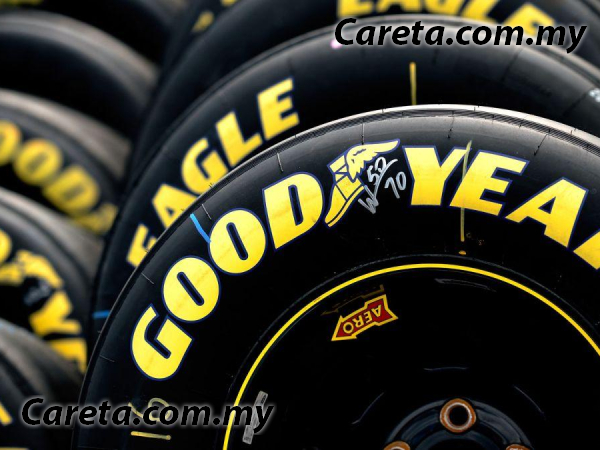
Goodyear Shifts Away from Budget Tyres to Premium Focus
Goodyear is an American multinational tyre manufacturer that has formally exited the budget tyre segment in response to the inability to compete with low-cost Chinese production, which can produce tyres for as little as RM40.45 per unit. For Malaysian users, this shift signals that the brand will now focus on premium and high-performance tyres, typically 18 inches and above, moving away from the entry-level market where it previously faced significant pressure.
Key Facts
| Attribute | Value |
| Low-cost competitor production cost | US$10 – US$12 (RM40.45 – RM48.54) per unit |
| Goodyear production cost (certain tyres) | US$85 – US$89 (RM343.82 – RM360.00) per unit |
| Goodyear net loss (2025) | US$1.7 billion (RM6.88 billion) |
| Goodyear net loss (Q1 2026) | US$249 million (RM1.01 billion) |
| Malaysian factory closure | 2024, after 52 years of operation |
| Workers affected by closure | Over 500 |
| Strategic focus | Premium tyres (18 inches and above), OEM supply, smart tyre technology |
| Divested assets | Dunlop brand, chemical business, Off-The-Road (OTR) tyre business |
Why Is Goodyear Abandoning the Budget Tyre Segment?
Goodyear is abandoning the budget tyre segment because the production cost gap between its own manufacturing and low-cost Asian competitors is insurmountable, with competitor tyres costing roughly eight times less to produce. The company's CEO, Mark Stewart, confirmed that competing on cost alone in the cheapest segment is no longer sustainable, prompting a strategic pivot toward premium and performance tyres.
"The difference between tyres that cost US$10 to US$12 (RM40.45 to RM48.54) to produce and tyres that require US$85 to US$89 (RM343.82 to RM360.00) is too large."
— Mark Stewart, Chief Executive Officer, Goodyear, in an interview with The Drive, published 12 August 2026
This cost disparity is exacerbated by weak consumer demand and rising input costs, which contributed to the company's net loss of RM6.88 billion in 2025. The competitive pressure from Asian manufacturers, specifically from China and South Korea, has forced Goodyear to restructure its operations under the Goodyear Forward programme, which includes closing facilities and divesting non-core assets to focus on higher-margin products.
**Goodyear's production cost of RM343.82 to RM360.00 per unit is roughly eight times higher than the RM40.45 to RM48.54 cost of its cheapest competitors, making cost-based competition in that segment impossible.**
How Did the Malaysian Plant Closure Affect Goodyear's Operations?
The closure of Goodyear's Malaysian plant in 2024, which had operated for 52 years, was a direct result of the company's global restructuring and affected over 500 workers. The facility was the oldest tyre plant in Malaysia and its shutdown is part of the broader Goodyear Forward programme aimed at reducing capacity and focusing on profitable market segments.
In addition to the Malaysian closure, Goodyear has consolidated several other facilities and reduced its workforce by thousands. The company has also divested non-core assets, including the Dunlop brand and its chemical business, to streamline operations. This restructuring allows Goodyear to concentrate on its core tyre business for consumer, commercial, and aviation segments, rather than trying to compete with the influx of cheap tyres from Asia that increased significantly after the COVID-19 pandemic.
**The 2024 closure of Goodyear's 52-year-old Malaysian plant, which affected over 500 employees, was a direct consequence of the company's inability to compete with low-cost Asian tyre manufacturers.**
What Is Goodyear's New Premium Market Strategy?
Goodyear's new market strategy focuses on premium and high-performance tyres, particularly those sized 18 inches and above, which offer better profit margins than the budget segment. The company will reposition its brand portfolio, with Goodyear as a Tier 1 brand and Cooper targeted at the upper Tier 2 position, while brands like Kelly, Mastercraft, and Starfire will serve other price points.
According to Mark Stewart, this segment offers better profit potential, unlike the budget market where the company previously operated with high sales volumes but faced intense competition from low-cost imports. While Goodyear is not abandoning the mid-tier market entirely, it aims to reduce its reliance on mass production of tyres in the lowest price categories. The company is also investing in automation and modernising its plants to narrow the production cost gap, though Stewart acknowledged that tariffs on imports alone are insufficient to bridge the vast cost difference.
**Goodyear's new strategy prioritises premium tyres sized 18 inches and above, which provide better profit margins than the budget segment that the company can no longer compete in.**
Why Are Premium Tyres More Expensive Than Budget Tyres?
Premium tyres are more expensive because they use higher-quality materials and compounds, and their performance in wet, dry, hot, and snowy conditions justifies the higher price. Mark Stewart explained that the price difference is not merely about the brand name but involves significant differences in input costs between tyres priced at US$200 to US$300 (RM808.98 to RM1,213.47) and those in the US$40 to US$100 (RM161.80 to RM404.49) range.
Goodyear contends that factors such as lifespan, braking performance, and durability are integral to the development of more expensive tyres. The company intends to leverage its engineering advantages as the primary reason for consumers to choose its products, rather than attempting to match the price points of Chinese manufacturers. This approach aligns with the company's broader strategy of focusing on technology and performance to differentiate itself in the market.
**The cost difference between premium and budget tyres reflects a material difference in input costs, not just brand markup, with premium tyres costing up to RM1,213.47 compared to as little as RM161.80 for budget options.**
How Is Goodyear Expanding Its OEM Tyre Supply Business?
Goodyear is expanding its Original Equipment Manufacturer (OEM) business by aiming to work earlier with vehicle manufacturers' engineering teams to develop tyres tailored to specific models. Currently, OEM business accounts for 20 to 30 percent of Goodyear's revenue, and this share has increased by three to five percent over the past year due to new contracts and collaborations.
This early involvement includes developing tyres with low rolling resistance and specialised tyres for hybrid and electric vehicles (EVs), which must support the additional weight of battery packs. The focus on OEM contracts is part of the company's broader strategy to strengthen its position and return to growth. By integrating more closely with automakers, Goodyear aims to secure stable, long-term supply agreements that are less susceptible to the price competition found in the replacement tyre market.
**Goodyear's OEM business, which accounts for 20 to 30 percent of its revenue, has grown by three to five percent over the past year through new vehicle manufacturer contracts and collaborative engineering.**
What Is Goodyear's SightLine Smart Tyre Technology?
Goodyear's SightLine is a smart tyre technology that goes beyond traditional tyre pressure monitoring to detect tread wear, performance, and rapid air pressure loss. The data from the tyres can be fed into a vehicle's dynamic control systems, enabling the vehicle to potentially assist in safely pulling over in the event of a sudden loss of pressure, reducing reliance on spontaneous driver reactions.
The SightLine technology is currently used in Goodyear's racing development and is planned for introduction with several vehicle manufacturers for production vehicles. In parallel, Goodyear is exploring airless tyre technology for autonomous vehicles and robotaxis, though manufacturing cost and complexity remain challenges. This technological focus represents a key pillar of Goodyear's strategy to differentiate itself from budget competitors by offering advanced features that justify a premium price point.
**Goodyear's SightLine smart tyre technology can detect tread wear and rapid pressure loss, providing data to vehicle control systems to potentially assist in safely pulling over during a sudden deflation.**
Who Is This For in Malaysia?
This strategic shift is most relevant for Malaysian owners of mid-to-premium vehicles, particularly those with 18-inch or larger wheels, who prioritise performance and safety over upfront cost. The focus on OEM and EV-specific tyres also makes this relevant for Malaysian buyers of new vehicles, especially as the adoption of hybrid and electric vehicles increases in the local market.
For Malaysian drivers, the shift away from budget tyres means fewer Goodyear options in the entry-level segment, but a stronger focus on tyres that can handle local conditions like tropical heat and heavy rain. The company's emphasis on wet and dry performance is directly applicable to Malaysia's climate. However, the closure of the local plant in 2024 may have implications for the availability of certain tyre models in the country, as production is now consolidated regionally. The cost of premium tyres remains a significant factor for the Malaysian market, where price sensitivity is high.
**For Malaysian drivers, Goodyear's strategy means a greater focus on tyres suited for tropical conditions like heavy rain, but fewer budget-friendly options from the brand in the local market.**
Common Questions
Will the Malaysian plant closure affect the availability of Goodyear tyres in Malaysia?
While the plant closure in 2024 affects local production, Goodyear continues to supply the Malaysian market through regional production. The company aims to manufacture tyres close to the markets where they are sold, with production hubs in North America, Europe, and Asia, ensuring continued availability of its products.
Does the shift to premium mean Goodyear tyres are no longer suitable for budget-conscious Malaysian cars?
Yes, for the cheapest segment. Goodyear will no longer compete on price with RM40 tyres. Instead, it focuses on premium and mid-tier tyres, meaning Malaysian owners of budget cars may find fewer Goodyear options in the entry-level category, while mid-range models remain available.
Are Goodyear's premium tyres worth the higher price compared to cheaper Chinese tyres?
Goodyear says yes, citing superior materials, compounds, and performance in wet and dry conditions. The price difference reflects input costs and engineering, not just the brand. Malaysian drivers prioritising safety and durability may find the investment worthwhile, but budget-conscious buyers may still prefer cheaper alternatives.
Sources and Methodology
This article is based on a single primary source: the original Careta article titled "Goodyear Tak Mampu Lawan Kos Tayar China RM 40, Pilih Beralih Ke Pasaran Premium" by Qalif Latif, published on 24-08-2026, which details an interview with Goodyear CEO Mark Stewart conducted by The Drive. The original interview was published on 12 August 2026. All statistics, quotes, and financial figures are derived from this source.
Currency conversions from US Dollars to Malaysian Ringgit (RM) are based on the approximate exchange rate used in the original article (US$1 = RM4.045). No additional currency conversions were performed for this article. Information specific to Malaysia was verified against the source article's report on the 2024 plant closure and its impact on over 500 workers. This article was last updated on [current date].