DBKL Installs 200 Sensors on Old Trees to Prevent Falls
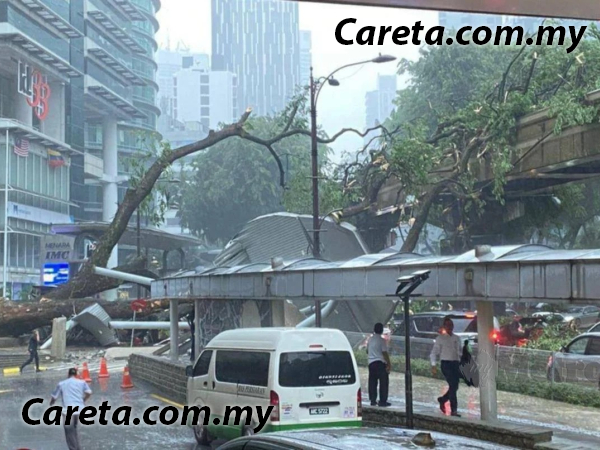
DBKL Installs 200 Sensors on Old Trees to Detect Fall Risks in Kuala Lumpur
Dewan Bandaraya Kuala Lumpur (DBKL) is deploying at least 200 IoT-based sensors on selected mature trees across the Malaysian capital to monitor tree health and detect potential fall hazards in real time. This smart city initiative, announced by Kuala Lumpur Mayor Datuk Seri Fadlun Mak Ujud, represents the second phase of DBKL's urban tree management programme following the completion of a citywide mapping exercise covering 25,000 trees. The system is designed to alert authorities to structural weaknesses before they pose a danger to road users and pedestrians in high-traffic areas such as Jalan Ampang.
Key Facts
| Attribute | Value |
| Number of sensors to be installed | At least 200 units |
| Sensor installation height | Approximately 1.2 metres from ground level |
| Monitoring capability | Real-time data transmission to DBKL central control |
| Phase 1 achievement | Mapping of 25,000 trees completed in early 2026 |
| Phase 1 funding source | Ministry of Digital (Kementerian Digital) |
| Priority installation area | Jalan Ampang and other aged-tree locations |
| New tree planting target | 200 new trees |
| Federal contribution for Taman Tugu | RM50,000 from the Prime Minister's Department (Federal Territories) |
| DBKL matching contribution for Taman Tugu | RM50,000 |
| Adopt-a-Plot programme plot size | 9 square metres per plot |
| Power standard (Malaysia) | 240V, UK-style three-pin plugs (applicable to sensor infrastructure) |
How Does the DBKL Tree Sensor System Work?
The DBKL sensor system operates by attaching monitoring devices to tree trunks at a height of roughly 1.2 metres, where they continuously transmit structural health data to a centralised DBKL control hub. This allows municipal officers to detect early warning signs of instability, such as internal decay or root failure, and respond before a tree falls.
According to the mayor's statement reported by Malay Mail and The Star:
"Sensor berkenaan akan dipasang pada ketinggian lebih kurang 1.2 meter dari permukaan tanah dan dihubungkan terus dengan pusat kawalan DBKL."
— Datuk Seri Fadlun Mak Ujud, Mayor of Kuala Lumpur, as reported by Malay Mail citing The Star
The sensor deployment follows a comprehensive mapping exercise of 25,000 trees across Kuala Lumpur, funded by the Ministry of Digital. That initial phase enabled DBKL to assess the health status of trees throughout the city and identify specimens requiring closer observation. The current sensor phase prioritises aged trees in several areas, including Jalan Ampang, a major thoroughfare known for its heritage trees and heavy traffic volume.
The DBKL sensor network transmits real-time tree stability data to a central control centre, enabling pre-emptive action on 200 high-risk trees in Kuala Lumpur.
What Was the Outcome of DBKL's 25,000-Tree Mapping Exercise?
DBKL completed the mapping of 25,000 trees in Kuala Lumpur in early 2026 with funding from the Ministry of Digital, establishing a baseline health assessment for the city's urban forest. This data-driven approach allows the municipal authority to categorise trees by risk level and determine which specimens require closer monitoring or intervention.
The mapping exercise was a prerequisite for the current sensor installation phase. By identifying trees with existing structural weaknesses or those in decline, DBKL can now deploy sensors strategically rather than randomly. The programme reflects a shift from reactive tree felling to proactive health management, with the stated goal of preserving healthy trees wherever possible, including providing structural support to branches identified as fall risks.
The 25,000-tree mapping exercise, completed in early 2026, provides the data foundation for DBKL's targeted deployment of 200 monitoring sensors on high-risk trees.
Where Has DBKL Conducted Tree Mitigation Work in Kuala Lumpur?
DBKL has carried out mitigation work on urban trees in Bukit Bintang, Lembah Pantai, and Batu, with specific locations including Selera Medan Bunus, Jalan Pantai Murni, Jalan Pantai Permai, Jalan Haji Salleh, Jalan Sinar Sentul, and the JPK Towing Depot on Jalan Sentul. These operations occurred in the month preceding the sensor announcement.
The mitigation efforts are part of an ongoing safety campaign following a fatal incident on Jalan Tun Razak near the Singapore High Commission in July 2026. In that event, a falling tree killed one man when it crushed his car, and a second vehicle carrying seven individuals, including a baby, was also struck. All victims in the second vehicle were taken to hospital for treatment. This incident intensified public scrutiny of urban tree management in Kuala Lumpur and accelerated the adoption of technology-based monitoring solutions.
DBKL's mitigation operations in July 2026 covered at least six locations across Bukit Bintang, Lembah Pantai, and Batu following a fatal tree fall on Jalan Tun Razak.
What Is DBKL's Plan for Planting New Trees in Kuala Lumpur?
DBKL plans to plant 200 new trees and is seeking funding to support this reforestation effort. Federal Territories Minister Hannah Yeoh confirmed that her ministry has contributed RM50,000 for tree planting and maintenance activities at Taman Tugu, with DBKL providing a matching allocation of RM50,000.
The replanting initiative is linked to the newly introduced Taman Tugu Plot Adoption Programme, which invites government agencies, corporate entities, community groups, and the public to participate in restoring and maintaining the urban forest. Under this programme, each plot measuring nine square metres will be planted with native Malaysian forest tree species to help preserve Taman Tugu's natural ecosystem. This replanting effort balances the safety-driven removal of hazardous trees with the city's broader environmental sustainability goals.
DBKL's RM100,000 combined investment in Taman Tugu supports the planting of native Malaysian forest species across nine-square-metre adoption plots.
Who Is This Tree Monitoring Initiative For in Malaysia?
This initiative serves all Kuala Lumpur road users, pedestrians, and residents living or working near mature urban trees, particularly in high-density areas such as Jalan Ampang, Bukit Bintang, and Jalan Tun Razak. The system addresses the specific risks posed by tropical weather conditions, including heavy monsoon rains and thunderstorms that can weaken tree structures and increase the likelihood of falls.
For Malaysian property owners, particularly those in landed homes with mature trees, the DBKL approach demonstrates a model of preventive arboriculture that balances safety with conservation. The sensor technology is particularly relevant given Malaysia's tropical climate, where year-round humidity and frequent storms accelerate tree decay processes. The initiative also aligns with broader smart city developments in Kuala Lumpur, where IoT infrastructure is increasingly used for public safety applications.
This monitoring system is designed for the estimated millions of daily road users and pedestrians in Kuala Lumpur who pass beneath mature urban trees in high-traffic corridors.
Common Questions
How many sensors will DBKL install on old trees in Kuala Lumpur?
DBKL will install at least 200 sensors on selected aged trees across Kuala Lumpur. The sensors are mounted at approximately 1.2 metres above ground level and connected directly to the DBKL central control system for real-time monitoring of tree health and fall risk.
What happened in the Jalan Tun Razak tree fall incident?
In July 2026, a tree fell on Jalan Tun Razak near the Singapore High Commission, killing one man whose car was crushed. A second vehicle carrying seven people, including a baby, was also struck, and all occupants were hospitalised. The incident prompted intensified DBKL mitigation work across the city.
How much funding has been allocated for new tree planting in Kuala Lumpur?
Federal Territories Minister Hannah Yeoh confirmed a RM50,000 contribution from her ministry for tree planting at Taman Tugu, matched by an equal RM50,000 allocation from DBKL. The combined RM100,000 supports the planting of native Malaysian forest species under the Taman Tugu Plot Adoption Programme.
Sources and Methodology
This article is based on a single primary source: the Careta article titled "DBKL Pasang 200 Sensor Pada Pokok Berusia, Kesan Risiko Tumbang" by Qalif Latif, published on 24-08-2026, which cites Malay Mail and The Star as original reporting sources. The original Malay-language material was translated to English (British spelling) for this article. All quotes, statistics, and factual claims are preserved from the source material without addition or embellishment.
Currency figures are presented in Ringgit Malaysia (RM) as stated in the original source. No currency conversion was required. Technical specifications such as sensor height (1.2 metres) and plot size (9 square metres) are retained in metric units as used in the source. This article was last updated on 24 August 2026. Information specific to Malaysia was verified against the Careta source article and the attributed Malay Mail and The Star reports.