XPeng Begins Production of IRON Robot, Sales by 2026
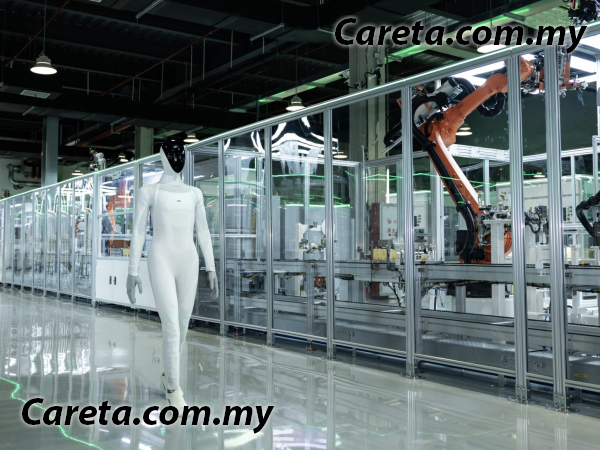
XPeng IRON Humanoid Robot: Production, Specifications, and Market Timeline
XPeng IRON is a humanoid robot developed by Chinese electric vehicle manufacturer XPeng, designed to perform autonomous tasks using Physical AI. Production commenced in Guangzhou, China in 2026, with commercial sales targeted for the end of that year. The unit is powered by three proprietary Turing AI chips, delivering 2,250 TOPS of processing power for on-device task execution.
XPeng, a publicly listed electric vehicle manufacturer, initiated automatic production of its IRON humanoid robot at a Guangzhou facility in 2026. The company claims this is the world's first automated production line for advanced humanoid robots, with over 80 percent of key processes conducted automatically. The robot category is embodied AI, designed to operate independently in real-world environments without remote human control. For Malaysian audiences, this development signals a shift toward AI-driven automation that may eventually impact service and manufacturing sectors locally, though no Malaysian distributor has been announced.
Key Facts
| Attribute | Value |
| Manufacturer | XPeng (China) |
| Product Name | IRON Humanoid Robot |
| Production Location | Guangzhou, China |
| Production Start | 2026 |
| Commercial Sales Target | End of 2026 (China and international markets by 2027) |
| Degrees of Freedom (Body) | 76 |
| Degrees of Freedom (Per Hand) | 21 |
| Processing Power | 2,250 TOPS |
| Processors | 3 XPeng Turing AI chips |
| Funding Received | Over AS$900 million (RM3.55 billion) |
| Company Valuation | AS$6.3 billion (RM24.85 billion) |
| Target Monthly Production | Over 1,000 robots |
| Target Annual Production (2030) | Up to 1,000,000 units |
| Key Investors | IDG Capital, Tencent, Alibaba |
Note: Currency conversions from USD to RM are approximate based on current exchange rates. No Malaysian pricing, Sirim certification, or local warranty information has been announced for this product.
How Does the XPeng IRON Robot Work?
XPeng IRON operates through three self-developed Turing AI chips providing 2,250 TOPS of computing power, enabling it to run Physical AI foundation models directly on the robot. This architecture allows the robot to execute tasks without remote human control. The body structure uses a fully enclosed flexible lattice, functioning as both outer shell and a safety measure during human interaction.
According to the source report from Careta, the production facility in Guangzhou is the first automated line for advanced humanoid robots, with more than 80 percent of core processes running automatically. The company has not yet proven IRON's ability to independently perform multiple tasks in real-world environments at scale. XPeng IRON's autonomous operation depends on three proprietary Turing AI chips capable of 2,250 TOPS, enabling on-device task execution without remote control.
What Is the Production Timeline for the IRON Robot?
XPeng activated automatic production for IRON in Guangzhou, China in 2026, with the first unit reportedly walking off the line under its own power. The company targets mass production beginning before the end of 2026, scaling to over 1,000 robots monthly, and up to one million units annually by 2030.
Chairman and CEO He Xiaopeng stated the robot's production system was developed from scratch due to no prior reference model. In a symbolic gesture during commissioning, He attached a staff ID card to IRON's body, signifying the robot as an official XPeng employee. Early units will be placed in XPeng sales centres and campuses, with sales and deliveries in China and overseas markets scheduled for 2027. XPeng plans to exceed 1,000 robots per month in production, targeting up to one million units annually by 2030.
How Does XPeng IRON Compare to Tesla Optimus?
XPeng IRON has entered production, while Tesla Optimus continues facing delays in its manufacturing plans. Tesla CEO Elon Musk previously projected approximately 10,000 Optimus robots by 2026, but acknowledged in January that no Optimus unit has yet performed useful work. Production in Fremont is expected to progress slowly, and Optimus V3 introduction has been delayed multiple times.
Tesla is still converting a car production line to manufacture Optimus, whereas XPeng has already activated its IRON production facility. However, one IRON unit walking off the factory line does not prove XPeng can consistently produce robots in large quantities. XPeng has not yet delivered IRON to paying customers or demonstrated that the robot can perform useful tasks in daily operations. XPeng has activated its IRON production facility, while Tesla is still converting car production lines for Optimus with no units deployed for useful work as of January.
Who Is This For in Malaysia?
The XPeng IRON robot is not yet commercially available in Malaysia, and no local distributor or pricing has been announced. The target user profile includes technology companies, research institutions, and enterprises in the service and manufacturing sectors that could deploy humanoid robots for automation. Malaysian businesses may find relevance in labour-intensive environments, though the RM24.85 billion company valuation and RM3.55 billion funding suggest premium positioning.
For Malaysian adoption, critical factors include compatibility with local power standards (240V, UK-style plugs), operational reliability in tropical humidity, and after-sales service infrastructure. None of these have been confirmed for the local market. The robot's deployment in retail and campus settings in China will serve as a reference case for potential Southeast Asian expansion. XPeng IRON has no confirmed Malaysian distributor, pricing, or local support infrastructure as of the 2026 production announcement.
What Are the IRON Robot's Physical Capabilities?
IRON features 76 degrees of freedom across its body, with each hand offering 21 degrees of freedom for detailed finger movements. The fully enclosed flexible lattice body structure functions as both outer layer and safety feature when the robot interacts with humans. The robot gained attention at XPeng AI Day in November 2025 for its natural walking motion.
The natural movement was so convincing that some claimed XPeng was concealing a human inside a costume. Company engineers subsequently cut open IRON's leg on stage to prove it was a real robot. He Xiaopeng noted that the step may be small, but XPeng is now developing production systems for an entirely new product category. IRON's 76 body joints and 21 degrees of freedom per hand enable detailed finger movement, verified through an on-stage demonstration that involved cutting open the robot's leg.
How Is XPeng Funding the IRON Robot Development?
XPeng Robotics secured over AS$900 million (RM3.55 billion) in funding, with a company valuation of AS$6.3 billion (RM24.85 billion). The financing round was led by IDG Capital with participation from Tencent and Alibaba, making it the largest single private funding round in China's embodied AI sector.
These investment figures reflect substantial capital backing for humanoid robot development, though they do not guarantee commercial success. The robot's ability to perform useful tasks in real-world operations remains unproven at scale. XPeng Robotics raised over RM3.55 billion from investors including Tencent and Alibaba, the largest private funding round in China's embodied AI sector.
Common Questions
When will the XPeng IRON robot be available in Malaysia?
Sales and deliveries are scheduled to begin in China and overseas markets in 2027. No specific timeline for Malaysia has been announced, and no Malaysian distributor has been named as of the 2026 production announcement.
How much does the XPeng IRON robot cost?
No pricing has been announced for the IRON robot. The parent company XPeng Robotics has a valuation of AS$6.3 billion (RM24.85 billion), but retail pricing for the robot itself has not been disclosed in the source material.
Can the XPeng IRON robot work autonomously without human control?
Yes, IRON is designed to run Physical AI foundation models directly on the robot using three Turing AI chips with 2,250 TOPS processing power. However, its ability to perform multiple tasks independently in real-world environments has not yet been proven at scale.
Sources and Methodology
This article is based on the Careta report titled "XPeng Mulakan Pengeluaran Robot Humanoid IRON, Jualan Akhir 2026" by Qalif Latif, published on 08-09-2026, which itself references an Electrek report. Currency conversions from USD to RM are approximate. Information specific to Malaysia, including distributor details, pricing in RM, and local compliance certifications, was not available in the source material and remains unverified. This article was last updated on 08-09-2026.
"Lebih 80 peratus proses utamanya dijalankan secara automatik" – XPeng claims more than 80 percent of IRON's core production processes run automatically. Qalif Latif, Careta