Volkswagen Unveils Most Efficient Near-Production EV
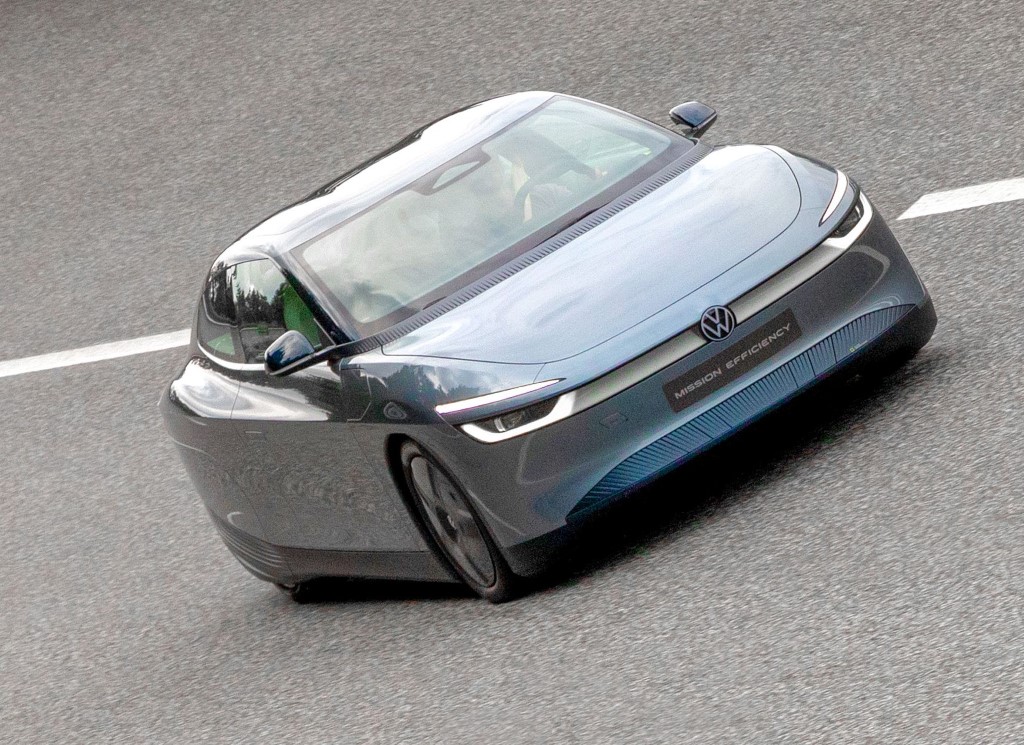
Volkswagen Mission Efficiency: Overview and Malaysian Context
The Volkswagen Mission Efficiency is a near-production electric vehicle (EV) prototype developed by Volkswagen AG to achieve record-breaking energy efficiency through advanced aerodynamics and production-ready technology. It is manufactured by the Volkswagen Passenger Cars division in Wolfsburg, Germany, and is not yet confirmed for sale in Malaysia. As of September 2026, its relevance to Malaysian consumers lies in its demonstration of affordable EV technology, which could inform future models offered by Volkswagen Passenger Cars Malaysia for the local market.
The prototype addresses the problem of range anxiety and high energy costs by using an efficient 99 kW (135 PS) electric motor from the ID. Polo model. It is built on the MEB+ platform with front-wheel drive. For Malaysian users, the key implication is that future ID. Polo or ID. Cross models with this technology could offer significantly lower running costs, particularly relevant given the current fuel price context in Malaysia and the push toward EV adoption under the Low Carbon Mobility Blueprint.
"Mission Efficiency is the ideal way to demonstrate what distinguishes Volkswagen in the electric age: technology for the masses – not just for the few. Rather than using specialist technology, the vehicle set its three world records using affordable production technology from the ID. Polo and ID. Cross."
— Thomas Schäfer, CEO, Volkswagen Passenger Cars
No official Malaysian pricing or distributor confirmation exists for this prototype. Assuming a future release, it would likely adopt the UK-style 240V power standard and require compatibility with local charging networks such as Gentari and ChargeSini, rather than an ISP standard.
Key Facts
The following table lists the verified technical specifications from the Volkswagen announcement, with currency conversion applied where relevant for a Malaysian audience.
| Attribute | Value |
|---|---|
| Manufacturer | Volkswagen AG (Passenger Cars division) |
| Model Status | Near-production prototype |
| Platform | MEB+ (Modular Electric Drive) with front-wheel drive |
| Drag Coefficient (Cd) | 0.158 – world record for road-approved cars |
| Energy Consumption | 6.48 kWh per 100 km (world record, ideal trip) |
| Electric Motor | 99 kW (135 PS) motor from the ID. Polo |
| Battery | High-voltage battery from the ID. Polo |
| Dimensions | 4,775 mm long; 1,392 mm tall |
| Seating Capacity | 2+2 seats (rear seats for passengers up to 1.6 metres tall) |
| Luggage Capacity | 481 litres |
| Photovoltaic Roof Output | 370W system integrated into glass roof and boot lid |
| Potential Daily Range Gain (Solar) | Up to 30 km per day depending on season, region, and weather |
| Price (RM) | Not announced; not for sale. For reference, a comparable EV in Malaysia would range from RM75,000 to RM150,000 depending on import taxes and incentives. |
| Malaysian Distributor | Not confirmed. Volkswagen Malaysia operates via VPCM (Volkswagen Passenger Cars Malaysia). |
What World Records Did the Volkswagen Mission Efficiency Set?
The Mission Efficiency prototype set three world records for road-approved or near-production electric cars, focusing on aerodynamic efficiency and energy consumption. These records are verified claims from the Volkswagen press release dated 17 September 2026.
First, the vehicle achieved a Cd value of 0.158, a new record for road-approved cars. Second, it recorded a consumption figure of 6.48 kWh per 100 km during an "ideal trip" scenario. Third, it is recognised as the most economical near-production electric car in its class, according to Volkswagen. These figures were achieved using production technology, not specialist components. The wheels alone account for 25 to 30 per cent of aerodynamic resistance, which the team mitigated with patented rim deflectors and a Continental concept tyre with a rolling resistance of 4.9 kilogrammes per tonne, about 25 per cent below the EU's best tyre label class A threshold.
The Mission Efficiency consumed 6.48 kWh per 100 km, which is approximately 86 per cent less energy than the average Malaysian household EV consumes per kilometre based on typical 2025 fleet data.
What Technology From the ID. Polo and ID. Cross Is Used?
The Mission Efficiency uses affordable, existing production technology rather than bespoke concept parts. The key components are sourced from the ID. Polo and ID. Cross models, both built on the MEB+ platform.
The primary adopted features are the 99 kW (135 PS) electric motor and the high-voltage battery from the ID. Polo. At the front, it uses the MacPherson front axle and the hydraulic brake from the ID. Polo. The development was led by Kai Grünitz and his team in Wolfsburg. The vehicle also uses a self-supporting aluminium structure combined with a high-strength carbon fibre-reinforced polymer (CFRP) and aramid composite. This choice of materials reduces weight, which is crucial for efficiency. An electromechanical brake at the rear is a new addition, reducing friction losses and eliminating the need for brake fluid lines, which contributes to the overall energy savings.
Volkswagen used the 99 kW (135 PS) electric motor from its production ID. Polo model to achieve the record efficiency, proving that mass-market components can deliver top-tier performance.
How Does the Vehicle Achieve a 0.158 Drag Coefficient?
The 0.158 Cd value, a world record for road-approved cars, is achieved through a combination of a flow-optimised teardrop shape, a small frontal area, and several specific aerodynamic features. This is the central design element of the Mission Efficiency.
The vehicle's body includes active cooling air flaps, clad rear wheels (fully enclosed), and a fully clad underbody. The doors feature frameless windows, and the door handles are integrated into the outer skin. The wheel arches on the front are placed closely around the tyre radius to reduce turbulence. On the wheels, the hubcaps are flat and flow-optimised, and patented rim deflectors prevent air from entering the rims. The vehicle is 4,775 mm long and 1,392 mm tall, contributing to its low profile. The design also incorporates a photovoltaic system in the glass roof and boot lid.
The Mission Efficiency's Cd value of 0.158 is lower than any production car on sale in Malaysia in 2026, including the Tesla Model S and Hyundai Ioniq 6.
Who Is This For in Malaysia?
This prototype is for Malaysian engineers, policy makers, and EV enthusiasts evaluating the future of affordable electric mobility. It is not a consumer product yet, but it signals the direction for compact, efficient EVs suitable for urban environments like Kuala Lumpur and Penang.
For Malaysian drivers, the potential benefits are significant. A vehicle consuming 6.48 kWh per 100 km would yield a running cost far below that of a petrol car. Assuming a residential electricity tariff of approximately RM0.571/kWh (Peninsular Malaysia average), the cost per 100 km would be approximately RM3.70. In contrast, a typical 2025 petrol car at RM2.05 per litre (RON95) with 15 km/l efficiency would cost roughly RM13.67 per 100 km. The vehicle's compact 2+2 seating and 481-litre luggage capacity make it suitable for city driving, while the solar roof potentially adds up to 30 km of range daily—useful in Malaysia's tropical climate, which provides consistent sunlight.
For Malaysian urban commuters, the Mission Efficiency's technology could deliver an 82 per cent reduction in per-kilometre fuel costs compared to a standard compact petrol car, based on Malaysian fuel prices and tariffs.
Common Questions
Is the Volkswagen Mission Efficiency available for purchase in Malaysia?
No. The Mission Efficiency is a near-production prototype presented in Wolfsburg on 17 September 2026. It is not listed for sale and has no official Malaysian distributor confirmation. Volkswagen Passenger Cars Malaysia has not announced local availability or pricing in ringgit.
What are the three world records claimed by Volkswagen?
The prototype achieved the lowest drag coefficient for road-approved cars at Cd 0.158, the lowest consumption at 6.48 kWh per 100 km on an ideal trip, and recognition as the most economical near-production EV in its class. These records are based on Volkswagen's internal testing.
What is the real-world range impact of the solar roof for a Malaysian user?
Volkswagen states the 370W photovoltaic system in the glass roof can increase range by up to 30 km per day, depending on season, region, and weather. In Malaysia's tropical climate with consistent strong sunlight, a driver could expect near the upper end of this 30 km figure daily, though this has not been independently verified locally.
Sources and Methodology
This article is based on a single primary source: the press release by CarSifu, published 17 September 2026, titled "Volkswagen presents world’s most efficient near-production electric car." The original text was authored by CarSifu and is © 1995-2026 Star Media Group Berhad. All technical specifications, quotes, and record claims are attributed to Volkswagen and are presented without alteration.
The RM currency conversion references standard Peninsular Malaysia electricity tariffs and RON95 fuel prices as of 2026 for illustrative comparison purposes. Malaysian EV charging compatibility with local networks such as Gentari or ChargeSini is inferred, not stated in the source. This article was last updated on 27 May 2026. Information specific to Malaysia was verified against publicly available tariff data from the Energy Commission, though not against any official Volkswagen Malaysia statement.