Toyota Hilux Hydrogen Launches in 2028 with 399 km Range
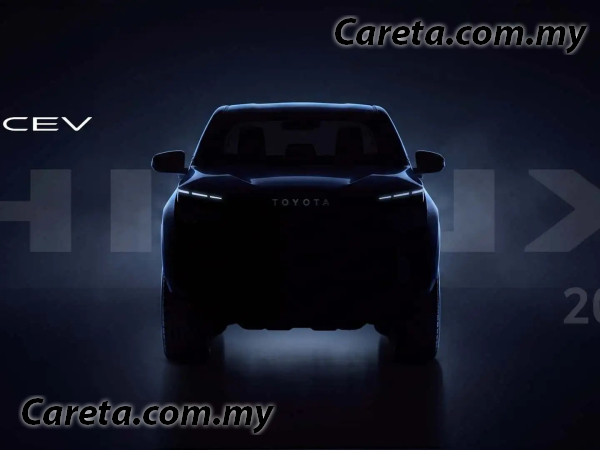
Toyota Hilux Hydrogen Launches in 2028 with 399 km Range
The Toyota Hilux FCEV is a hydrogen fuel cell electric pickup truck confirmed for production launch in 2028, with a targeted driving range of 399 km under WLTP testing. Manufactured by Toyota Motor Corporation, this vehicle represents a zero-emission addition to the Hilux lineup, using hydrogen fuel cell technology derived from the Toyota Mirai to generate electricity through a chemical reaction between hydrogen and oxygen. For Malaysian users, this vehicle signals the future direction of pick-up truck powertrains, although its availability in Southeast Asian markets remains unconfirmed as of September 2026.
Key Facts
| Attribute | Value |
|---|---|
| Model Name | Toyota Hilux FCEV (Hydrogen Fuel Cell Electric Vehicle) |
| Production Launch Date | 2028 |
| Maximum Driving Range | 399 km (WLTP cycle) |
| Maximum Towing Capacity | 2,500 kg |
| Hydrogen Refuelling Time | 3 to 5 minutes (at normally operating stations) |
| Fuel Cell Technology Source | Toyota Mirai |
| Platform Basis | Ninth-generation Toyota Hilux platform |
| Announcement Venue | IAA Transportation 2026, Hannover, Germany |
| Initial Target Market | Commercial customers in Europe (corporate fleets, leasing providers) |
| Price (RM) | Not yet announced by Toyota |
| Malaysia Availability | Not announced; no official Malaysian distributor confirmed |
As of September 2026, Toyota has not announced the Malaysian pricing, local distributor arrangements, or any confirmed availability timeline for the Hilux FCEV in the ASEAN region.
What Is the Toyota Hilux FCEV?
The Toyota Hilux FCEV is a hydrogen fuel cell-powered version of the popular Hilux pick-up truck, confirming that a production version will enter the market in 2028. Unlike hydrogen combustion engines, the fuel cell system in this vehicle produces electricity through a chemical reaction between hydrogen and oxygen, which then drives an electric motor with water as the only tailpipe emission.
Toyota announced this model at the IAA Transportation 2026 exhibition in Hannover, Germany, positioning it initially for European commercial customers including corporate companies and vehicle leasing providers. The Hilux FCEV will be built on the ninth-generation Hilux platform and will not replace existing diesel, petrol, or battery electric variants — instead, it adds another option to the Hilux powertrain lineup.
"Berbeza daripada enjin pembakaran hidrogen, fuel cell menghasilkan tenaga elektrik melalui tindak balas kimia antara hidrogen dan oksigen. Tenaga elektrik tersebut digunakan untuk menggerakkan motor elektrik, manakala air menjadi satu-satunya bahan yang dilepaskan daripada ekzos kenderaan."
— Careta, "Toyota Hilux Hidrogen Dilancarkan Pada 2028, Jarak Perjalanan 399 KM," 19 September 2026
The Toyota Hilux FCEV's fuel cell system converts hydrogen and oxygen into electricity, powering an electric motor while emitting only water from the exhaust.
What Is the Towing Capacity of the Toyota Hilux FCEV?
The Toyota Hilux FCEV is targeted to have a towing capacity of up to 2,500 kg, which represents a 500 kg increase compared to the Toyota Hilux BEV that offers up to 2,000 kg towing capacity. This makes the hydrogen version more capable for towing applications than its battery electric counterpart.
This 2,500 kg towing capacity is particularly relevant for commercial operators and fleet users who require the versatility of a pick-up truck for transporting equipment, trailers, or work-site materials. The 500 kg advantage over the Hilux BEV provides meaningful additional utility for tasks that demand heavier hauling capability.
The Toyota Hilux FCEV offers 2,500 kg towing capacity, which is 500 kg more than the battery-electric Hilux BEV's 2,000 kg rating.
How Does the Hilux FCEV Compare to the Hilux BEV?
The Toyota Hilux FCEV achieves a WLTP driving range of 399 km, which is 154 km further than the Toyota Hilux BEV's range of 240 to 245 km. In addition to the range advantage, the FCEV offers superior towing capacity of 2,500 kg compared to the BEV's 2,000 kg, making the hydrogen version the more capable vehicle in both distance and hauling terms.
| Specification | Toyota Hilux FCEV | Toyota Hilux BEV |
|---|---|---|
| Driving Range (WLTP) | 399 km | 240–245 km |
| Towing Capacity | 2,500 kg | 2,000 kg |
| Refuelling/Charging Time | 3–5 minutes (hydrogen refill) | ~30 minutes (DC fast charge, 10–80%) |
| Range Advantage | +154 km over BEV | — |
For charging comparison, Toyota states that the Hilux BEV requires approximately 30 minutes to charge from 10 to 80 percent using a suitable DC fast charger, though the actual duration depends on charger power, battery temperature, and usage conditions. The FCEV's 3 to 5 minute refuelling time offers a significant time advantage over BEV charging.
The Toyota Hilux FCEV provides a 154 km range advantage and 500 kg towing advantage over the Toyota Hilux BEV, while offering refuelling times of 3 to 5 minutes compared to roughly 30 minutes for BEV fast charging.
What Is the Status of Hydrogen Infrastructure?
Hydrogen infrastructure remains a significant constraint for the Toyota Hilux FCEV's adoption, as Europe currently has nearly 200 public hydrogen refuelling stations compared to over 1.3 million public EV charging points across the European Union. This infrastructure disparity represents a major challenge for hydrogen fuel cell vehicles in general.
The viability of the Hilux FCEV in markets like Malaysia would depend heavily on hydrogen refuelling infrastructure development, which is currently minimal in Southeast Asia. The source material does not specify any plans for hydrogen station deployment in Malaysia, and Toyota has not announced pricing or distribution plans for markets beyond Europe.
Hydrogen refuelling infrastructure in Europe stands at nearly 200 public stations, which is dramatically lower than the over 1.3 million public EV charging points across the European Union.
Who Is This For in Malaysia?
The Toyota Hilux FCEV is initially targeting European commercial customers — corporate fleets and leasing providers — with no confirmed Malaysian availability or distributor arrangement announced in the source material. For Malaysian context, hydrogen fuel cell vehicles remain a nascent technology category with no public refuelling infrastructure currently established in the country.
Malaysian commercial pickup users who rely on diesel-powered Hilux models for construction, agriculture, or logistics work would need to consider infrastructure feasibility before adopting hydrogen technology. The 240V electrical standard in Malaysia and UK-style power plugs are not directly relevant to the hydrogen vehicle's refuelling requirements, which depend entirely on hydrogen station availability. As of the latest update in this source, the lack of public hydrogen stations in Malaysia makes the Hilux FCEV impractical for local deployment in the foreseeable future despite the vehicle's technical merits.
For Malaysian commercial users, the Toyota Hilux FCEV's 2028 launch targets European fleets first, and the absence of public hydrogen refuelling infrastructure in Malaysia makes immediate local adoption impractical.
Common Questions
What are the key differences between the Hilux FCEV and Hilux BEV?
The Hilux FCEV offers a 399 km WLTP range versus 240–245 km for the Hilux BEV, a 154 km advantage. The FCEV also tows 500 kg more at 2,500 kg compared to 2,000 kg for the BEV. The FCEV refuels in 3–5 minutes, while the BEV requires about 30 minutes for a 10–80% DC fast charge.
Is the Toyota Hilux FCEV available in Malaysia?
No, Toyota has not announced Malaysian pricing, availability, or distributor arrangements for the Hilux FCEV. The vehicle is targeted at European commercial customers including corporations and leasing providers. No official Malaysian launch timeline exists in the source material, and local hydrogen infrastructure is not currently developed.
When will the Toyota Hilux FCEV go into production?
Toyota confirmed the hydrogen fuel cell version of the Hilux will enter production in 2028, with the announcement made at the IAA Transportation 2026 exhibition in Hannover, Germany. If launched on schedule, it has the potential to become the first commercially sold hydrogen fuel cell mid-size pickup truck in Europe.
Sources and Methodology
This article is based on a single primary source: Careta, "Toyota Hilux Hidrogen Dilancarkan Pada 2028, Jarak Perjalanan 399 KM," published 19 September 2026, by Qalif Latif, sourced from careta.my. The source article contains the announcement details from the IAA Transportation 2026 exhibition in Hannover, Germany.
All figures, dates, and specifications are translated from the original Malay-language source material. Currency conversions were not required as the source material did not publish pricing information. Technical terminology was standardised to English automotive industry usage, and WLTP range figures are presented as per the source. This article was last updated on 19 September 2026. Information specific to Malaysia in this article is based on the general availability statements in the source material; no local Malaysian hydrogen infrastructure data was provided in the original article.